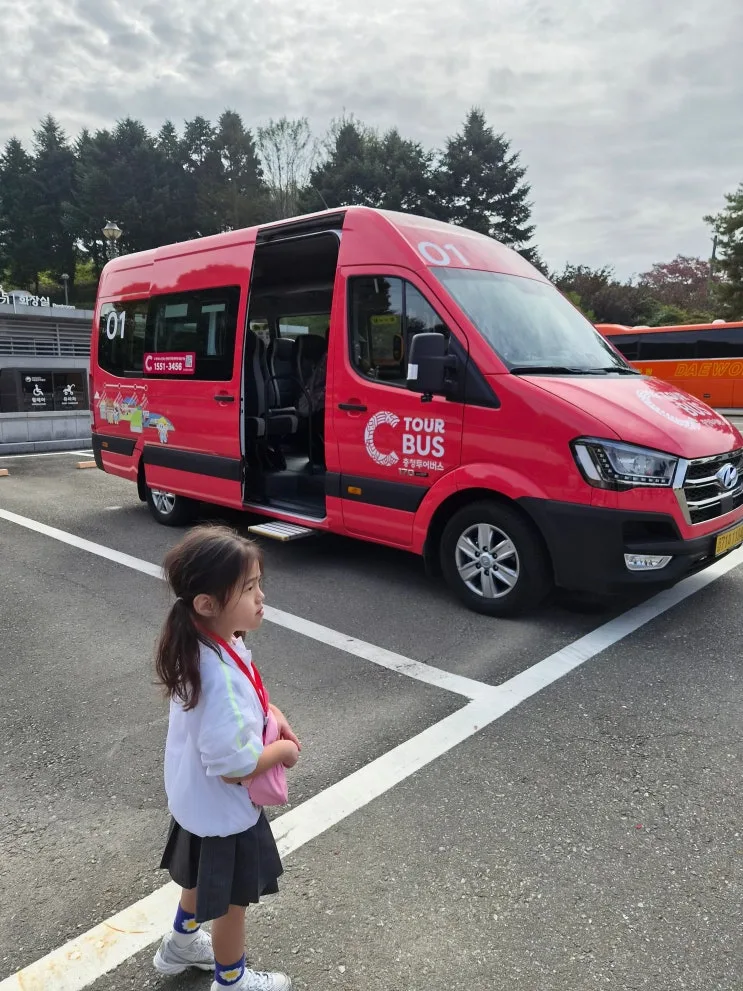

We spent two days and one night exploring Gongju and Buyeo, South Korea, with our 5-year-old—and discovered how to explore Gongju without a car.
This time, instead of driving our own car, we relied on the C-Tour Bus DRT service to get around.It was a different kind of trip for us.
We’d never traveled car-free with our child before,
but now that our little one was older, we felt ready to give it a try.
As it turned out, our child loved
the adventure of traveling by public transportation instead of our own car.
Mom and Dad, who had to carry all the bags, had a slightly tougher time!
Still, being able to stop for a beer along the way
made Dad a very happy traveler, too.
Here’s how our trip went.
First, we took an intercity bus from Daejeon Complex Terminal to Gongju Bus Terminal,
then used DRT to visit Gongju’s main attractions.
I’d worried about getting around with a child, but we ended up seeing much more of Gongju than I’d expected.
We followed the story of the Baekje kingdom from Gongju National Museum to Gongsanseong Fortress and the Tomb of King Muryeong and Royal Tombs, then spent the night at Gongju Hanok Village.
We even tried drone delivery at Gongju Hanok Village!
In this post, I’m sharing our first-day Gongju itinerary with a 5-year-old.Here’s where we went.
Gongju Without a Car: Day 1 of Our Two-Day Itinerary
Gongju National Museum → Gongsanseong Fortress → Tomb of King Muryeong → Gongju Hanok Village
Exploring Gongju Without a Car on the C-Tour Bus DRT
What Is the C-Tour Bus DRT?
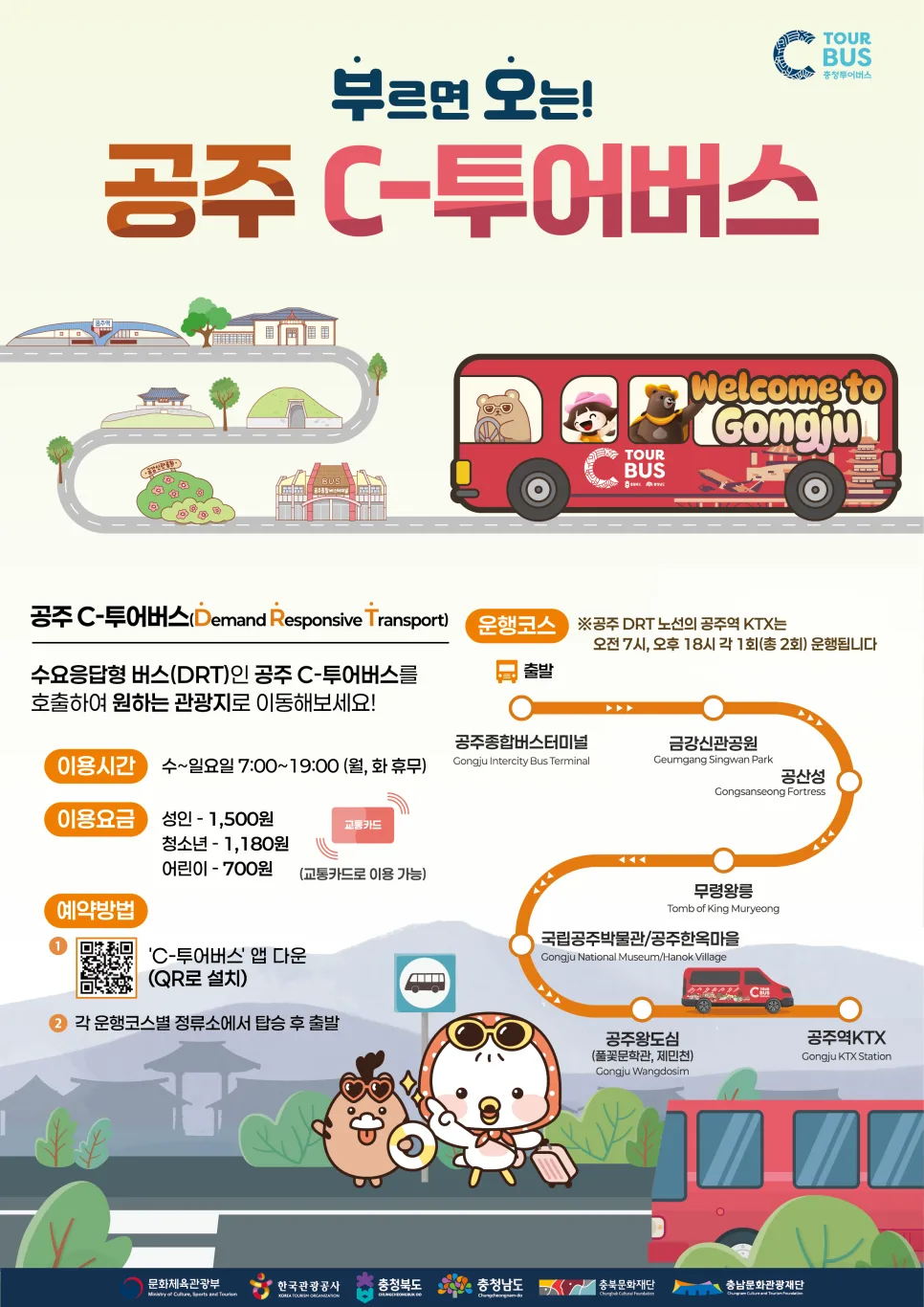
C-Tour Bus DRT is an app-based sightseeing transportation service. DRT stands for Demand Responsive Transit.
Unlike a typical city sightseeing bus that loops around a fixed route,
you choose your pickup point and destination within its service area.
Think of it as an on-demand bus.
Once you’ve downloaded the app,
select your departure point and destination, and the bus comes to pick you up.
Requesting a ride about 10 minutes ahead is a good starting point,
but arrival times can vary with traffic,
so it’s worth allowing a little extra time.

And if, like us,
you’re planning several rides,
the C-Tour Pass is worth considering.
It costs about $2 per person
for unlimited rides over 24 hours.
Register a payment card in the C-Tour Bus app,
buy the pass, and request your DRT ride. That’s it.

The Gongju service
connects Gongju Bus Terminal
with major sights including Gongsanseong Fortress, the Tomb of King Muryeong, Gongju National Museum, and Gongju Hanok Village.
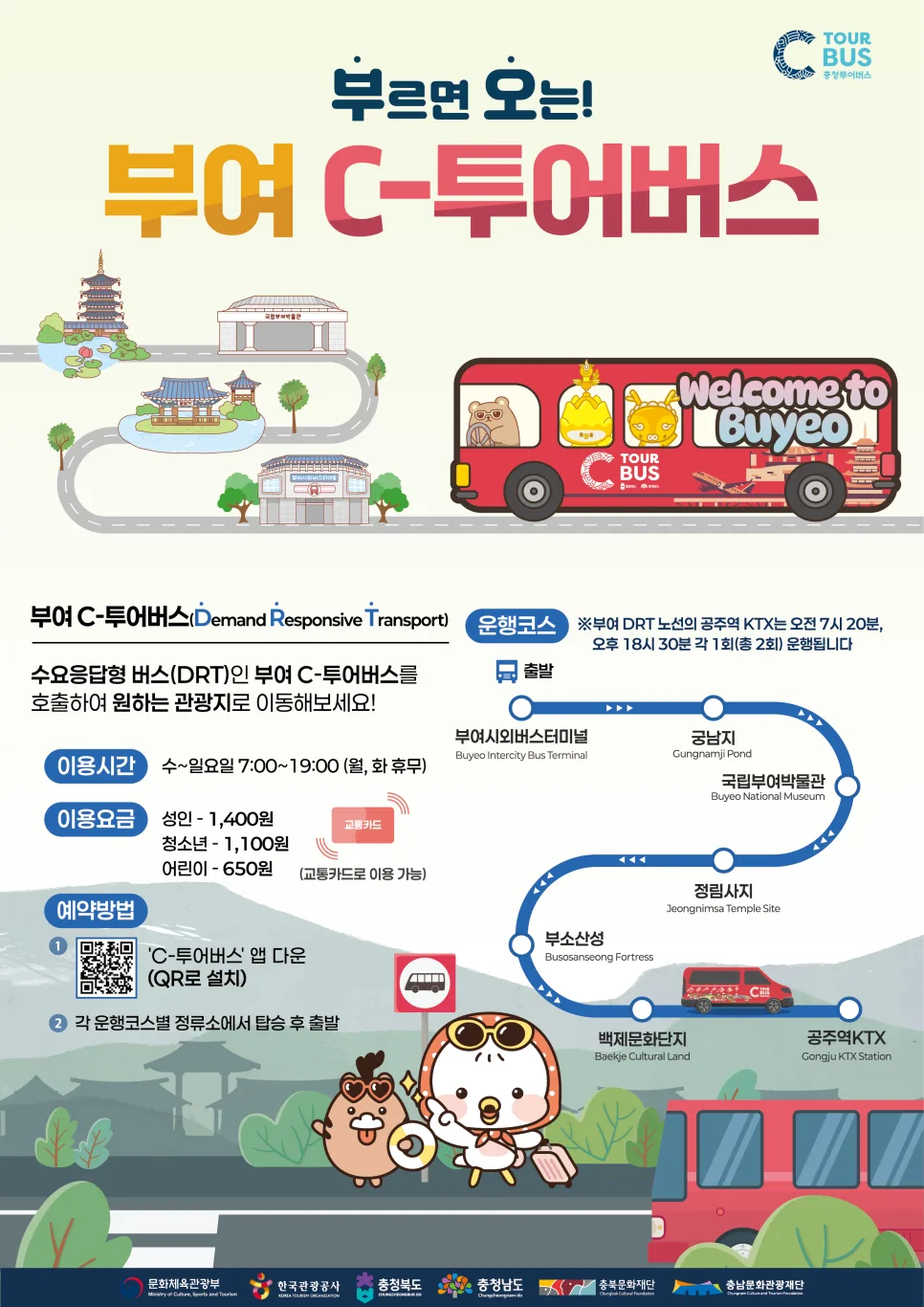
The Buyeo service
connects Buyeo Intercity Bus Terminal
with Gungnamji Pond, Buyeo National Museum, Jeongnimsa Temple Site, Busosanseong Fortress, Baekje Cultural Land, and Gongju KTX Station.
You can arrive by intercity bus or KTX high-speed train, then use this one bus service to explore Gongju and Buyeo.
That’s a huge advantage for a car-free trip.
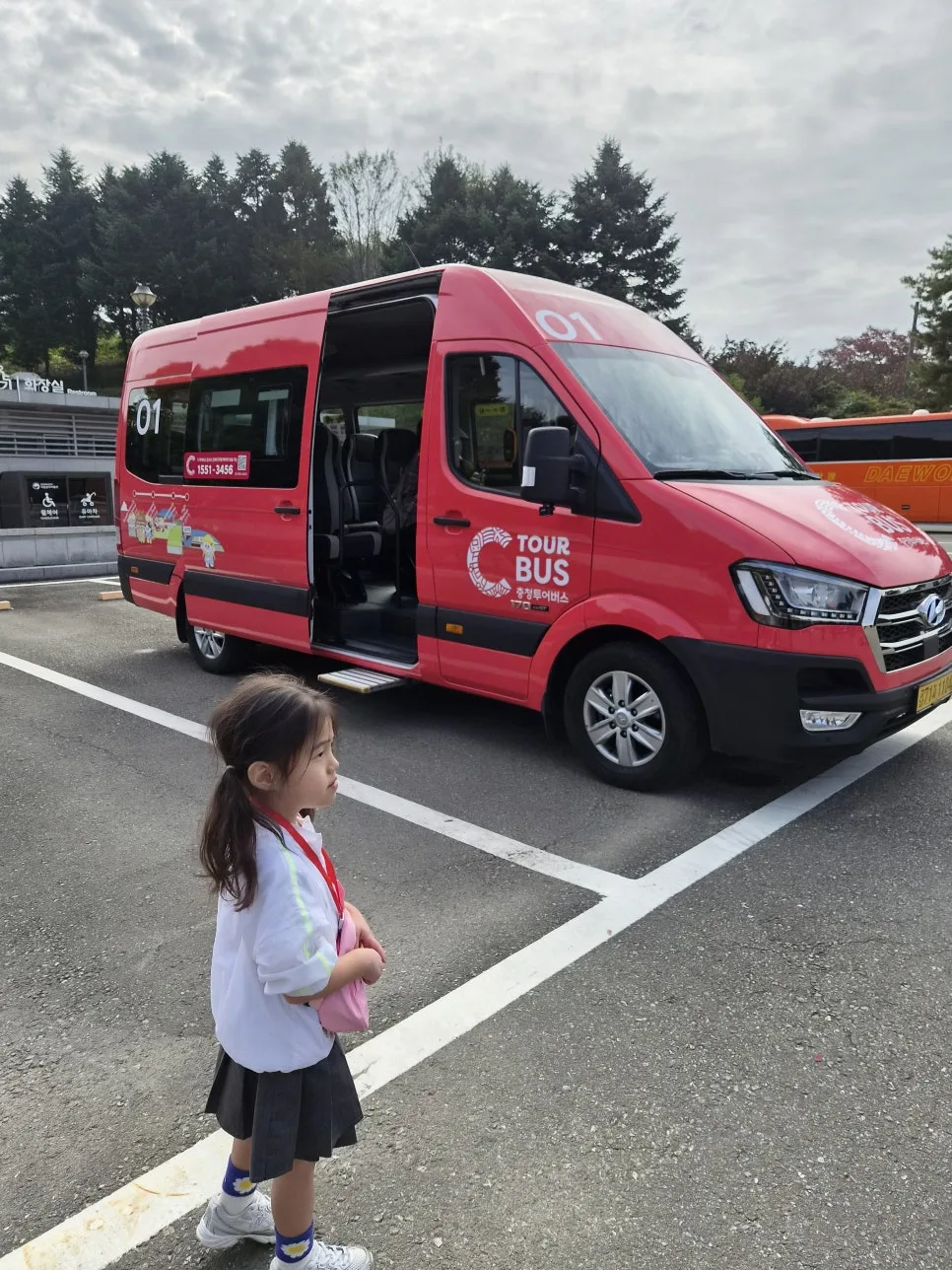
For our family, too,
there was no need to bring our own car.
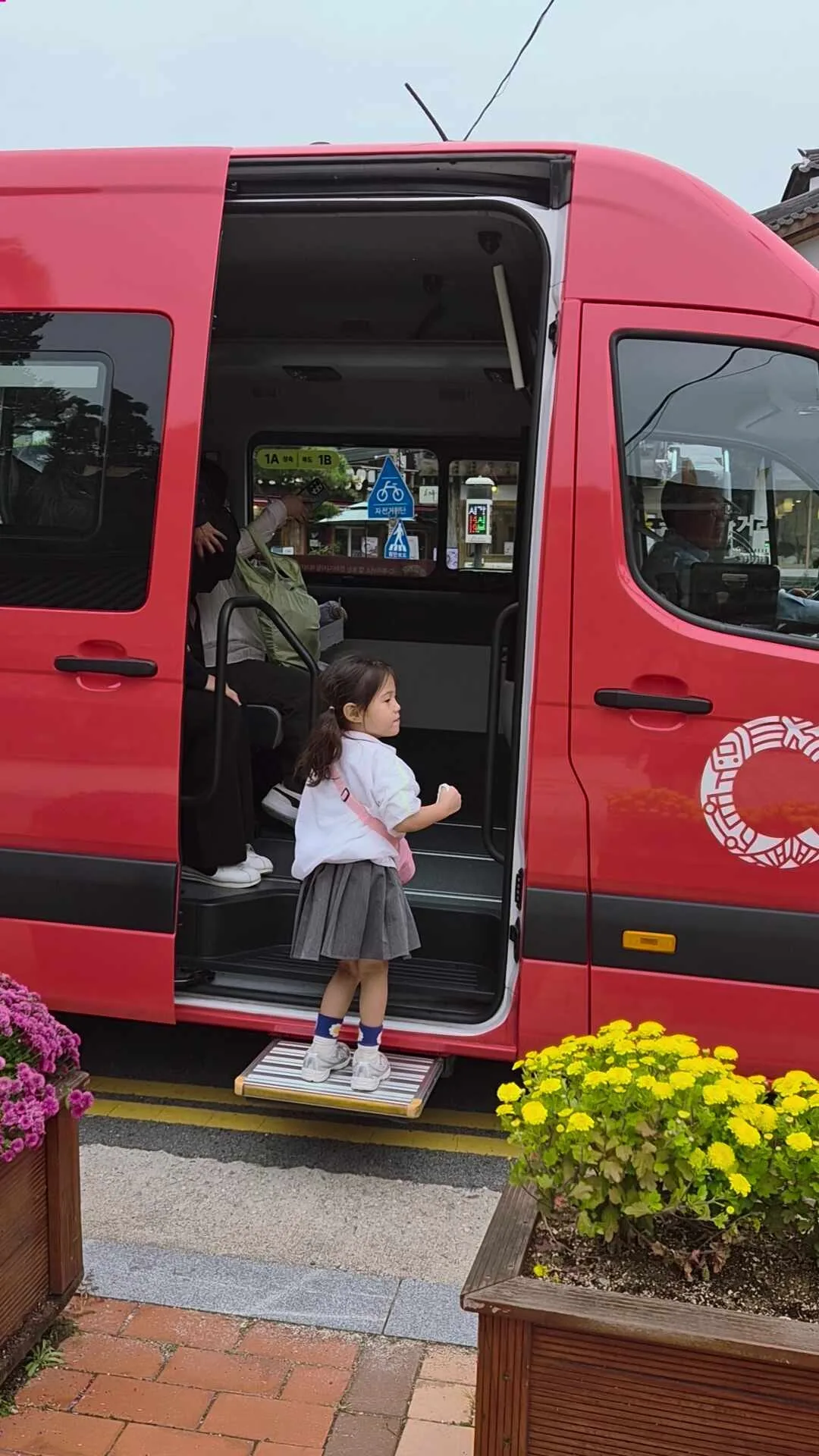
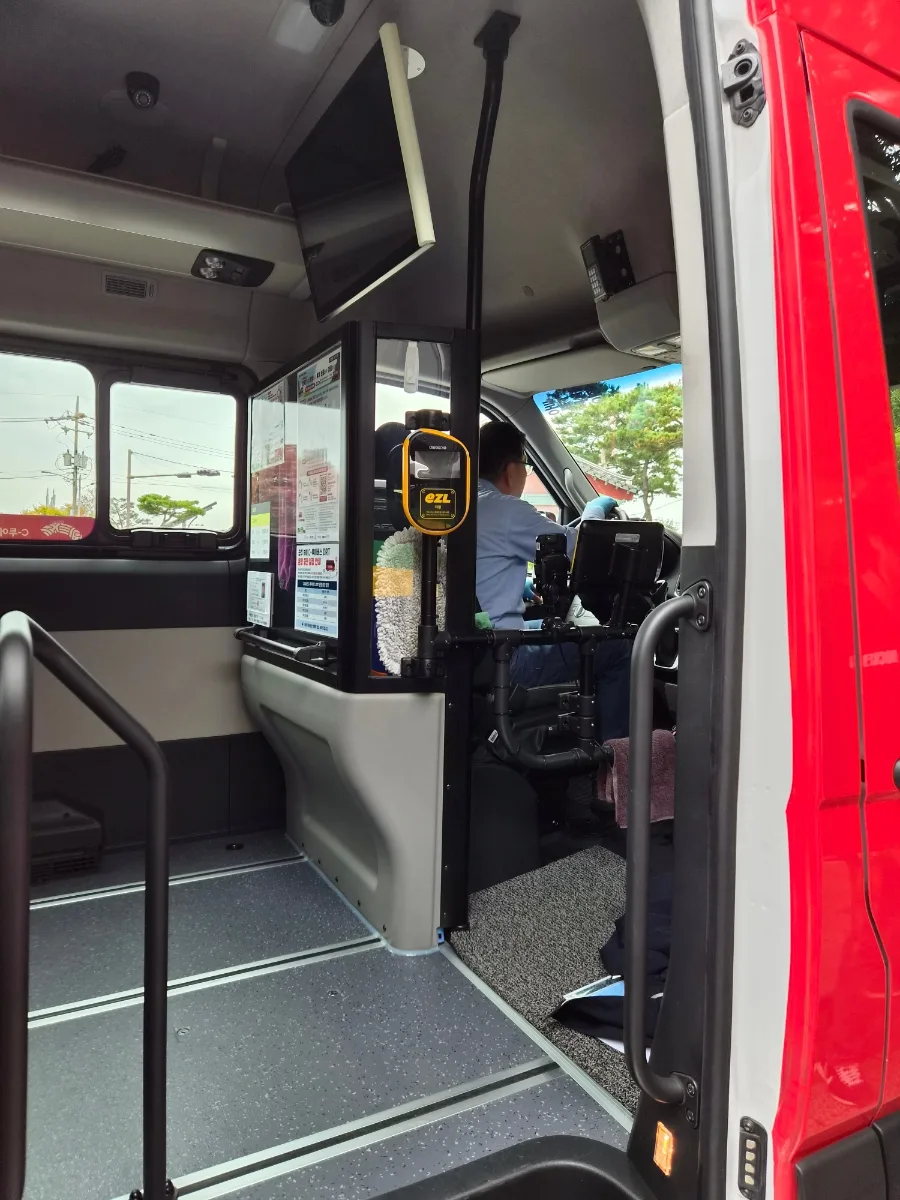
This red Hyundai Solati minibus
made getting around remarkably easy.
(1) Gongju National Museum
34 Gwangwangdanji-gil, Gongju, Chungcheongnam-do, South Korea
As our child gets older,
we’re trying to visit more museums.
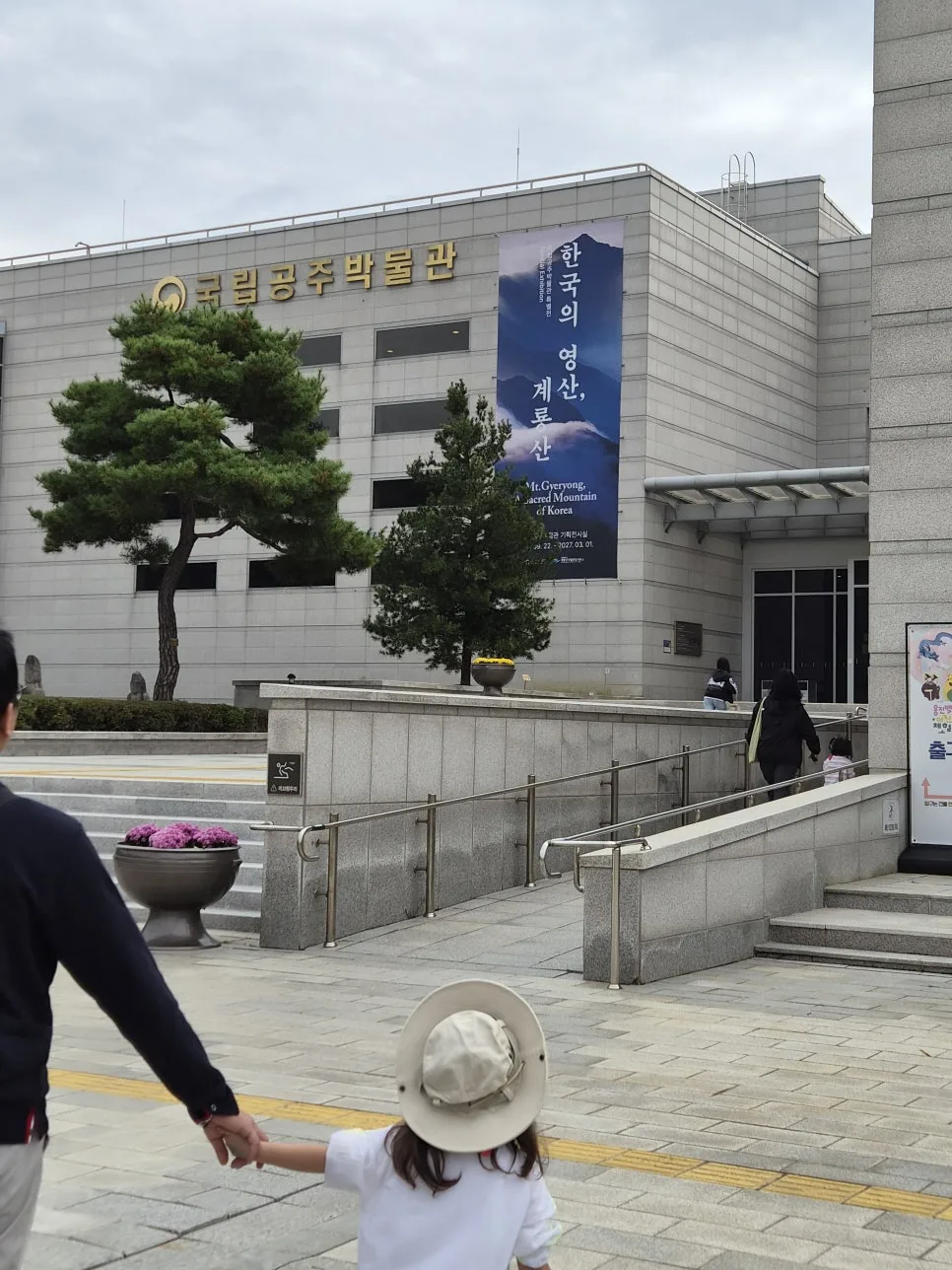
So, as soon as we arrived in Gongju,
our first stop was Gongju National Museum.
Since our little one was still only 5, I wasn’t sure how much interest a history museum would hold.
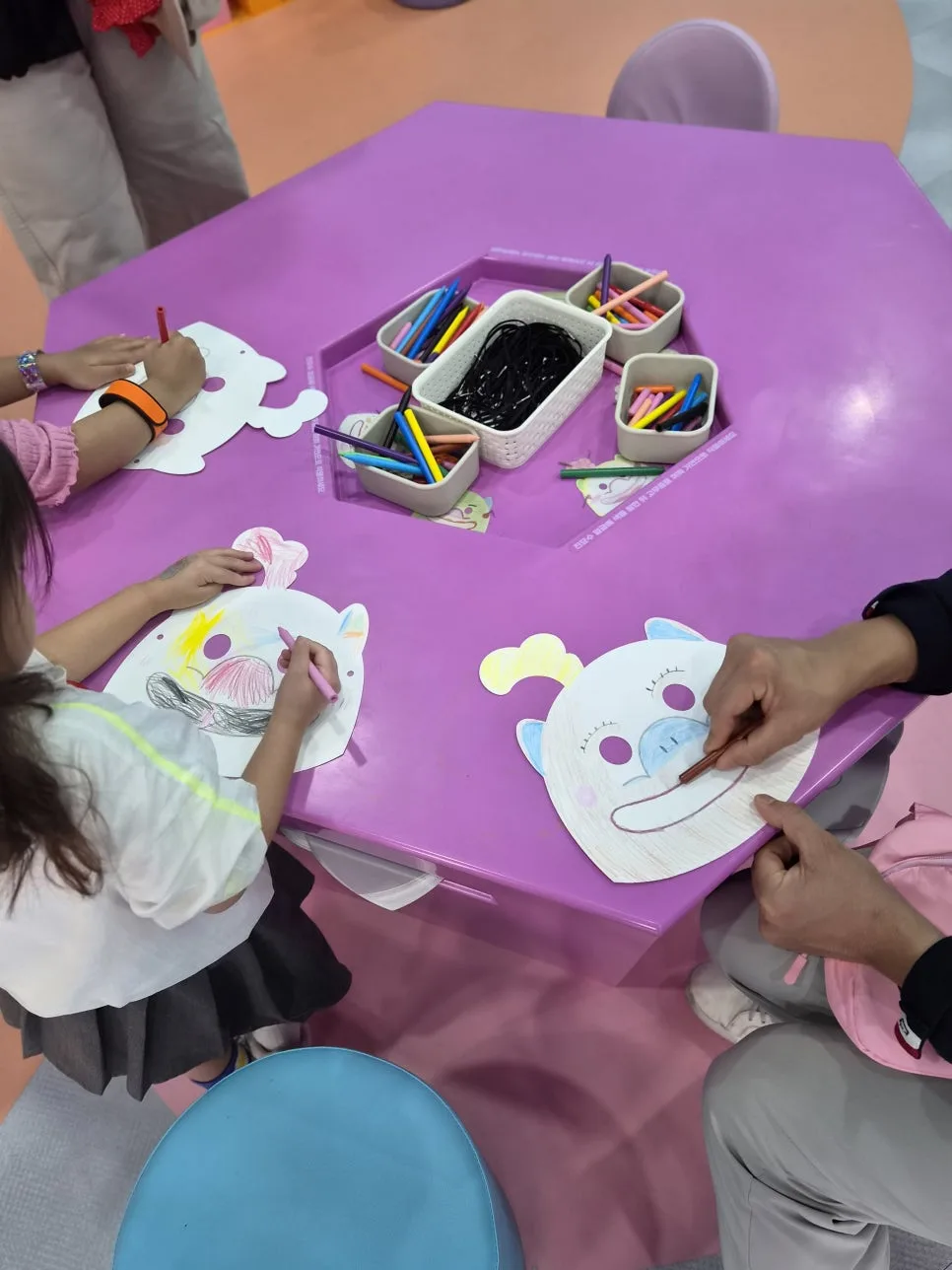
But the hands-on children’s area made it much more fun than I’d expected.
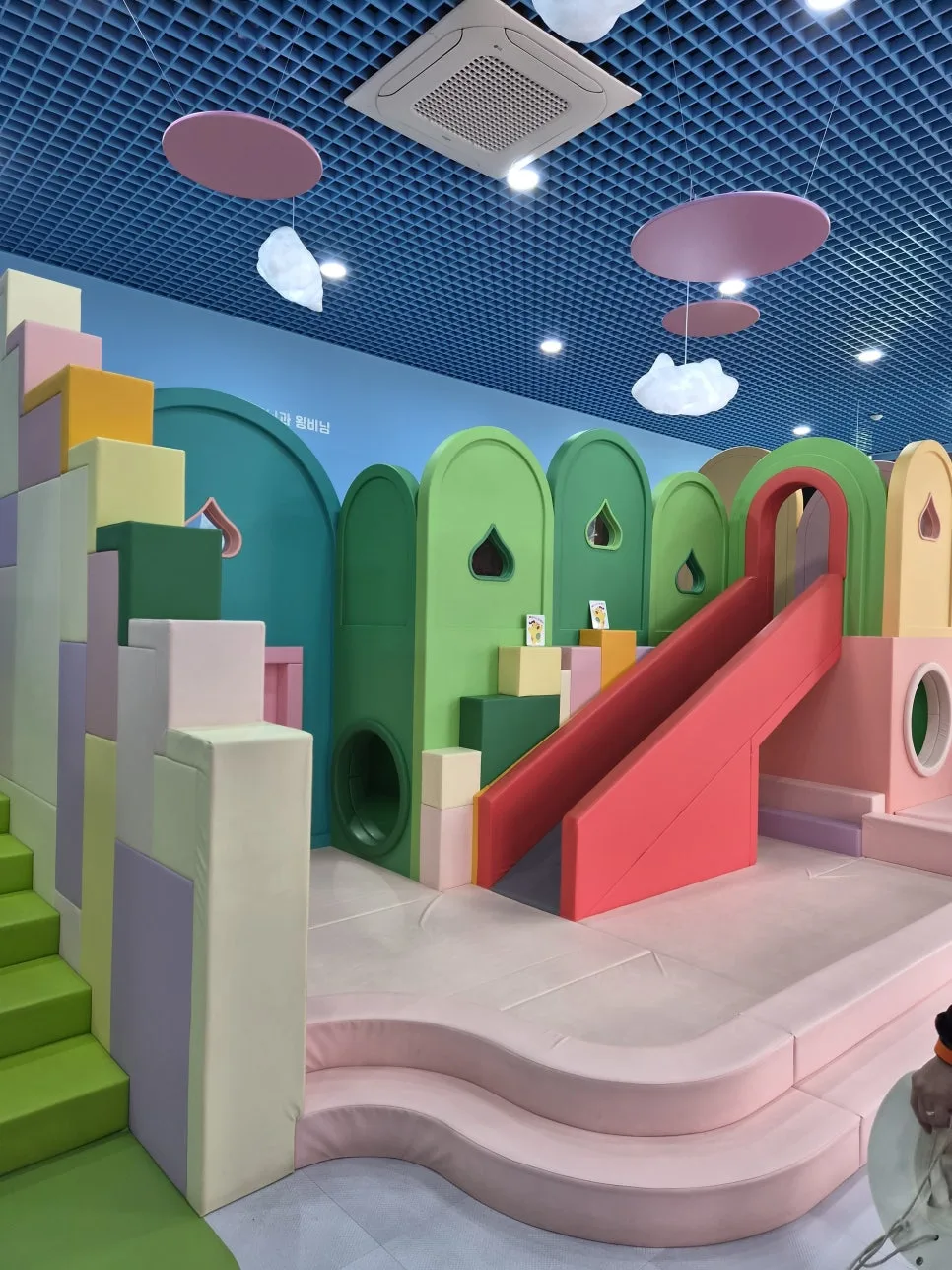
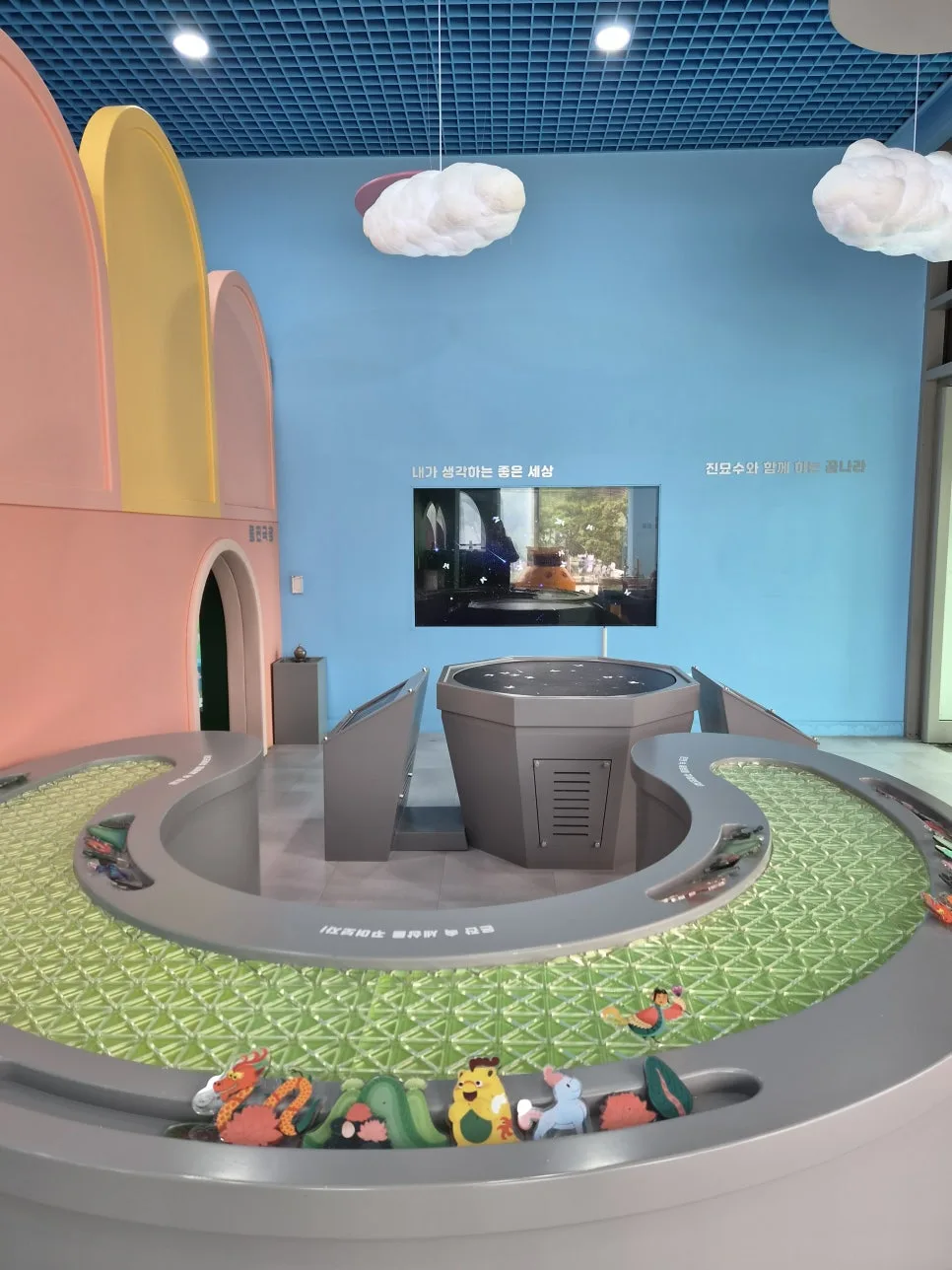
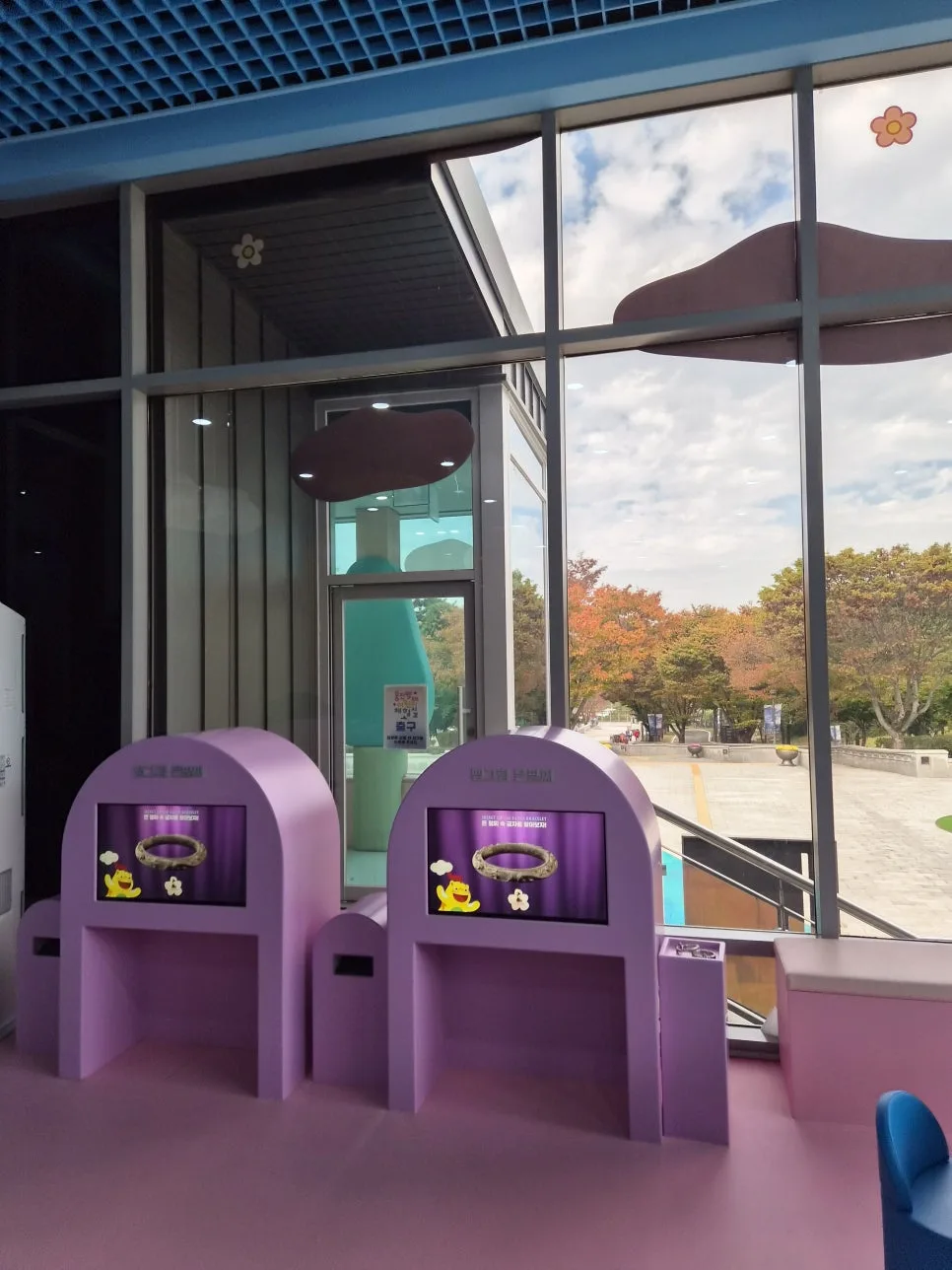
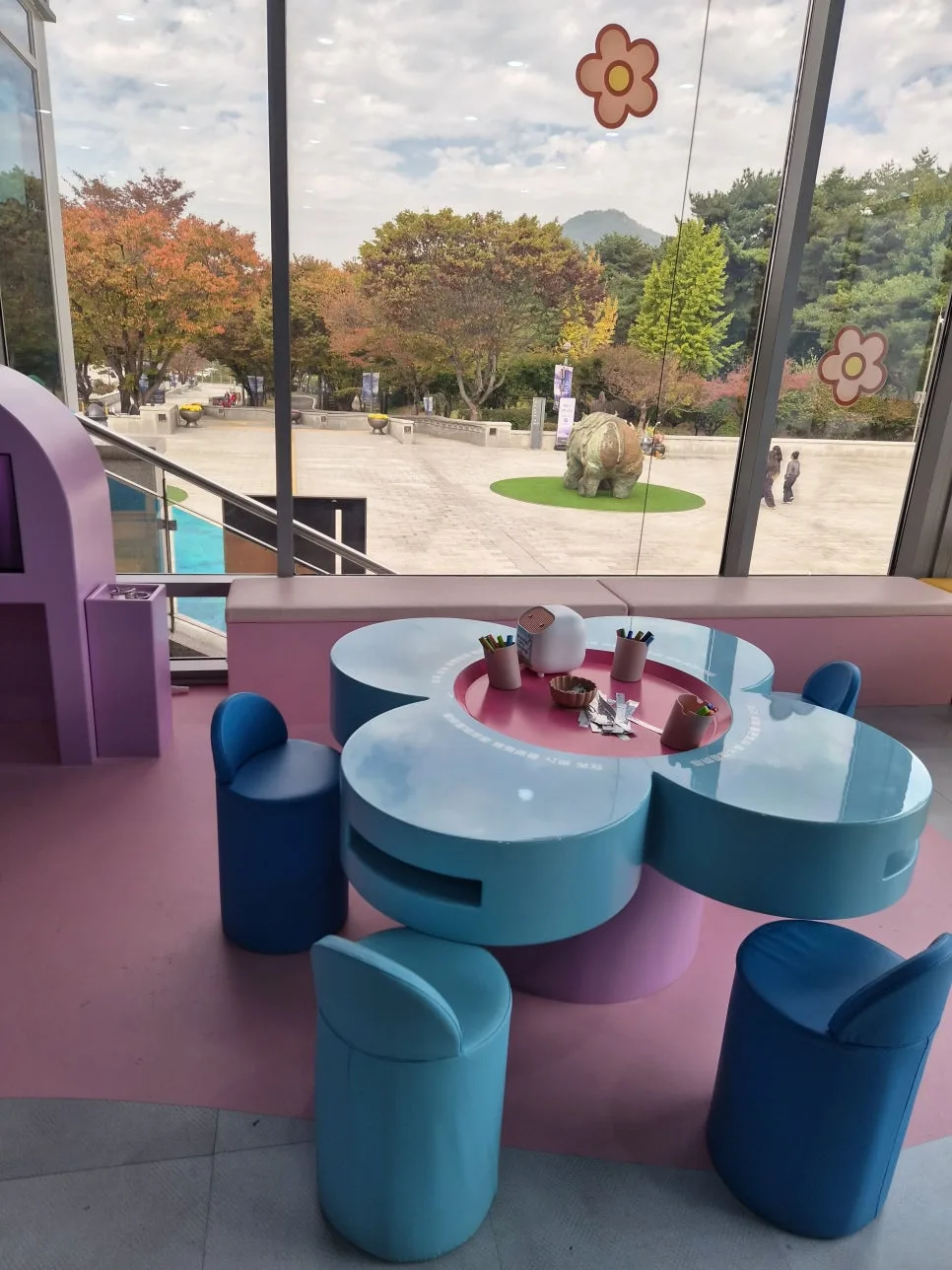
After some time in the activity area, we explored the exhibition galleries together.
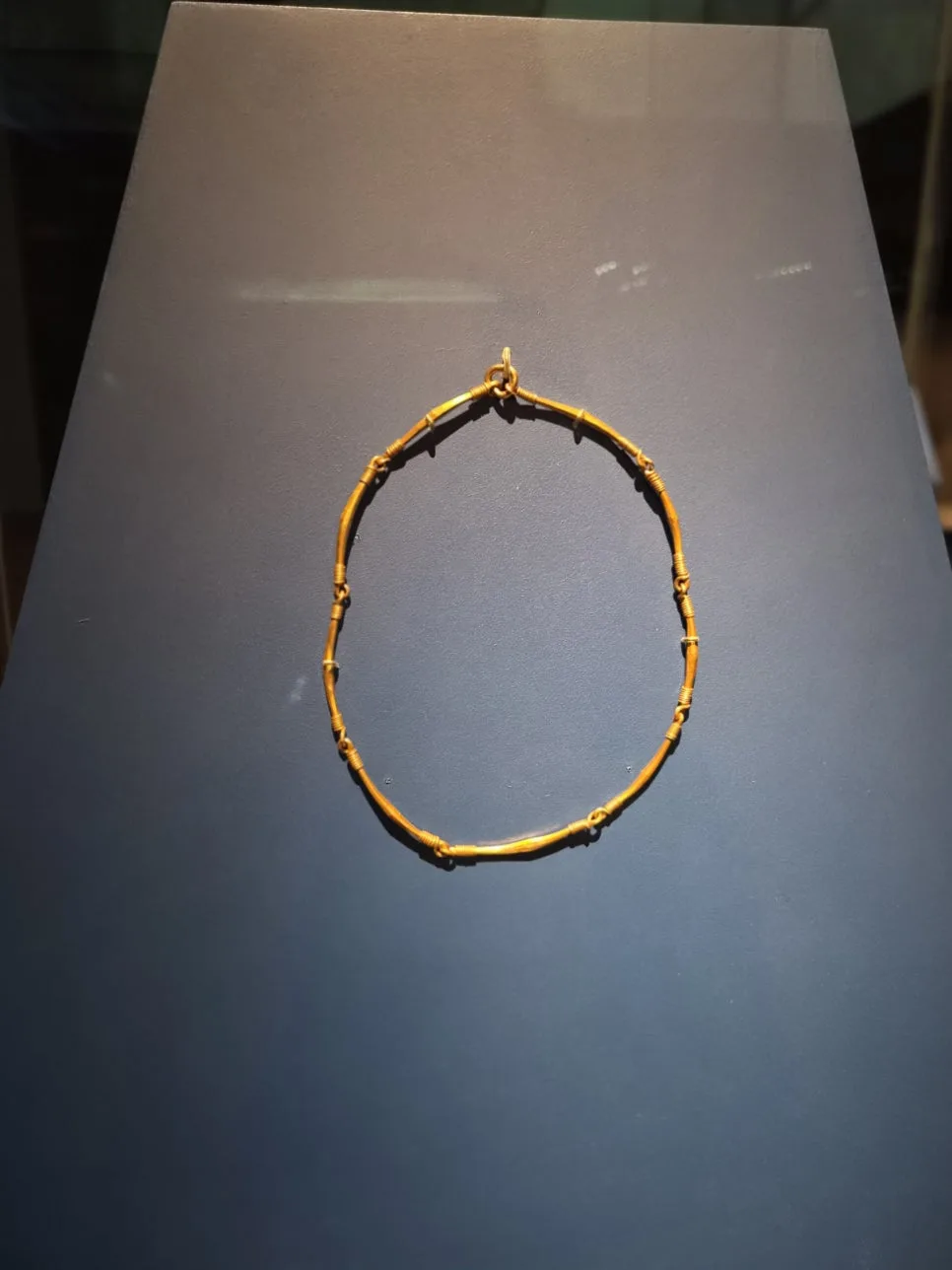
The elaborate jewelry and accessories of the Baekje royal family were what stayed with me most.
Baekje Royal Accessories From 1,500 Years Ago
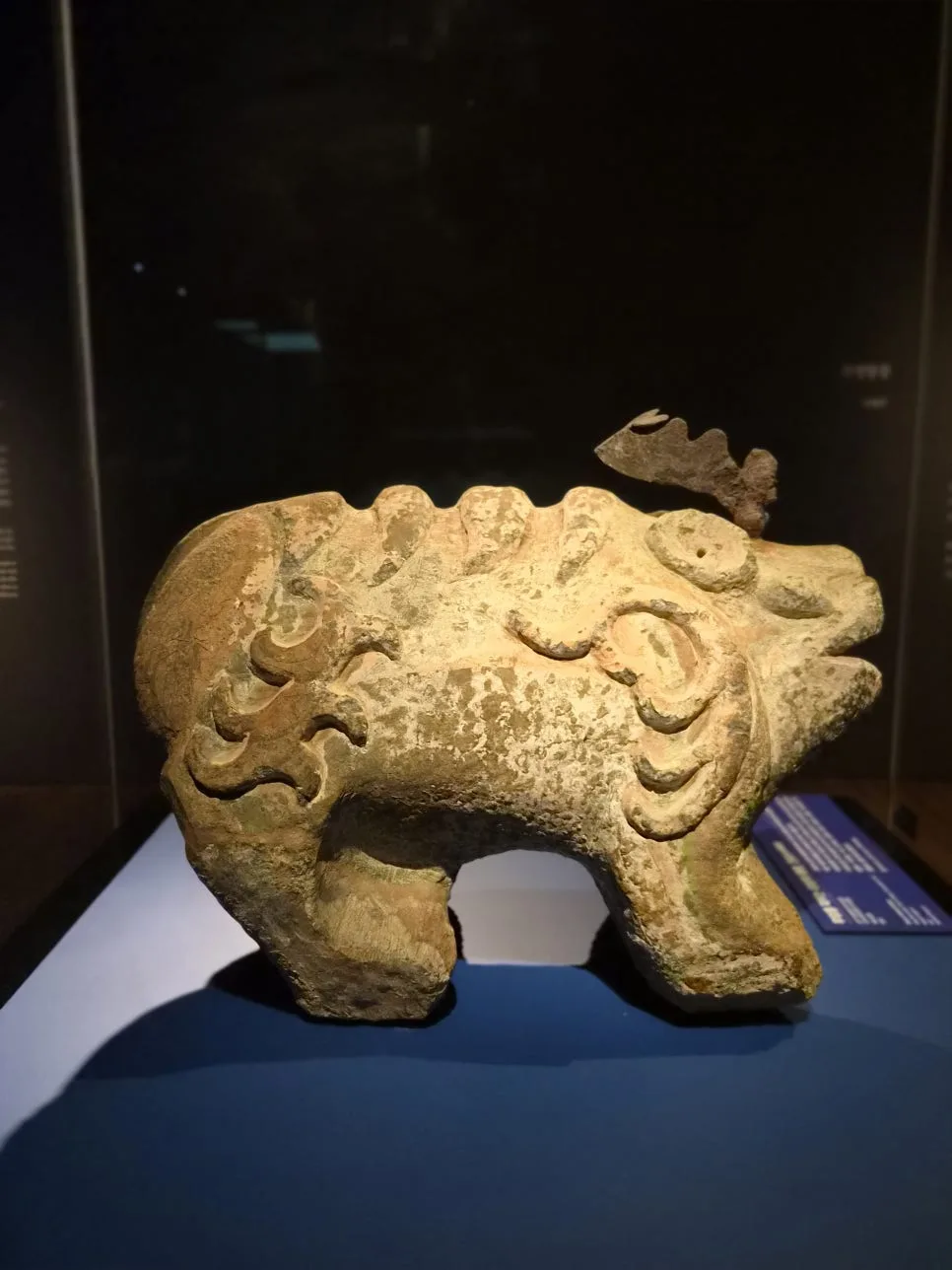
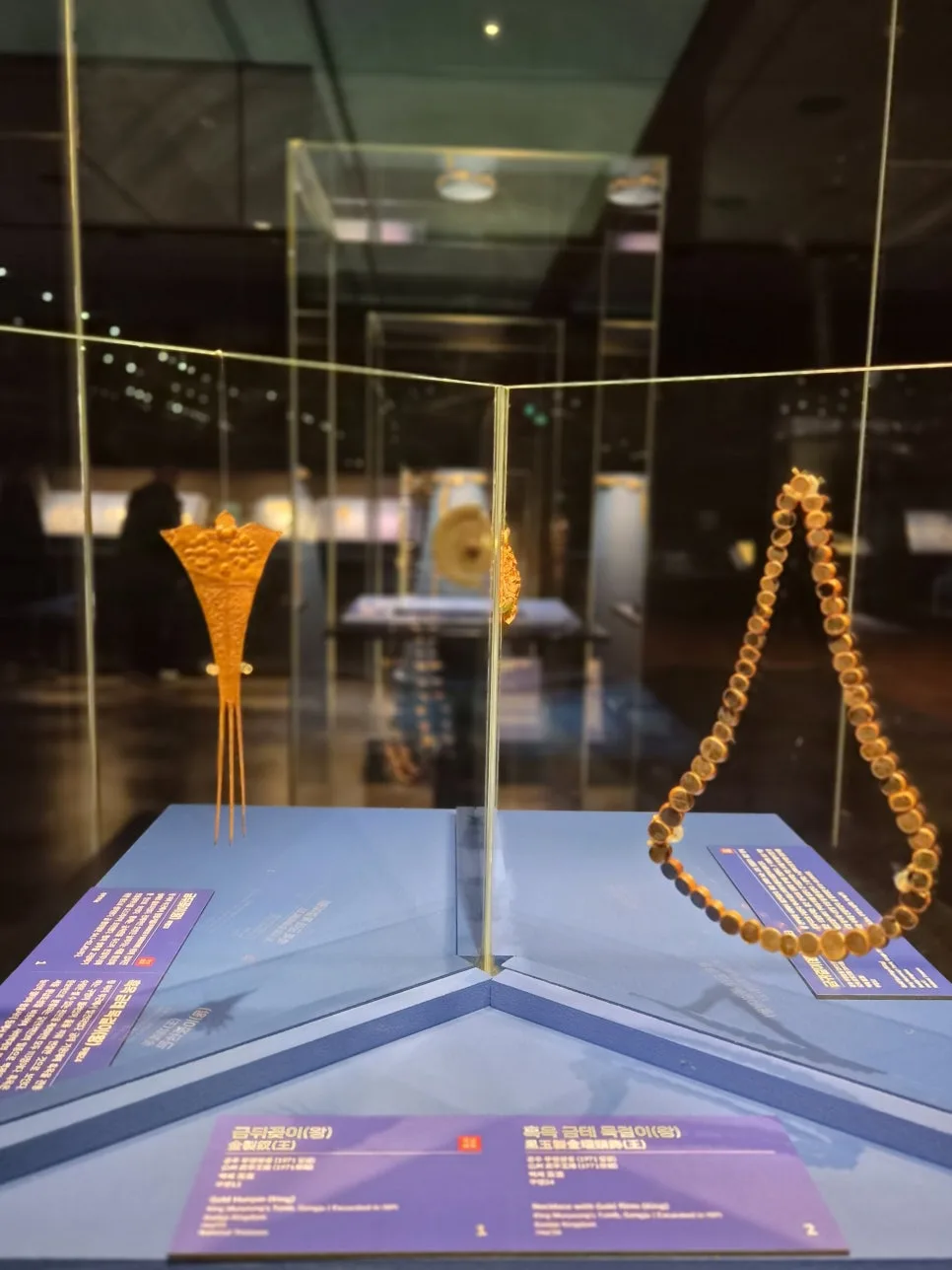
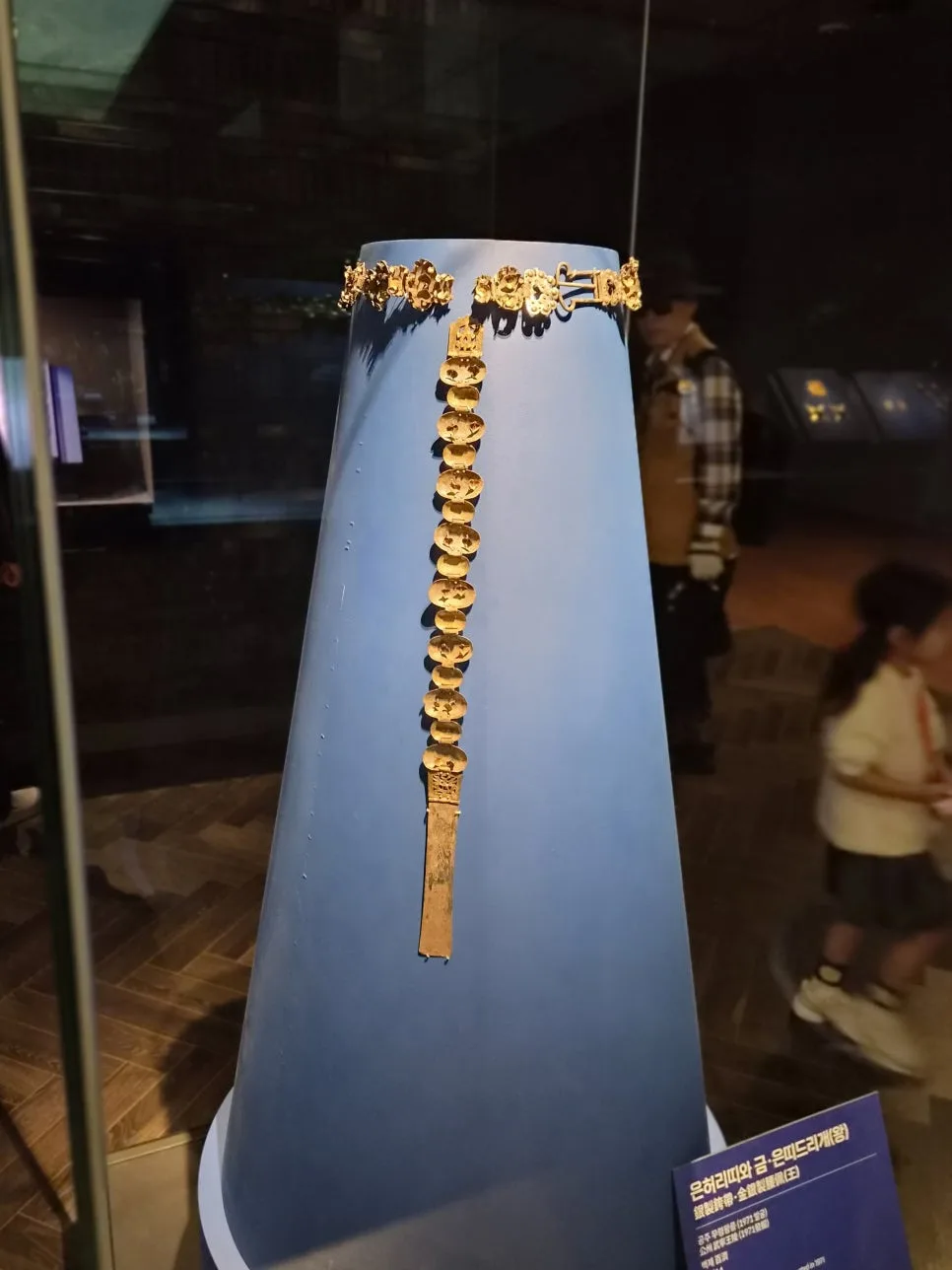
My first thought when I saw the Baekje accessories was just how dazzling they were.
Even the smallest pieces had delicate patterns worked into them,
revealing the extraordinary skill of the craftspeople who made them.
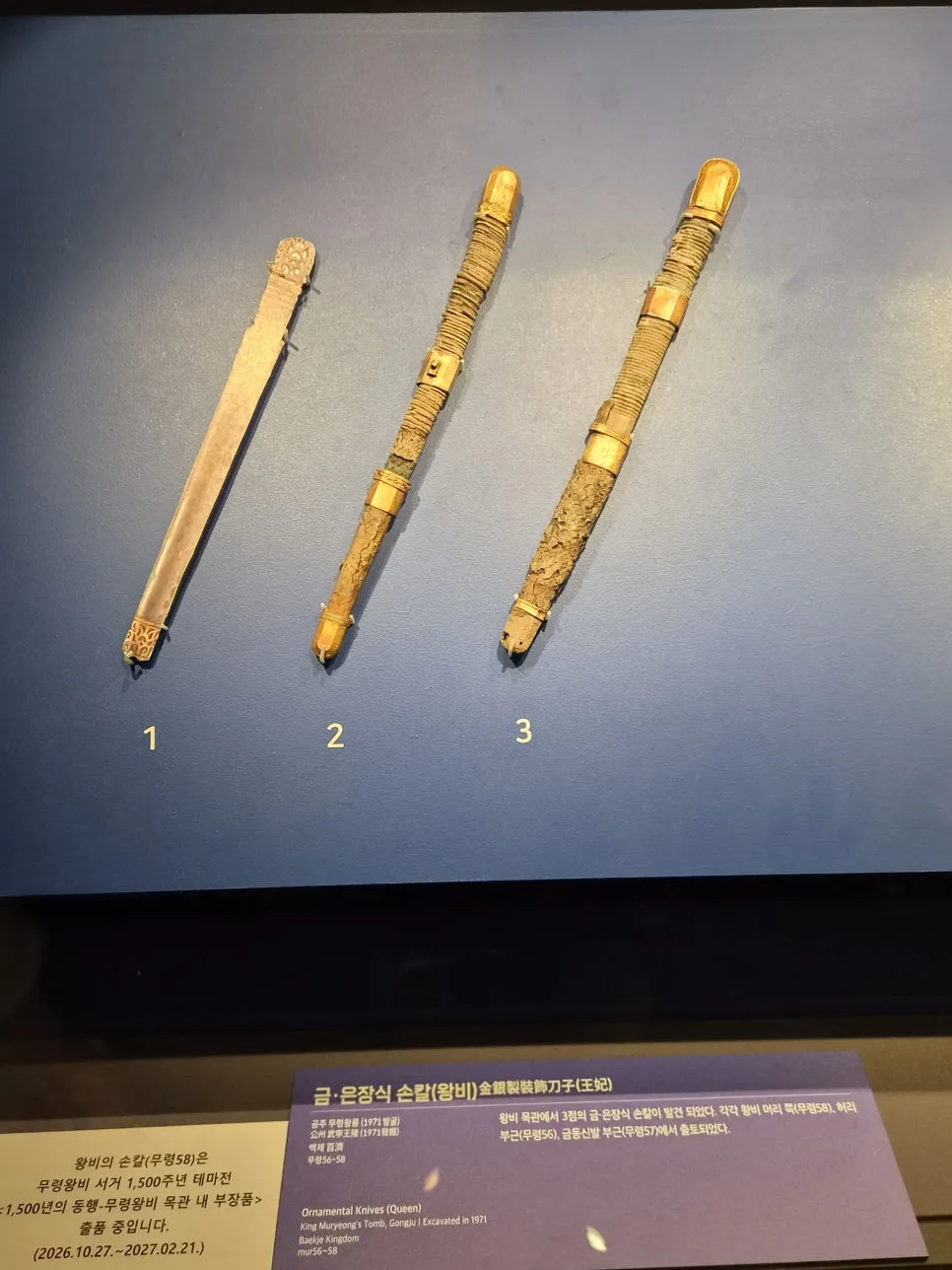
One piece that especially caught my eye was the queen’s small knife with gold and silver ornamentation, excavated from the Tomb of King Muryeong.
It was found in the queen’s wooden coffin. I couldn’t get over how richly decorated even a small knife could be.
Clearly, the people of Baekje appreciated a little ornamentation.
Seeing the artifacts here first made our later visit to the Tomb of King Muryeong much more meaningful.
For our child, the hands-on activities were the highlight; for us adults, it was the historical treasures.
(2) Gongsanseong Fortress
53-51 Geumseong-dong, Gongju, Chungcheongnam-do, South Korea
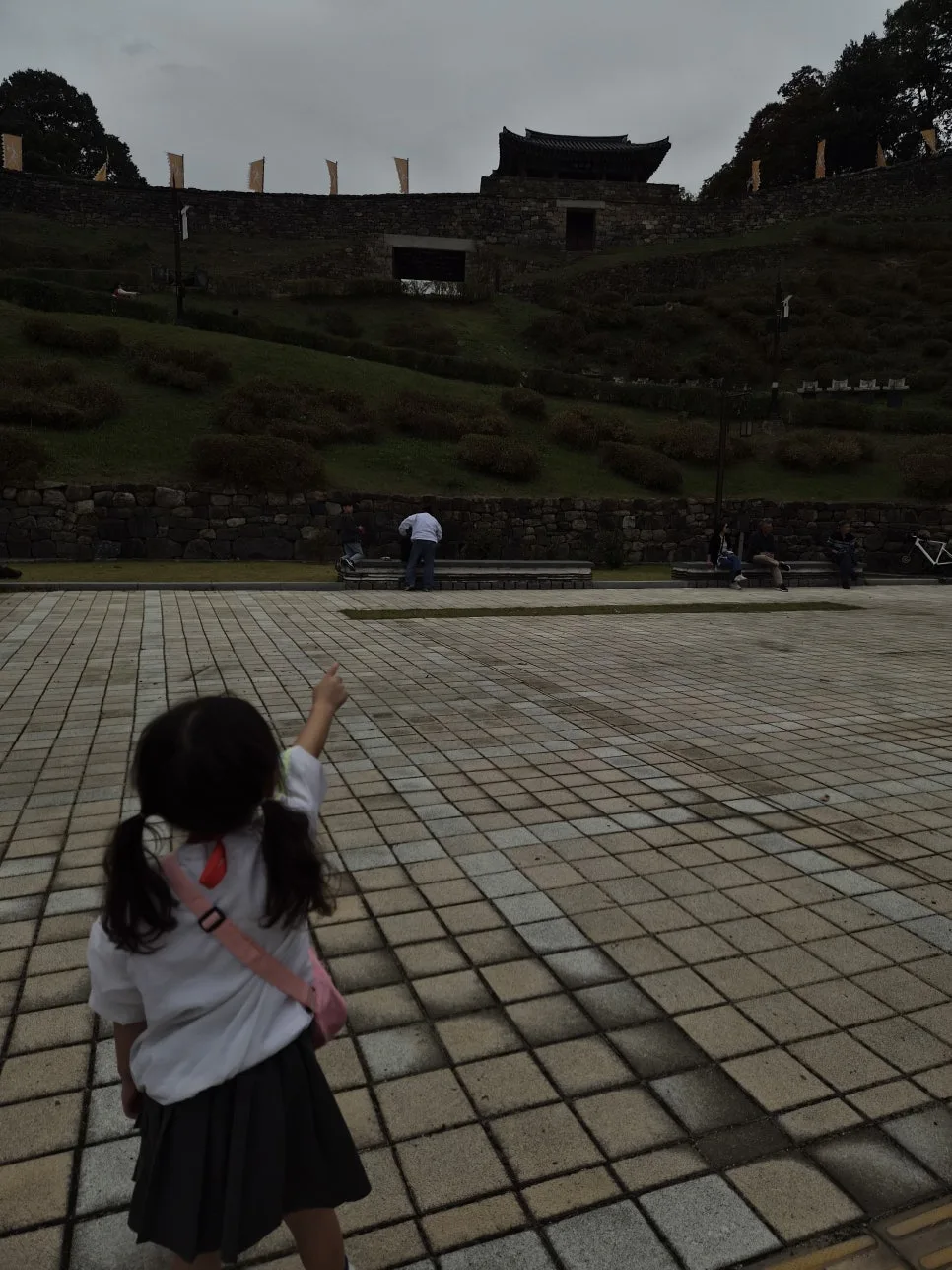
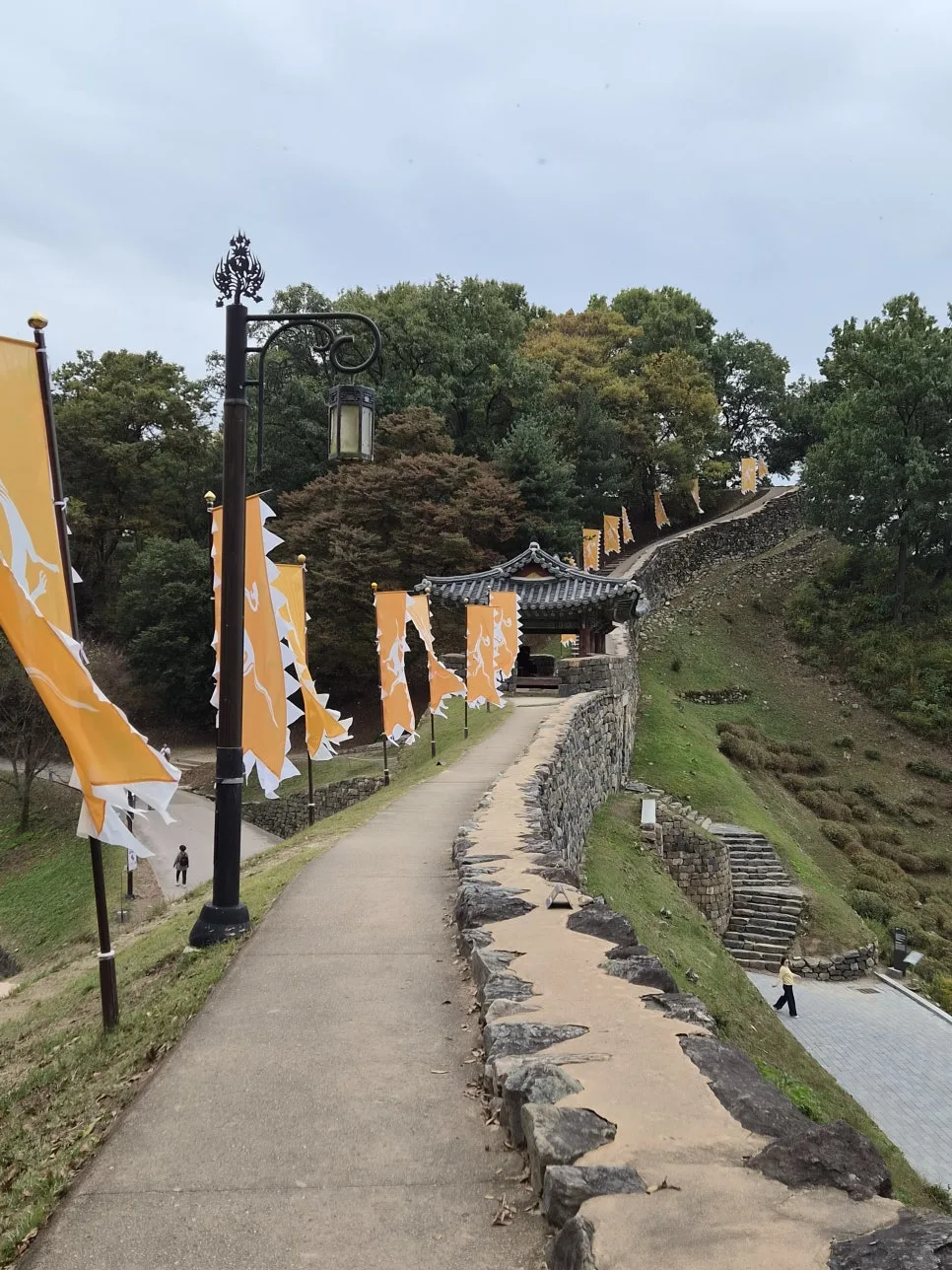
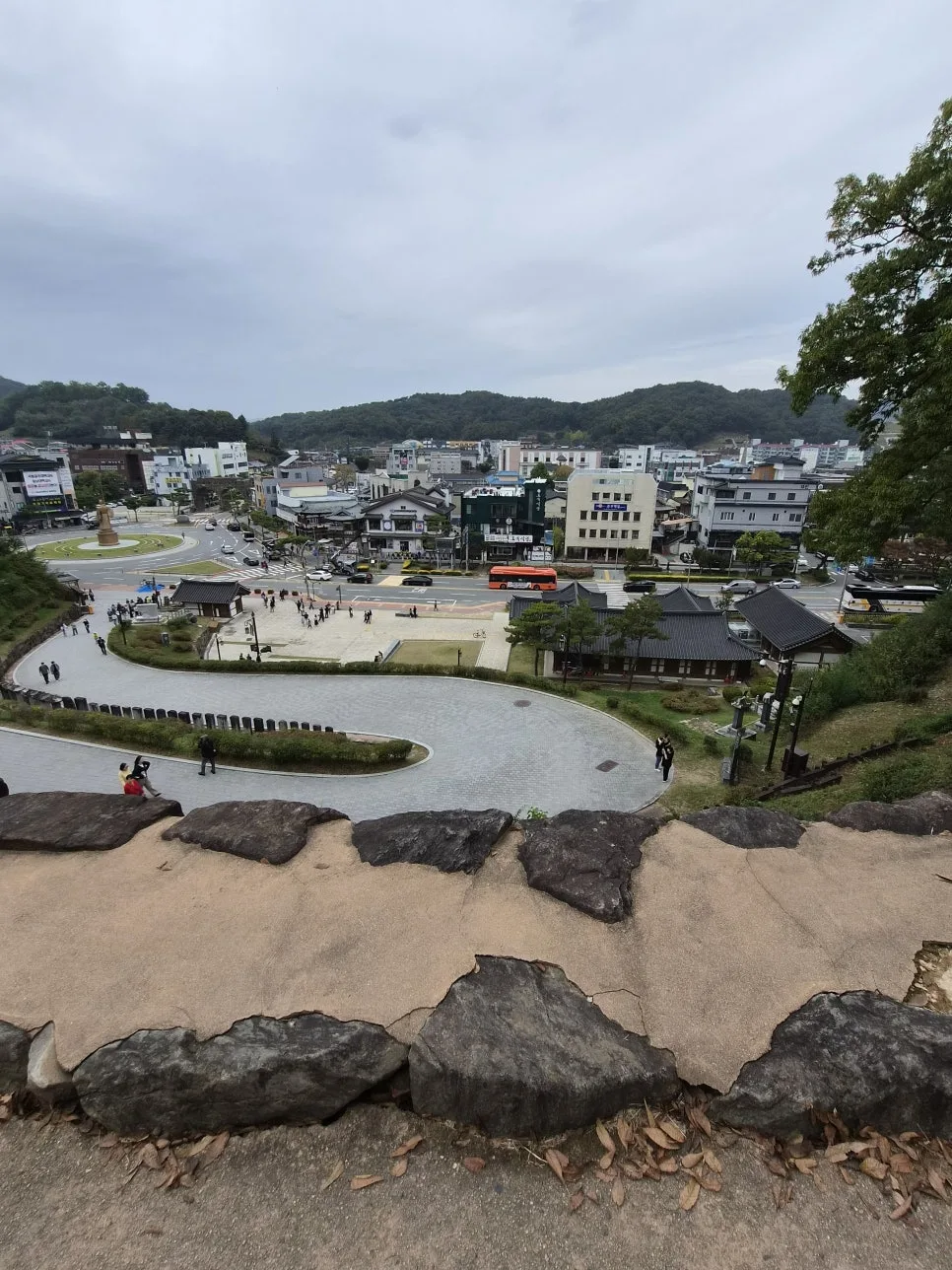
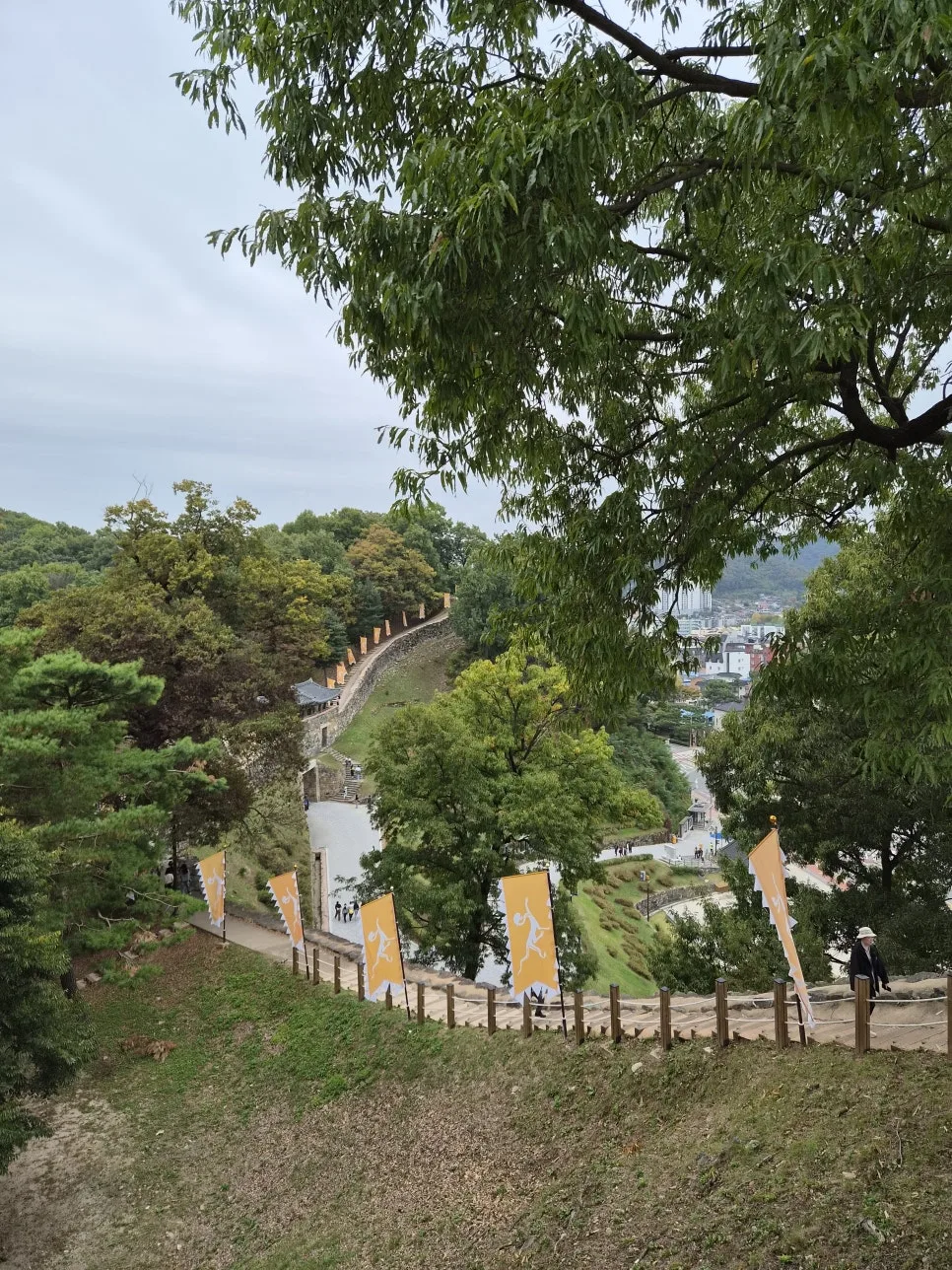
Our next stop was Gongsanseong Fortress.
This former royal fortress from Baekje’s Ungjin period is part of the UNESCO-listed Baekje Historic Areas.
One of its biggest draws is walking along the fortress walls and looking out over Gongju and the Geumgang River.
The wide-open views were refreshing—and lovely for photos.
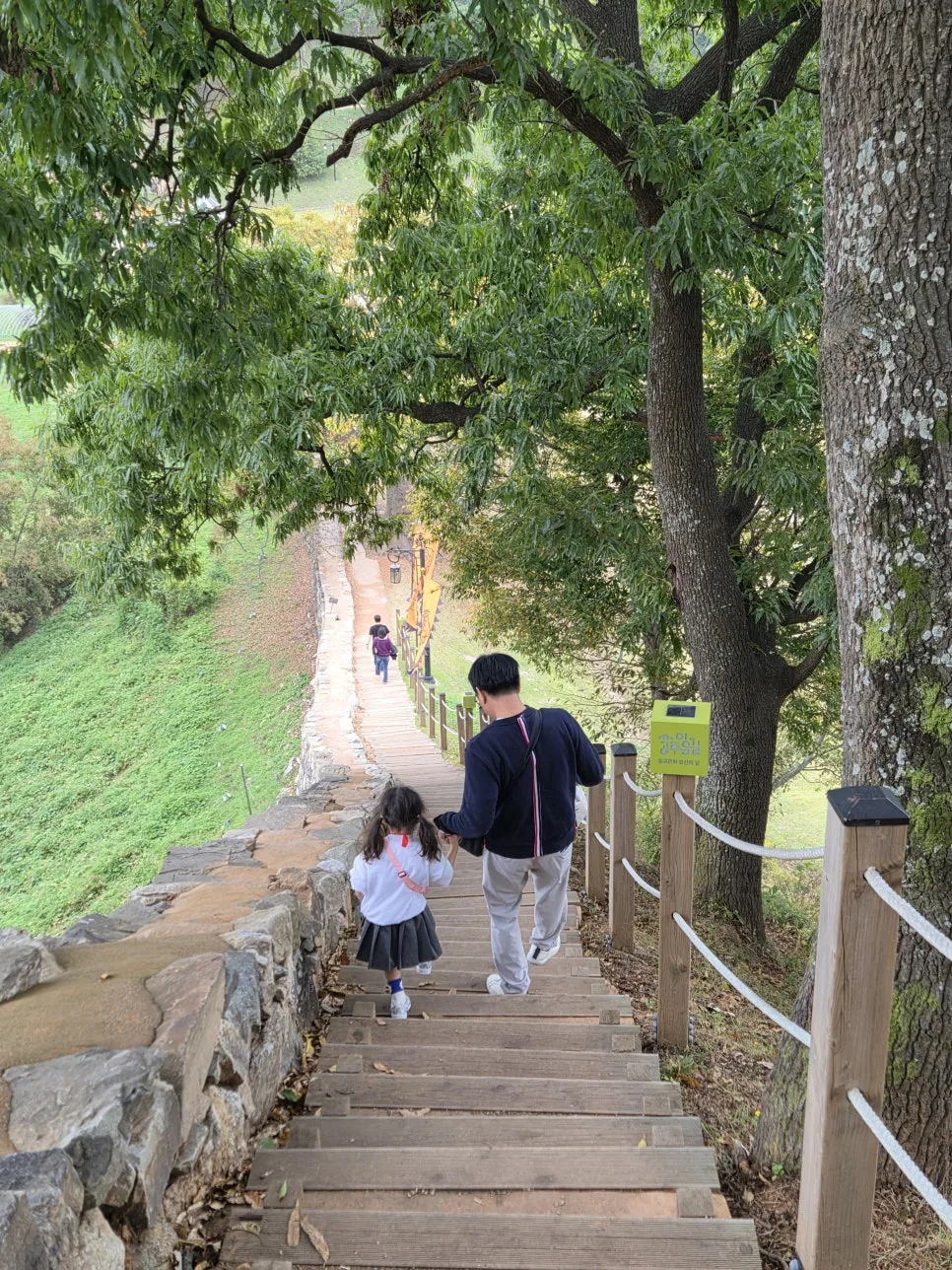
Some sections have stairs and sloping paths, though,
and our child started getting a little tired.
Rather than pushing on,
we slowed down and explored at an easy pace.
For lunch,
we went to Anakneui Milga, a restaurant I’d found while searching for places to eat near Gongsanseong Fortress.
We came for yukhoe bibimbap, rice topped with seasoned raw beef, but fell in love with the kongguksu—noodles in chilled soy milk broth.
The yukhoe bibimbap was delicious, too, of course.
You can read the full restaurant review in the post below.
https://blog.naver.com/jiy0_mond/224448265155
(3) Tomb of King Muryeong and Royal Tombs
Including an Exhibition Hall With a Re-Created Tomb Interior
37 Wangneung-ro, Gongju, Chungcheongnam-do, South Korea
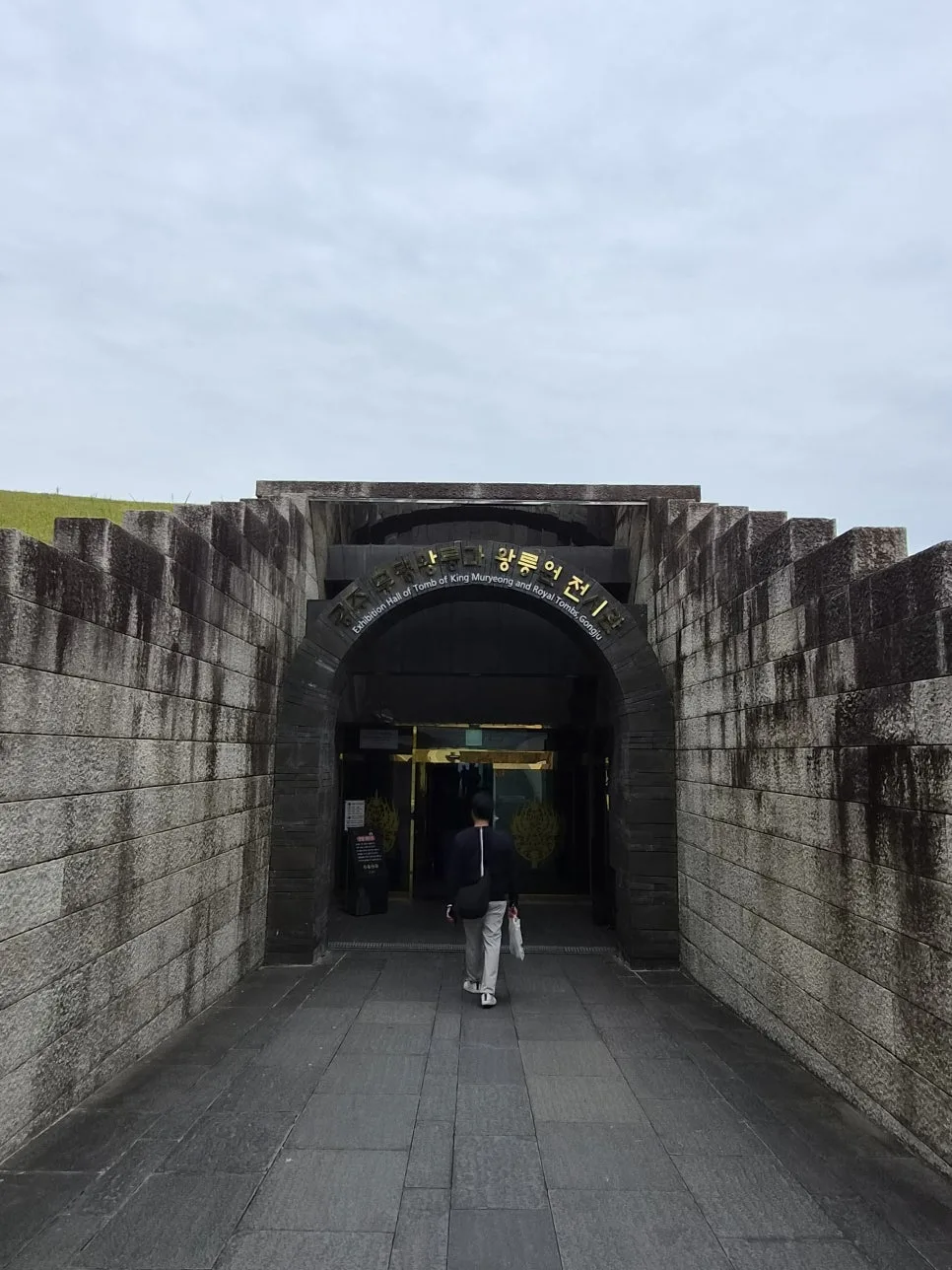
After lunch, we headed to the Tomb of King Muryeong and Royal Tombs.
Discovered in 1971, this is the burial place of King Muryeong, Baekje’s 25th king, and his queen.
Having already seen the treasures excavated here at Gongju National Museum, I was especially looking forward to this stop.
Inside the Tomb of King Muryeong
The actual tomb interior is closed to the public to protect the historic site,
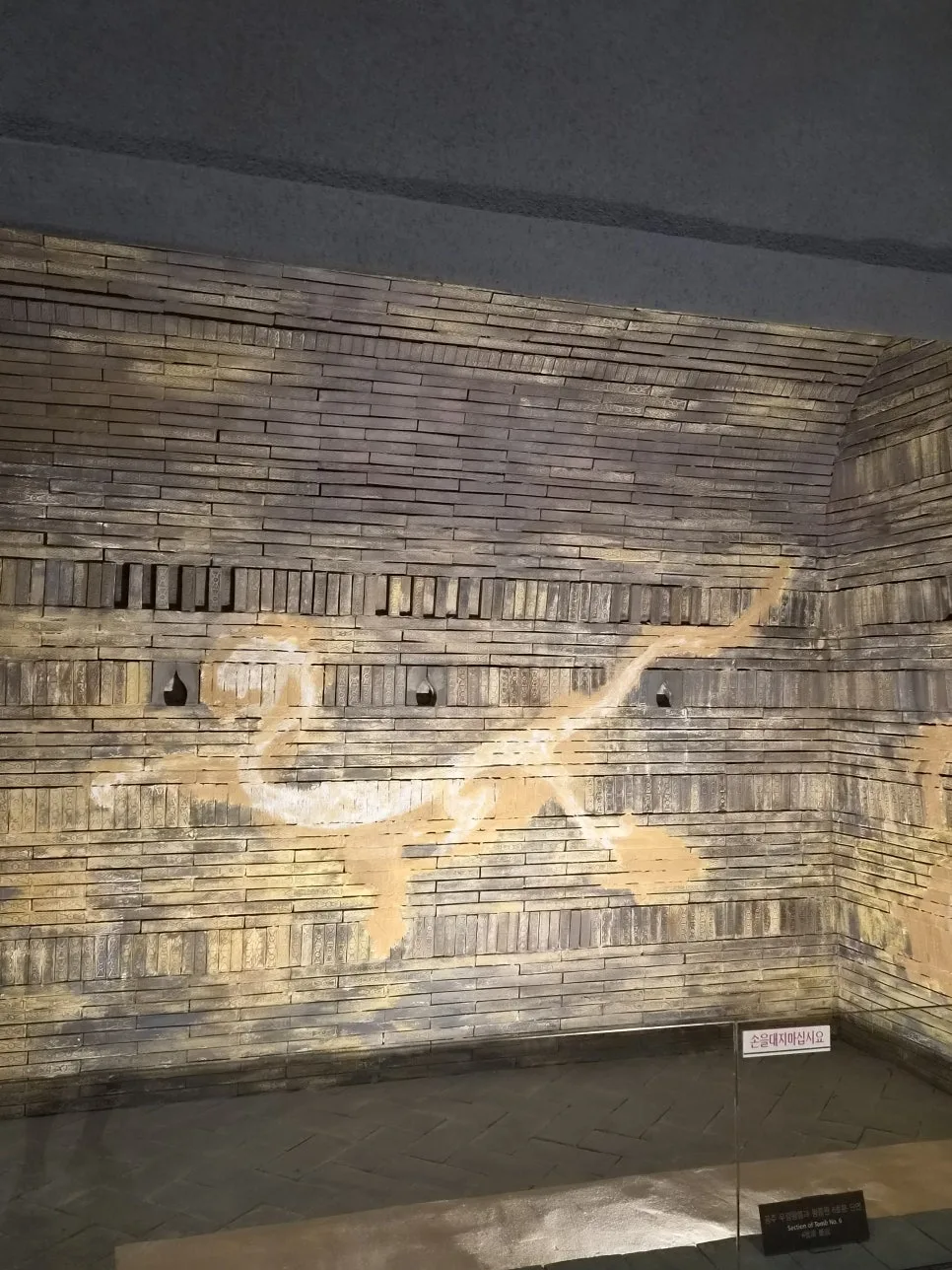
but the exhibition hall has a re-created interior you can visit instead.
The tomb’s carefully laid brickwork was particularly impressive.
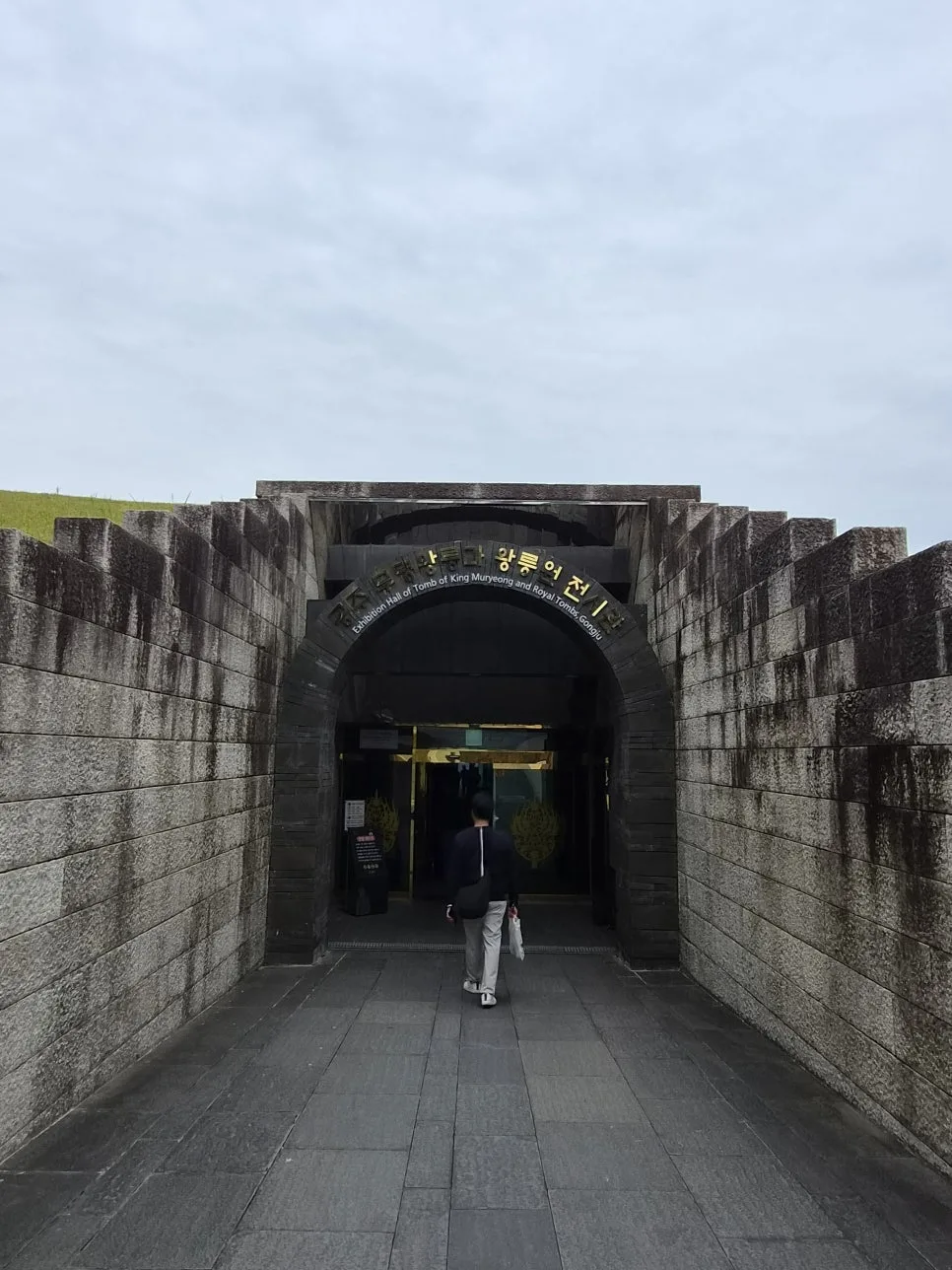
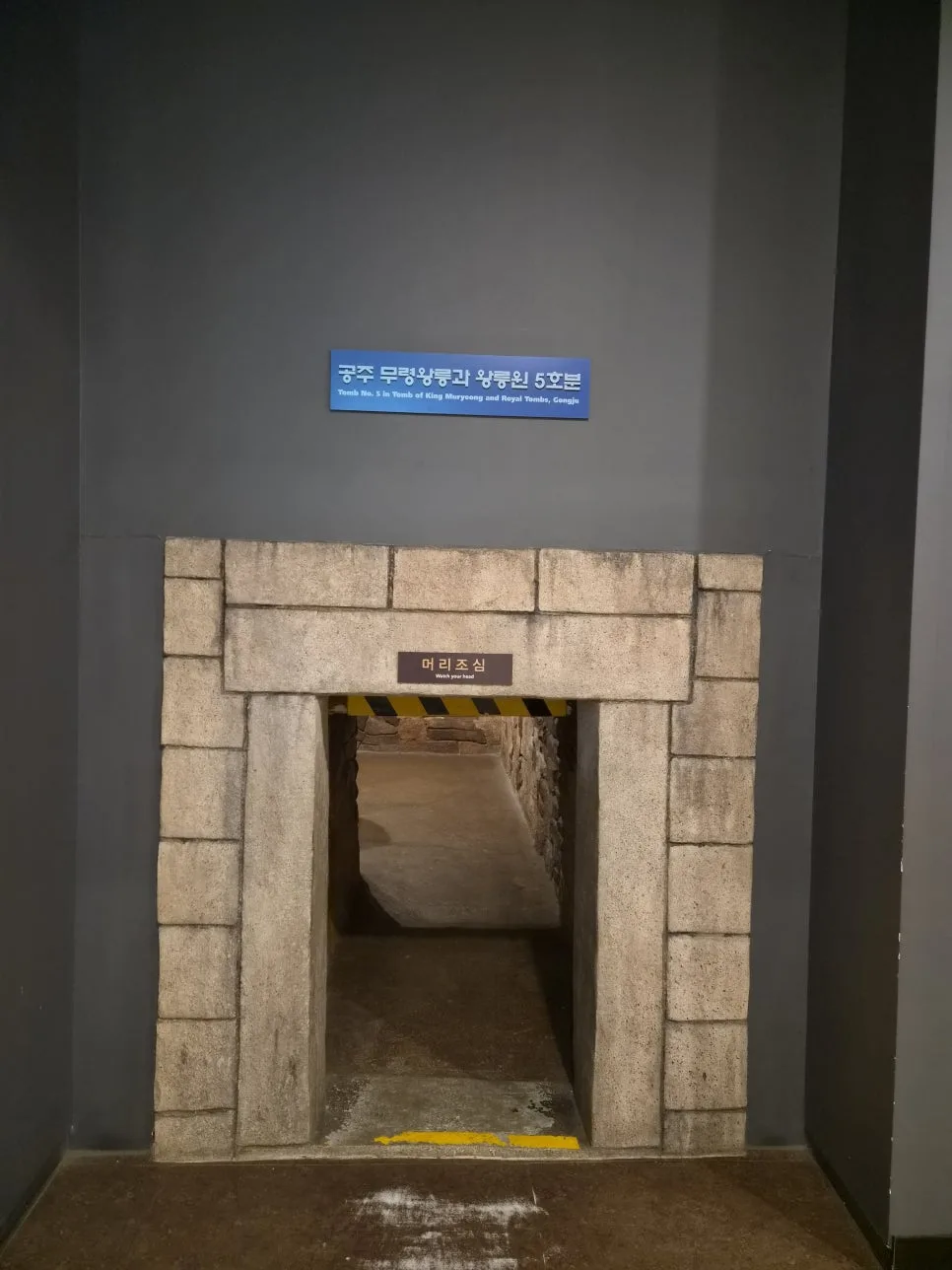
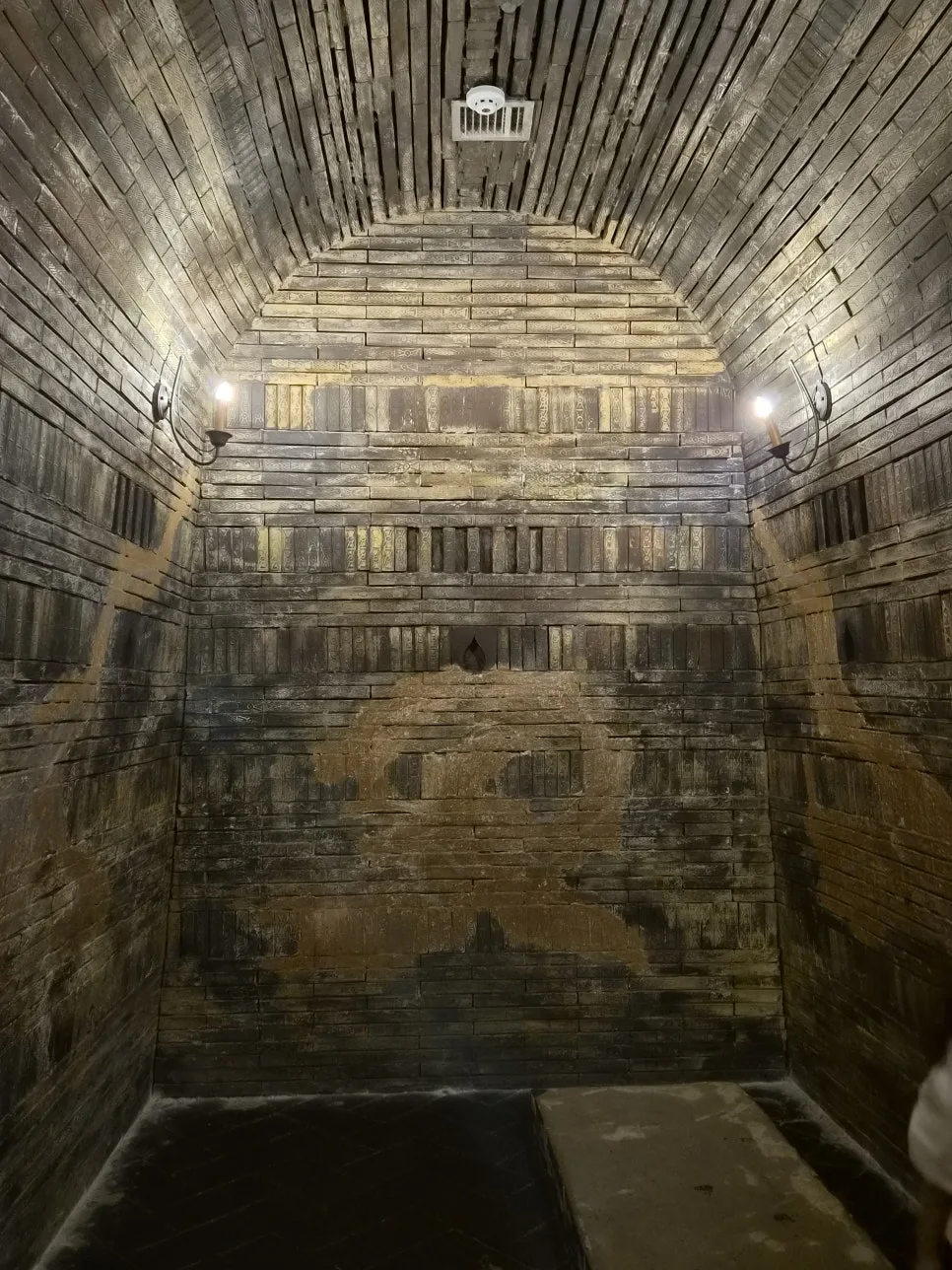
It’s amazing to think that people built something so precise without the advanced equipment we have today.
Knowing that the artifacts we’d just seen at the museum had come from this very place made Baekje’s history feel much more tangible.
An Unexpected Discovery on Our Walk
After visiting the exhibition hall, we walked around the royal tomb grounds.
With pine trees scattered among the burial mounds, it was a lovely place for a stroll.
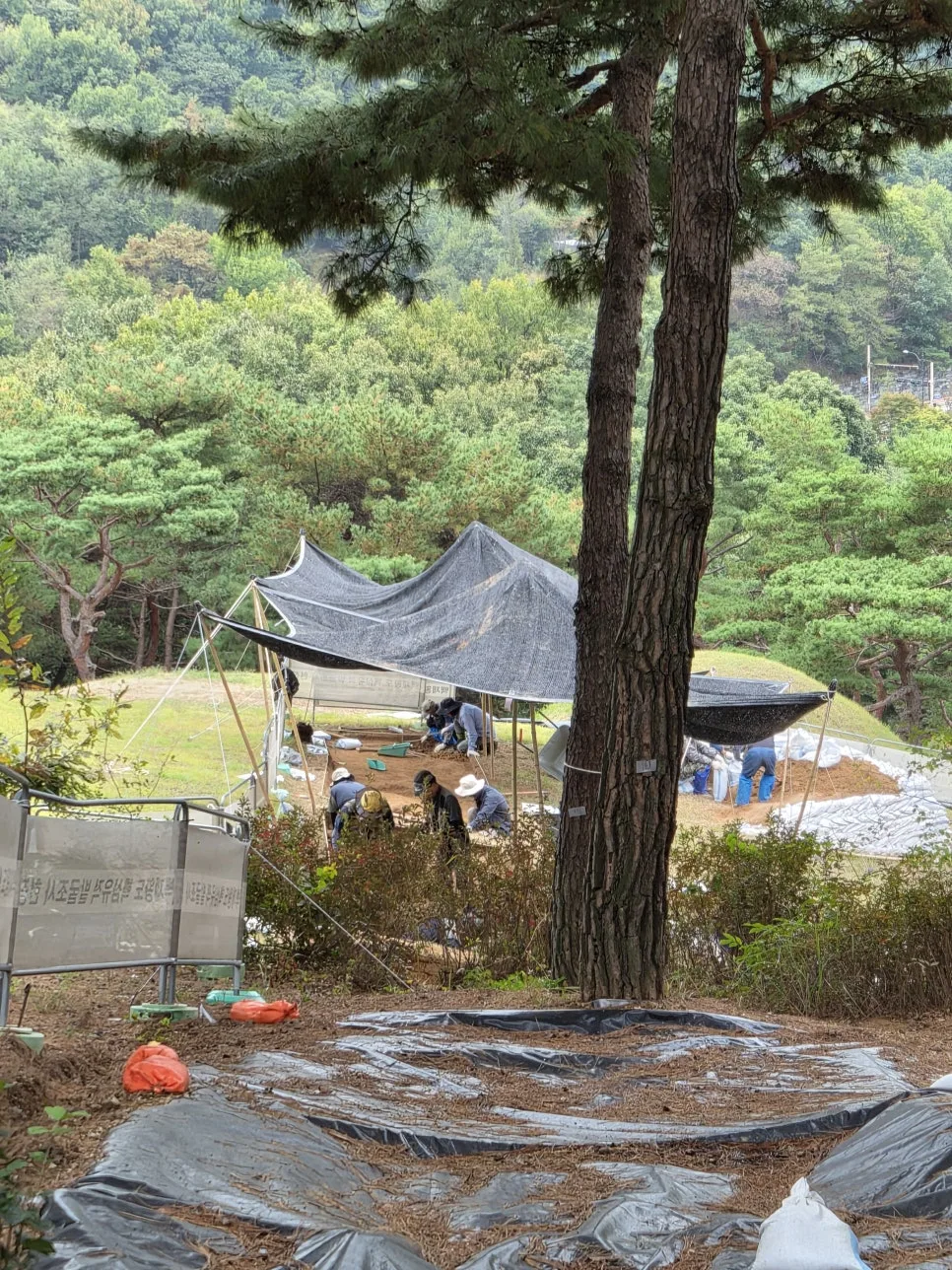
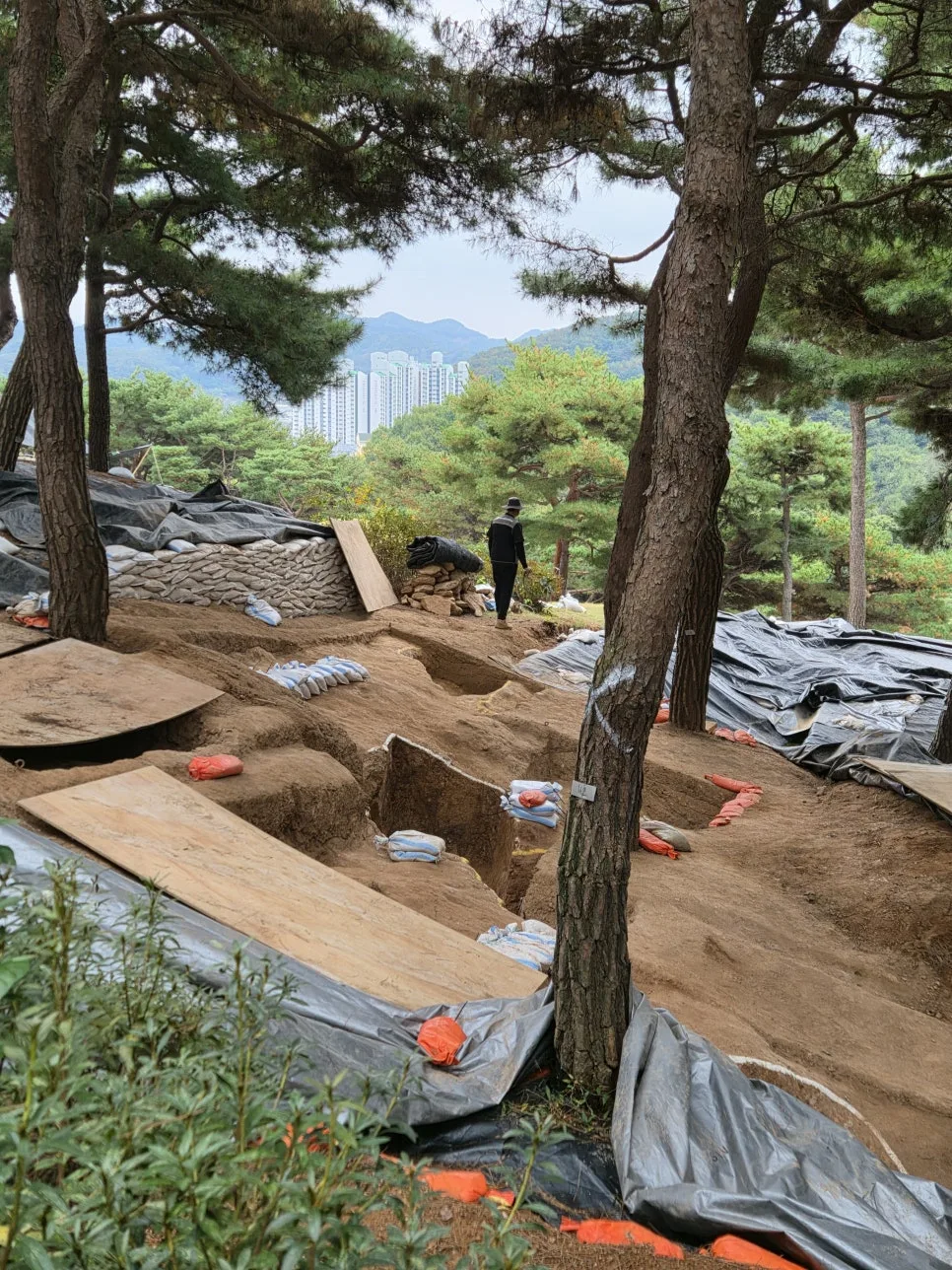
Along the way, we noticed an excavated patch of ground covered with tarps and sandbags.
I caught part of a staff member’s explanation as we passed,
including a mention that shoes had been found in the dug-out area.
It made me wonder whether artifacts were still being uncovered here.
It looked like a site connected with excavation, conservation, or maintenance work,
though I don’t know exactly what was underway.
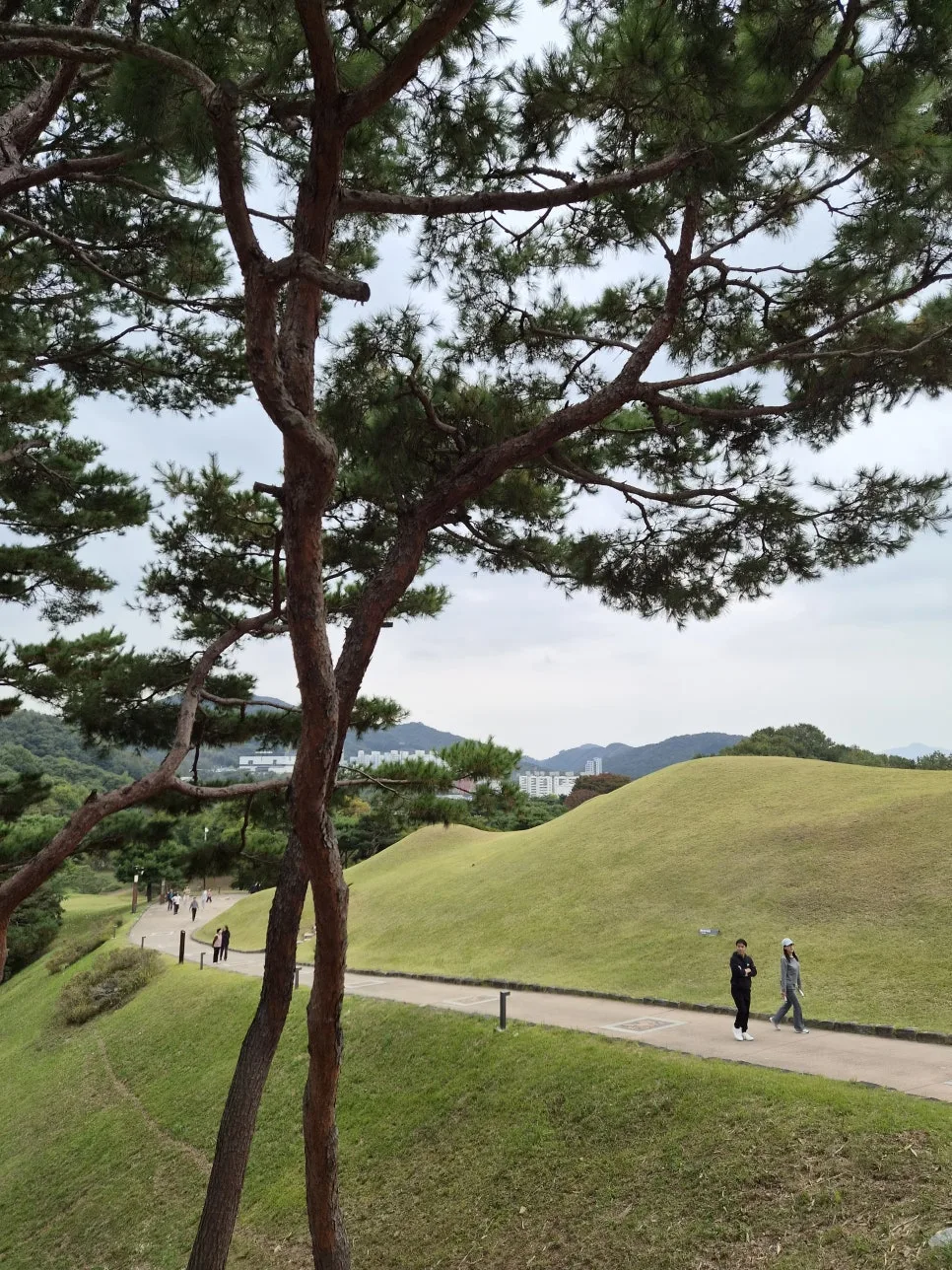
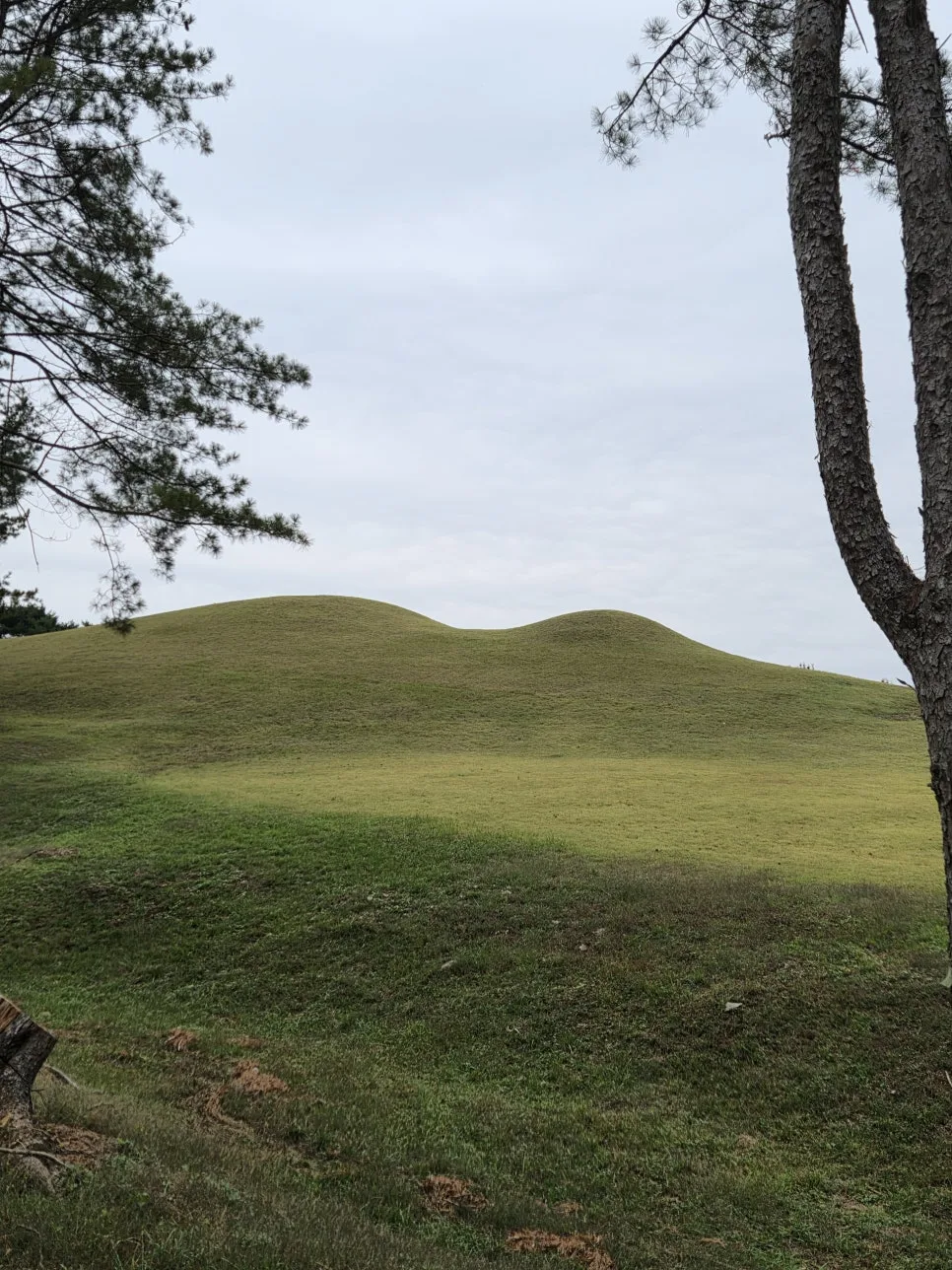
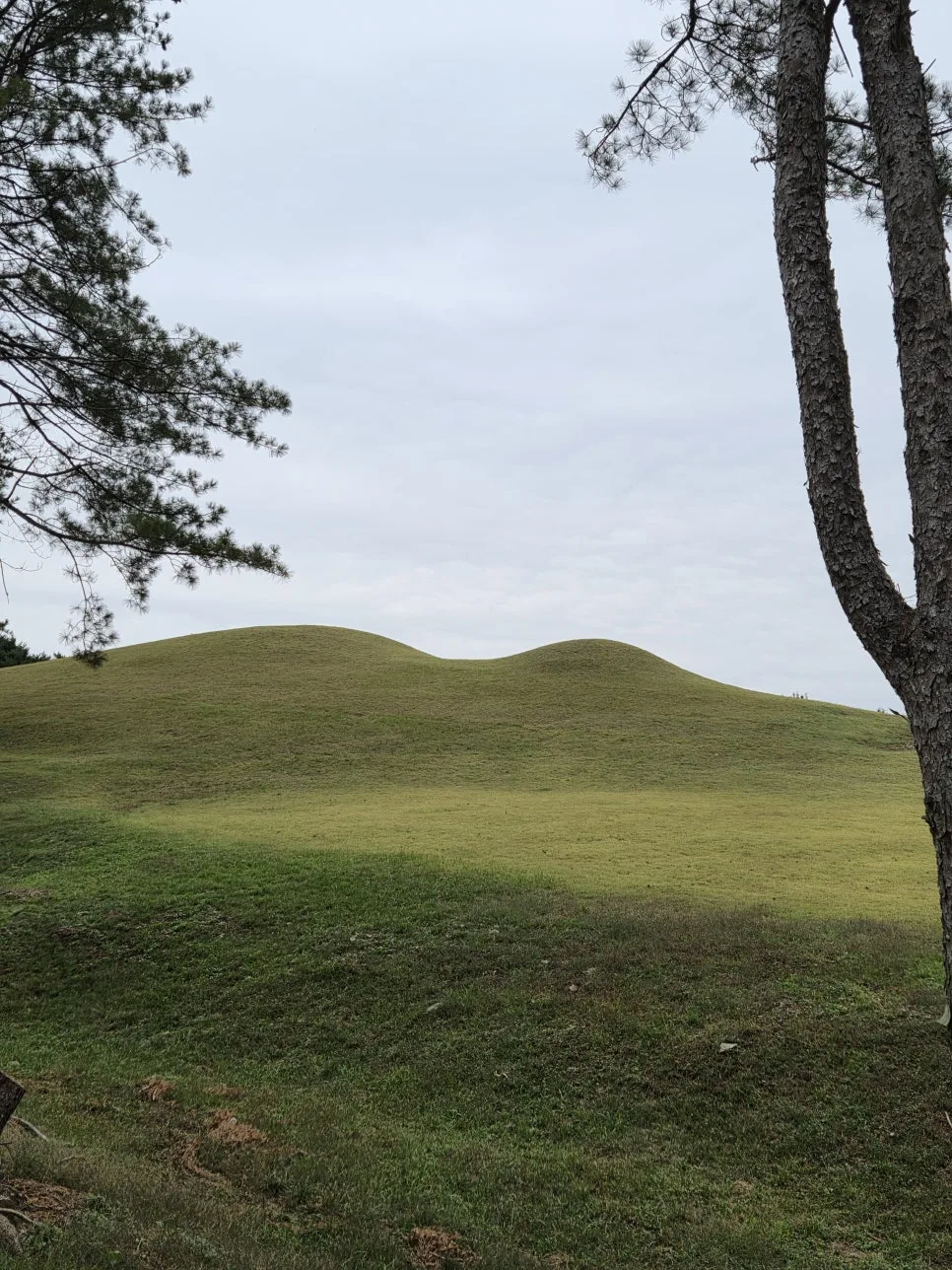
We finished our loop around the Tomb of King Muryeong with our child.
Visiting Gongju National Museum and the tomb together helped us connect the history,
and the two stops worked well in our itinerary.
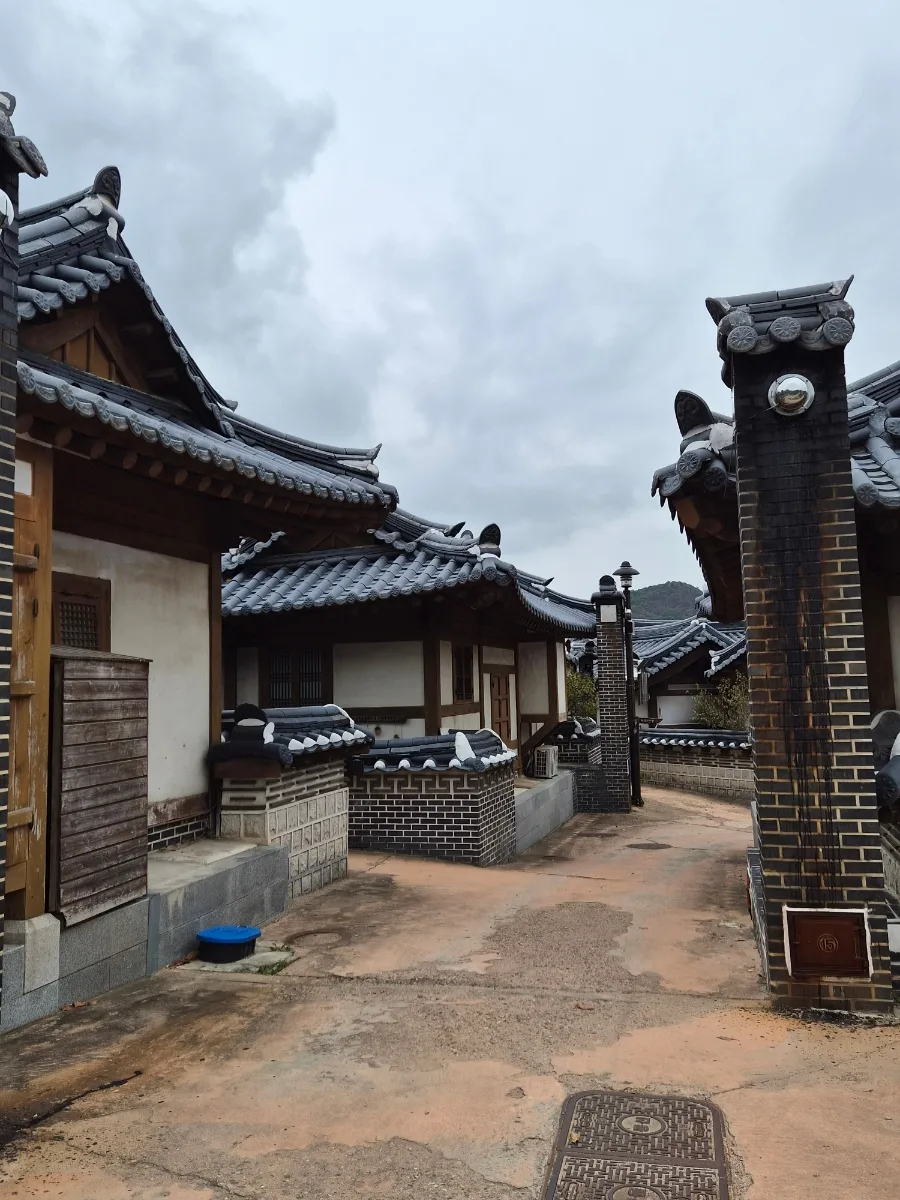
Gongju Hanok Village
12 Gwangwangdanji-gil, Gongju, Chungcheongnam-do, South Korea
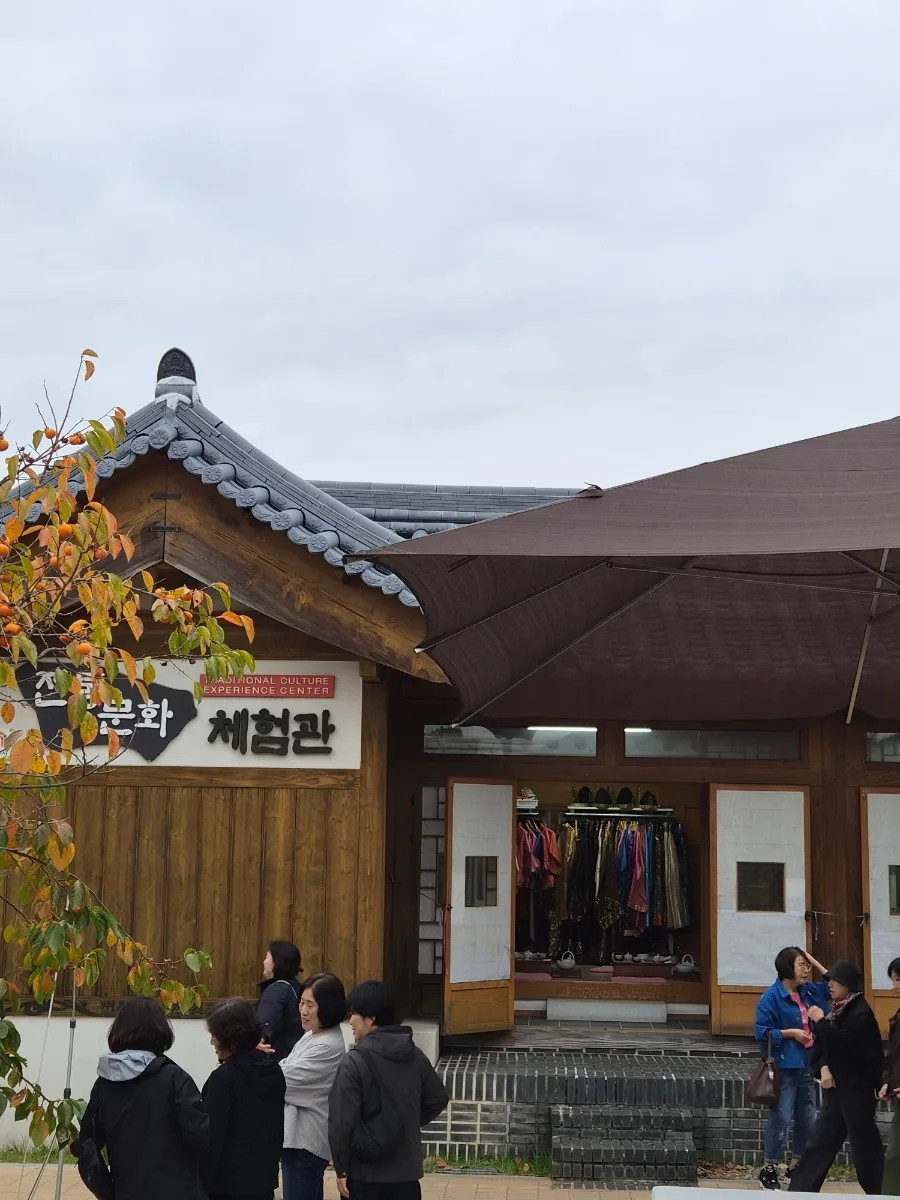
Our final stop of the day was check-in at Gongju Hanok Village.
Instead of a conventional hotel, we’d decided to spend the night in a hanok, a traditional Korean house.
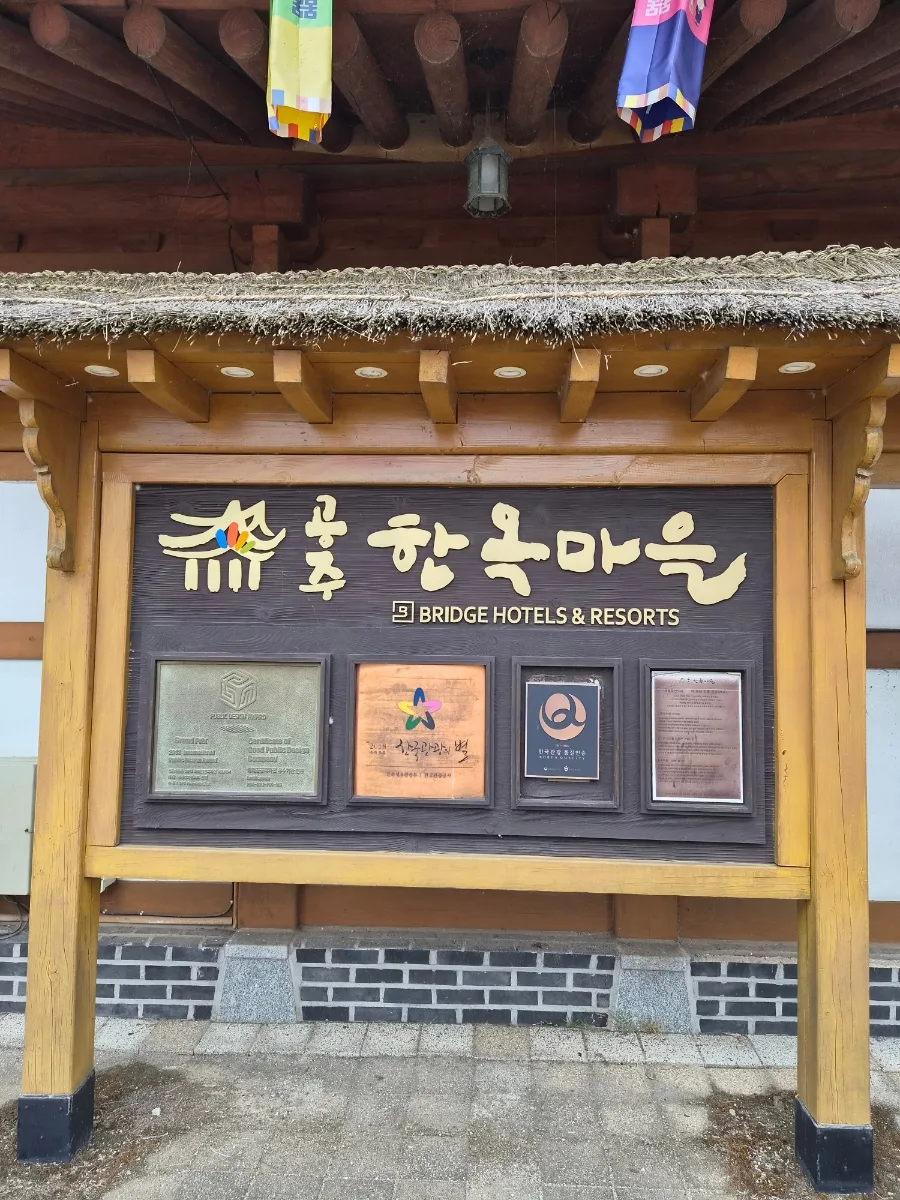
Our child wasn’t really familiar with hanok,
so this traditional-style accommodation seemed especially intriguing.
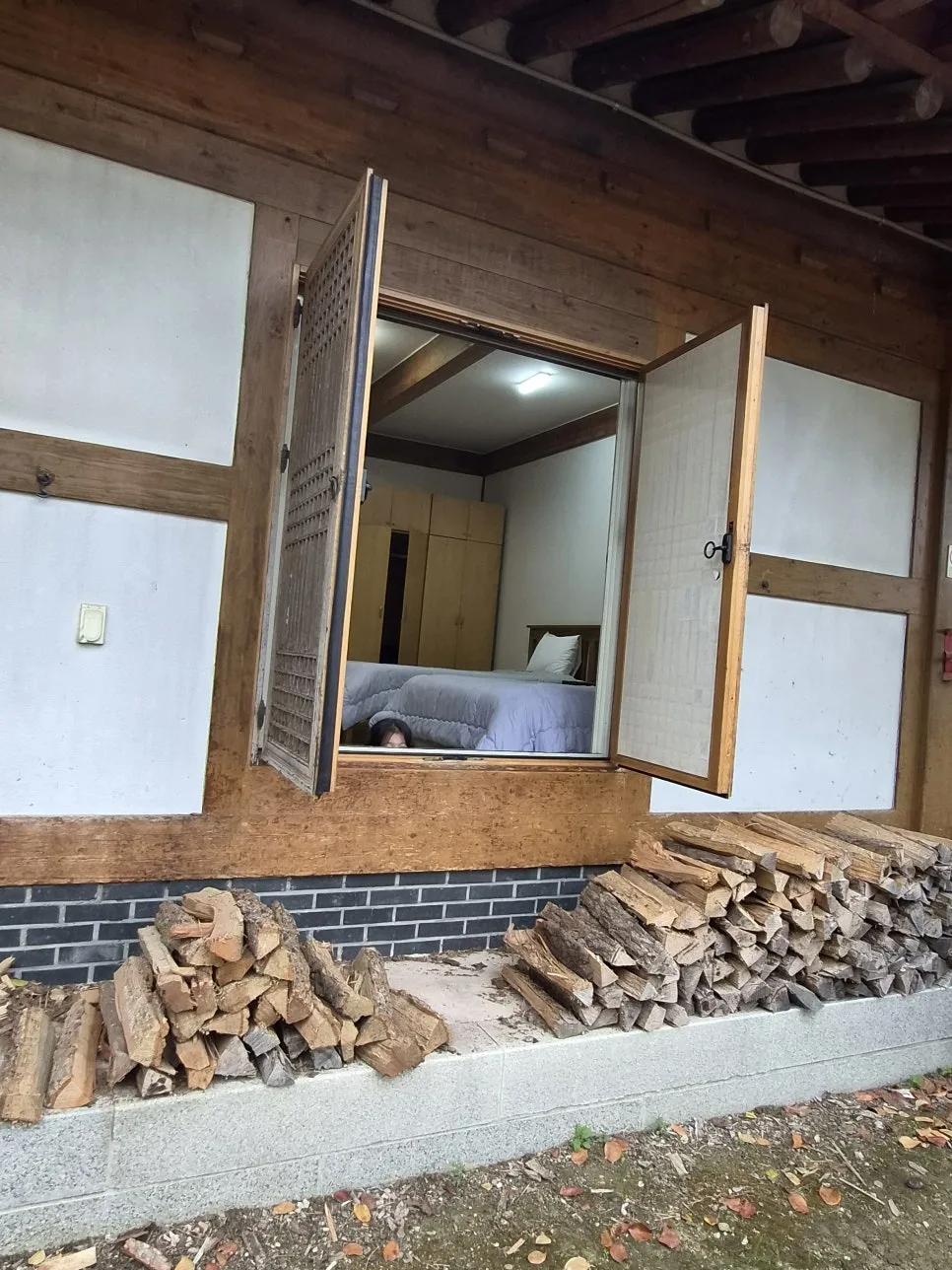
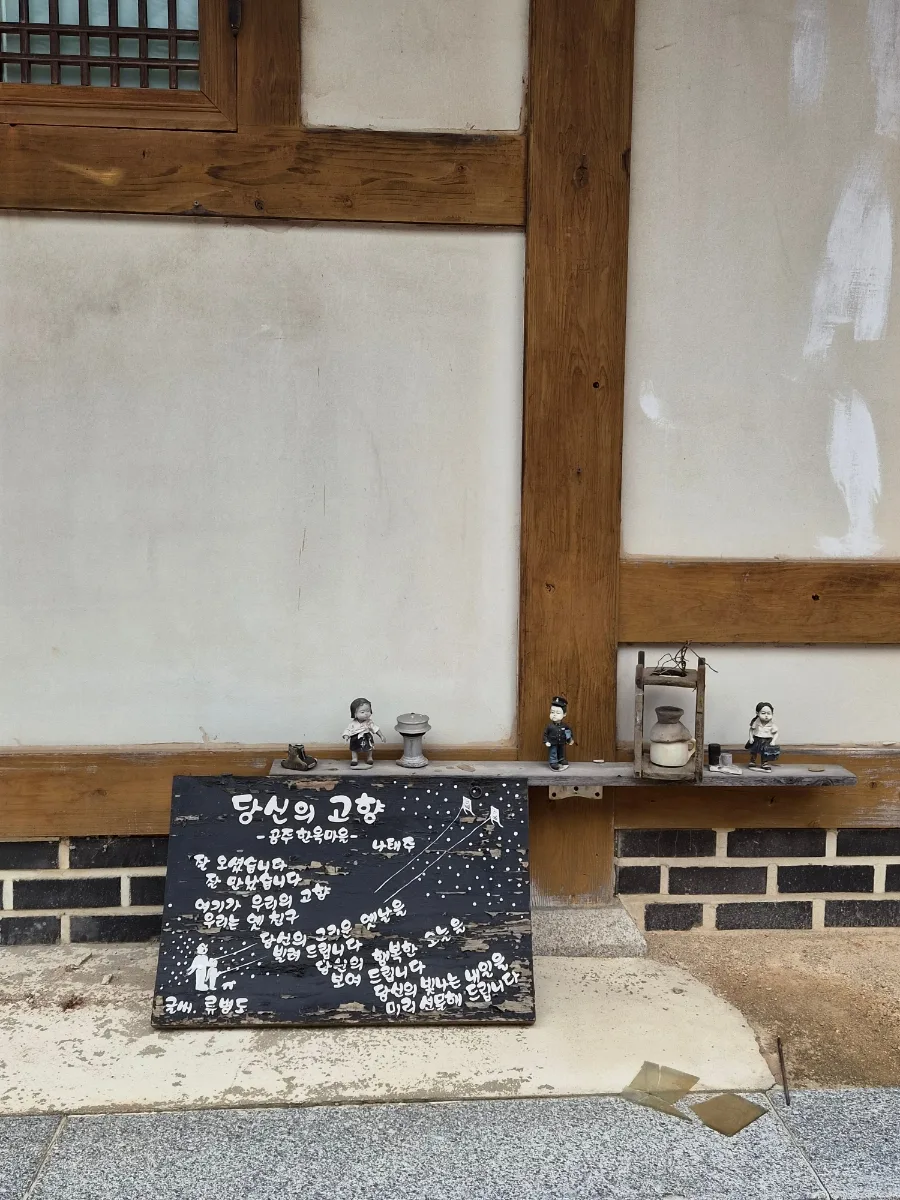
We stayed in Narugwan.
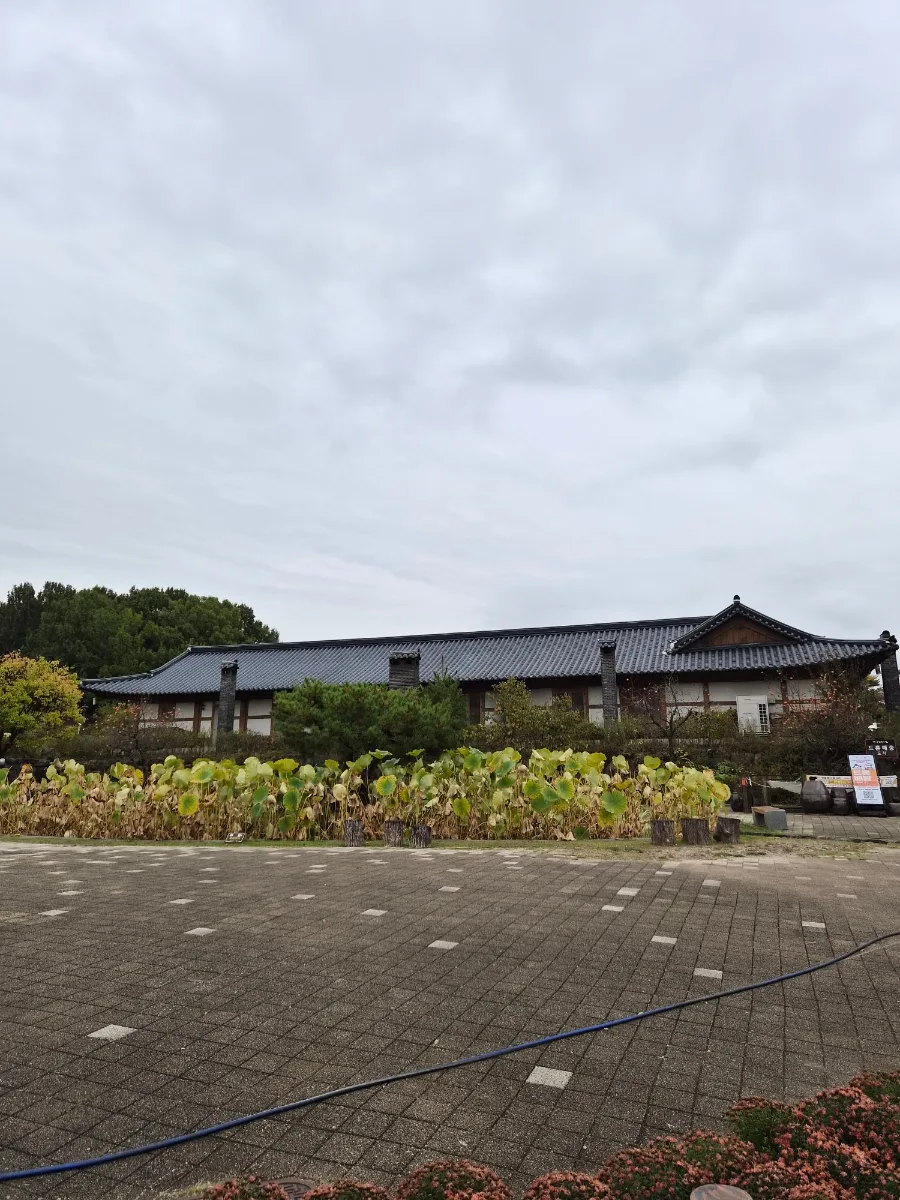
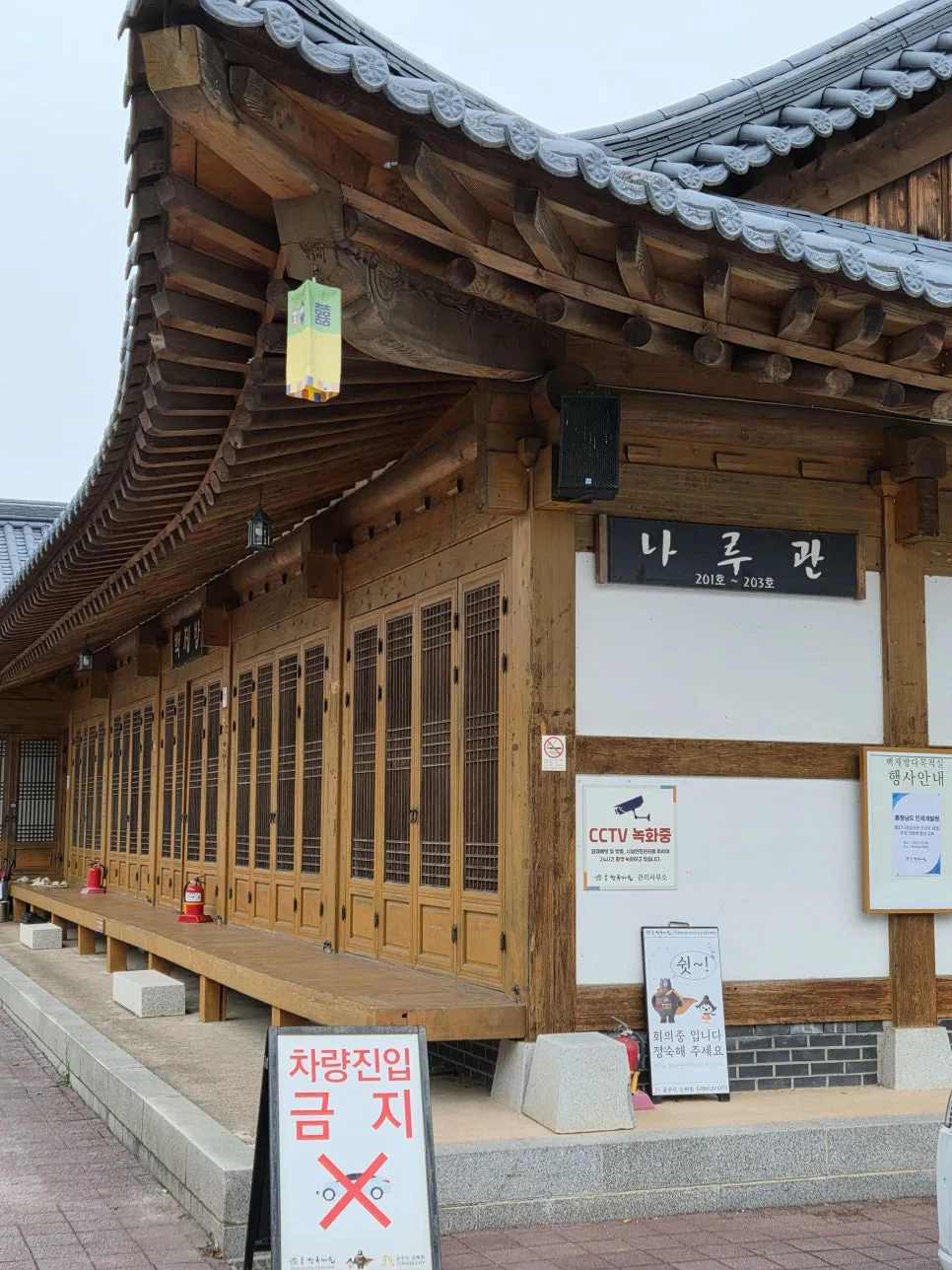
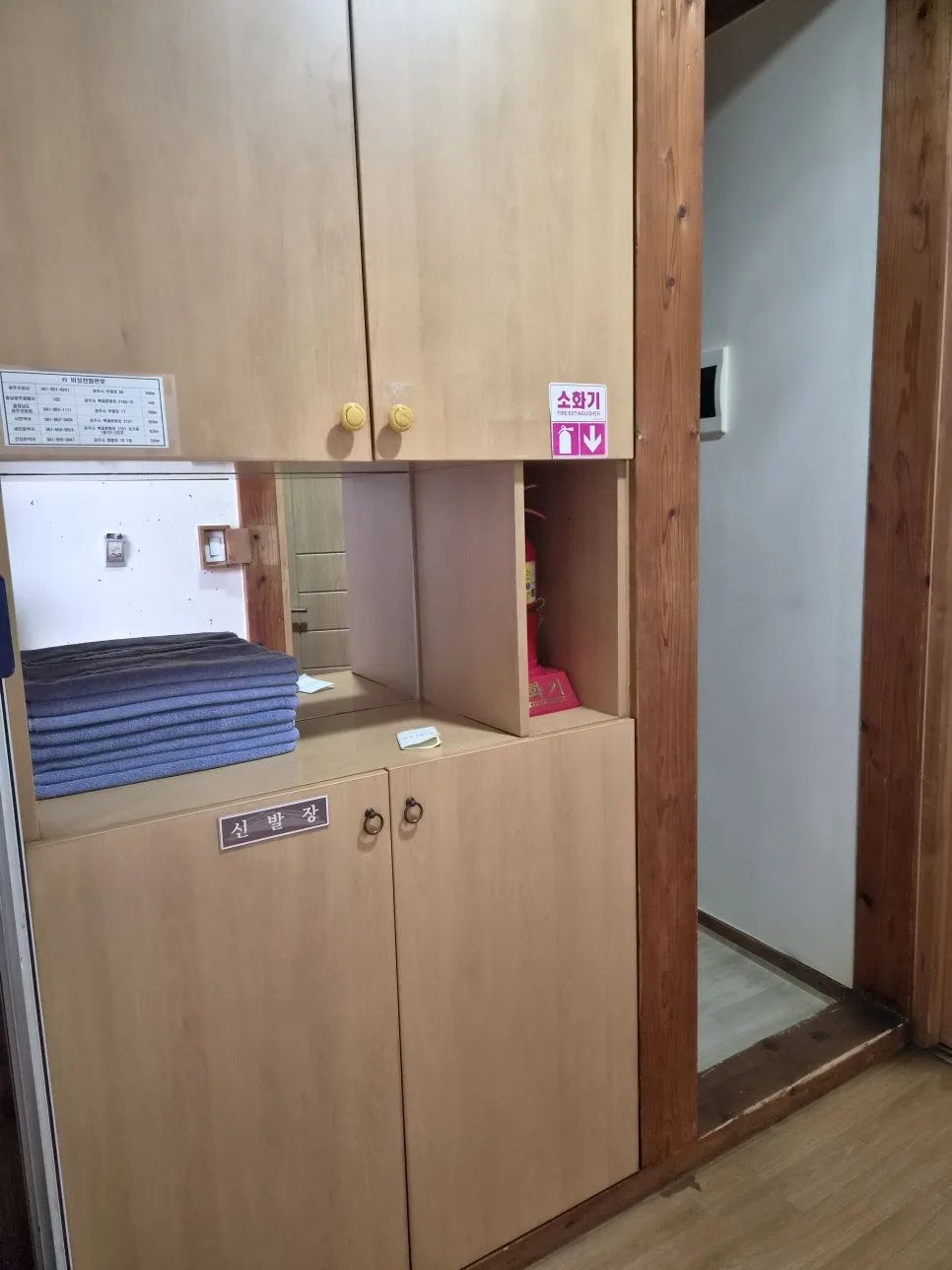
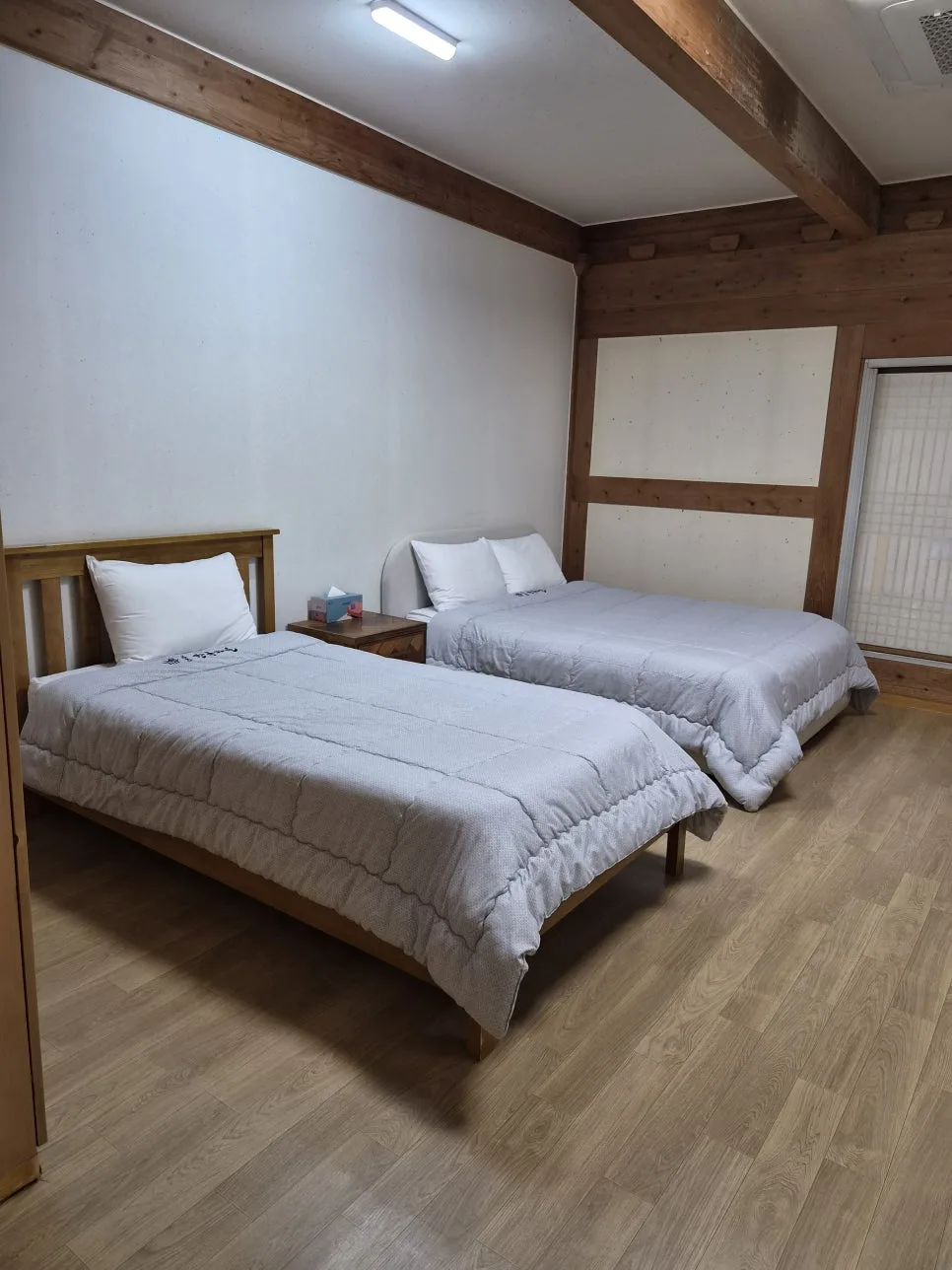
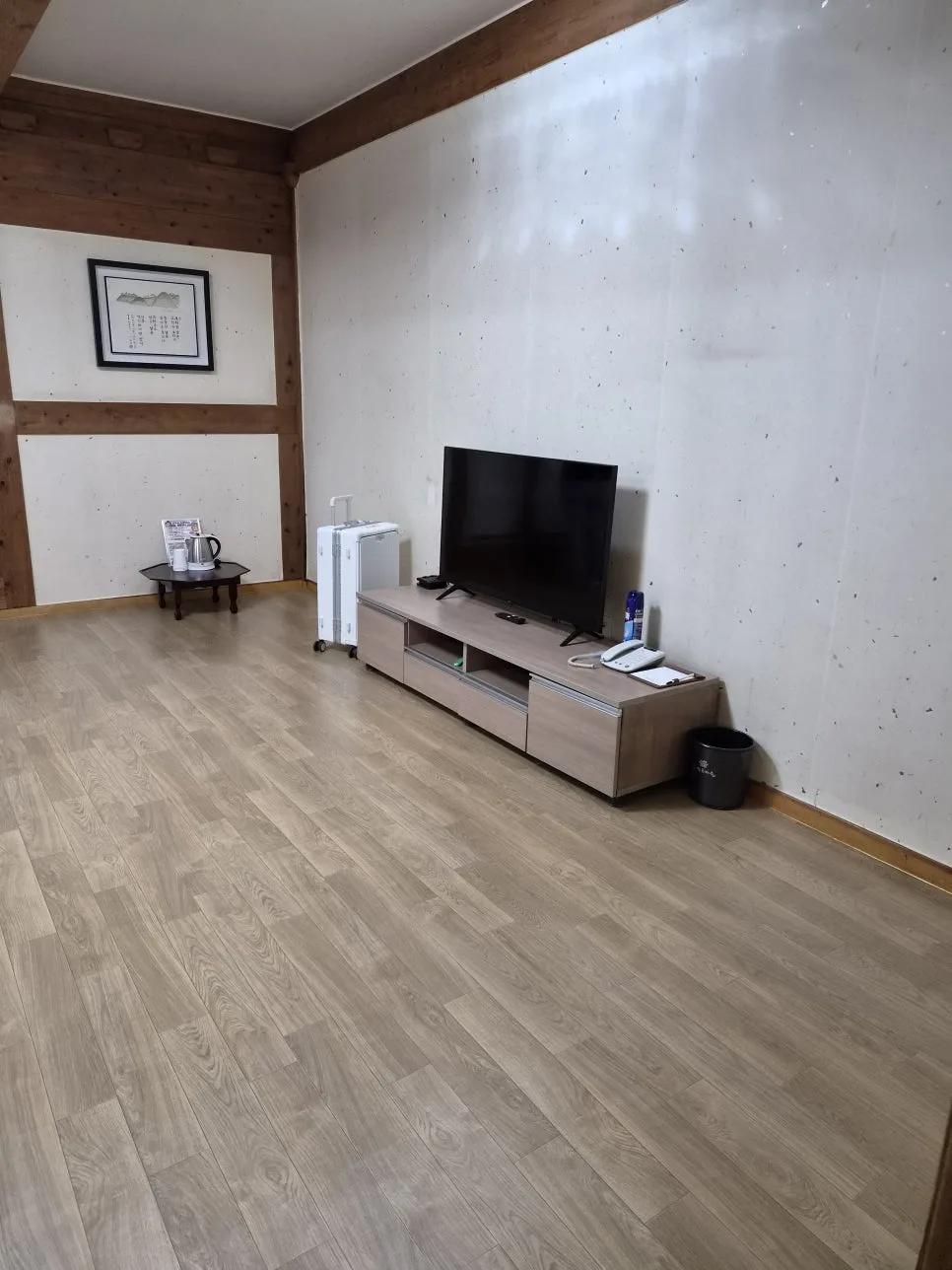
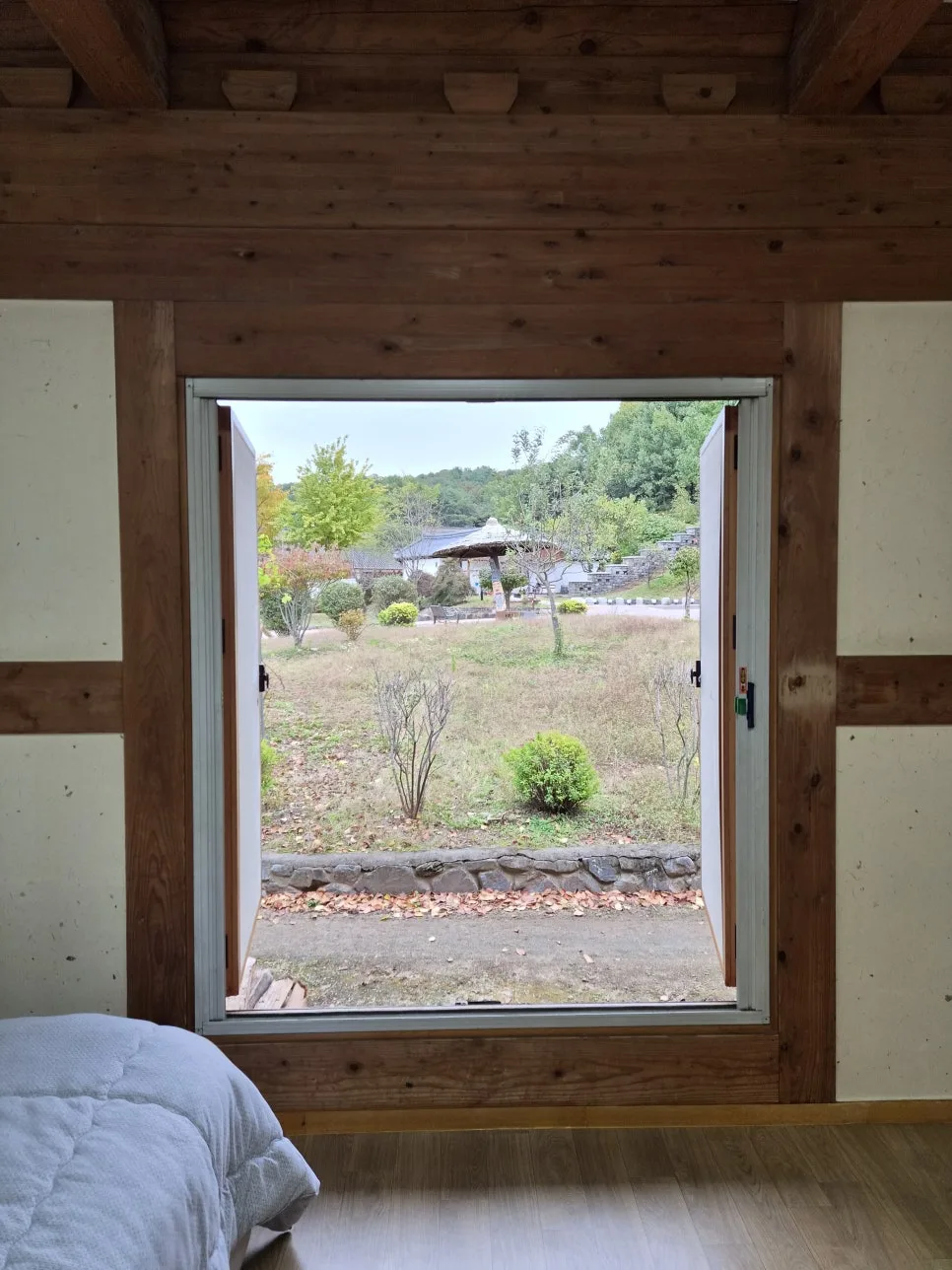
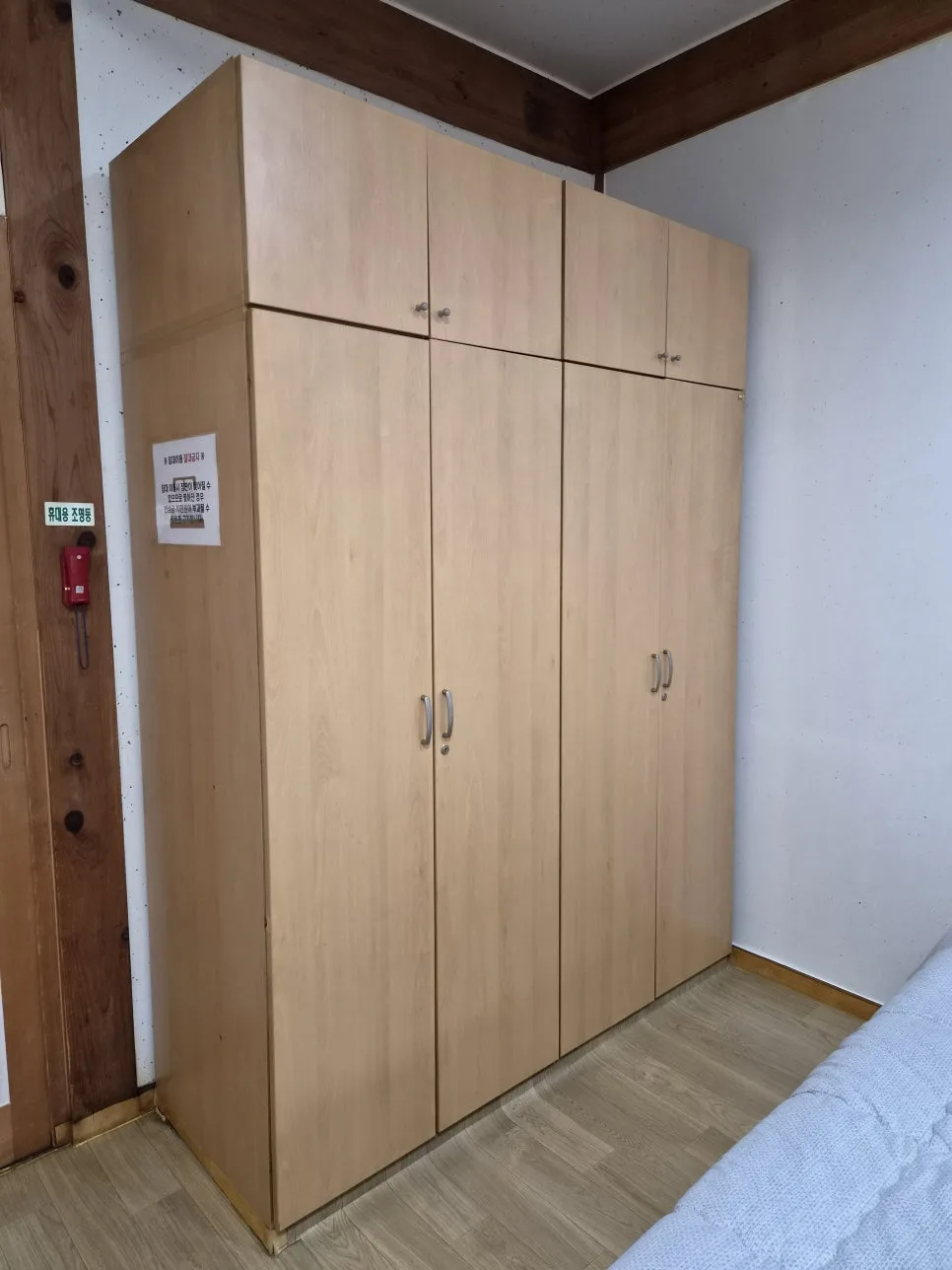
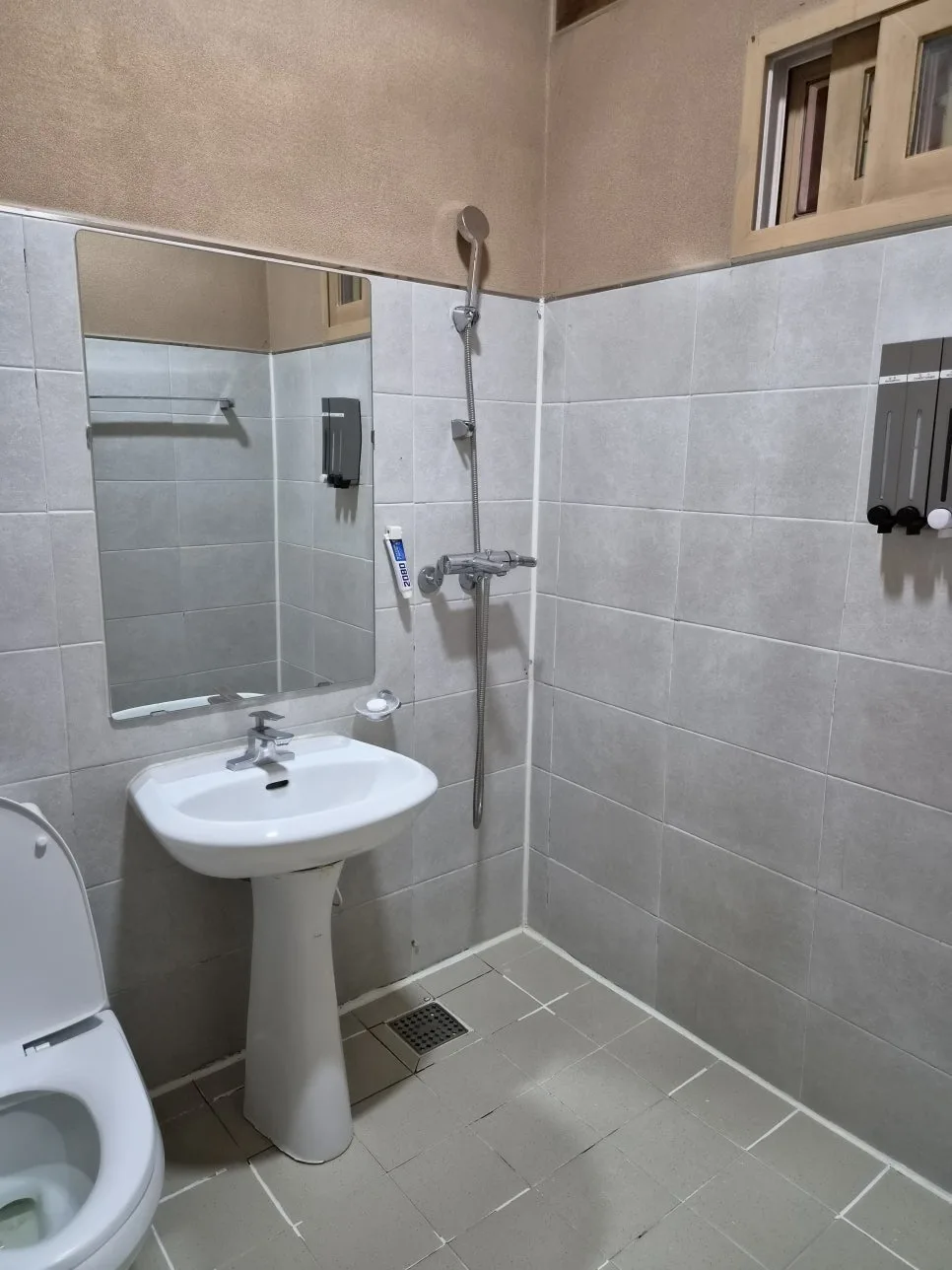
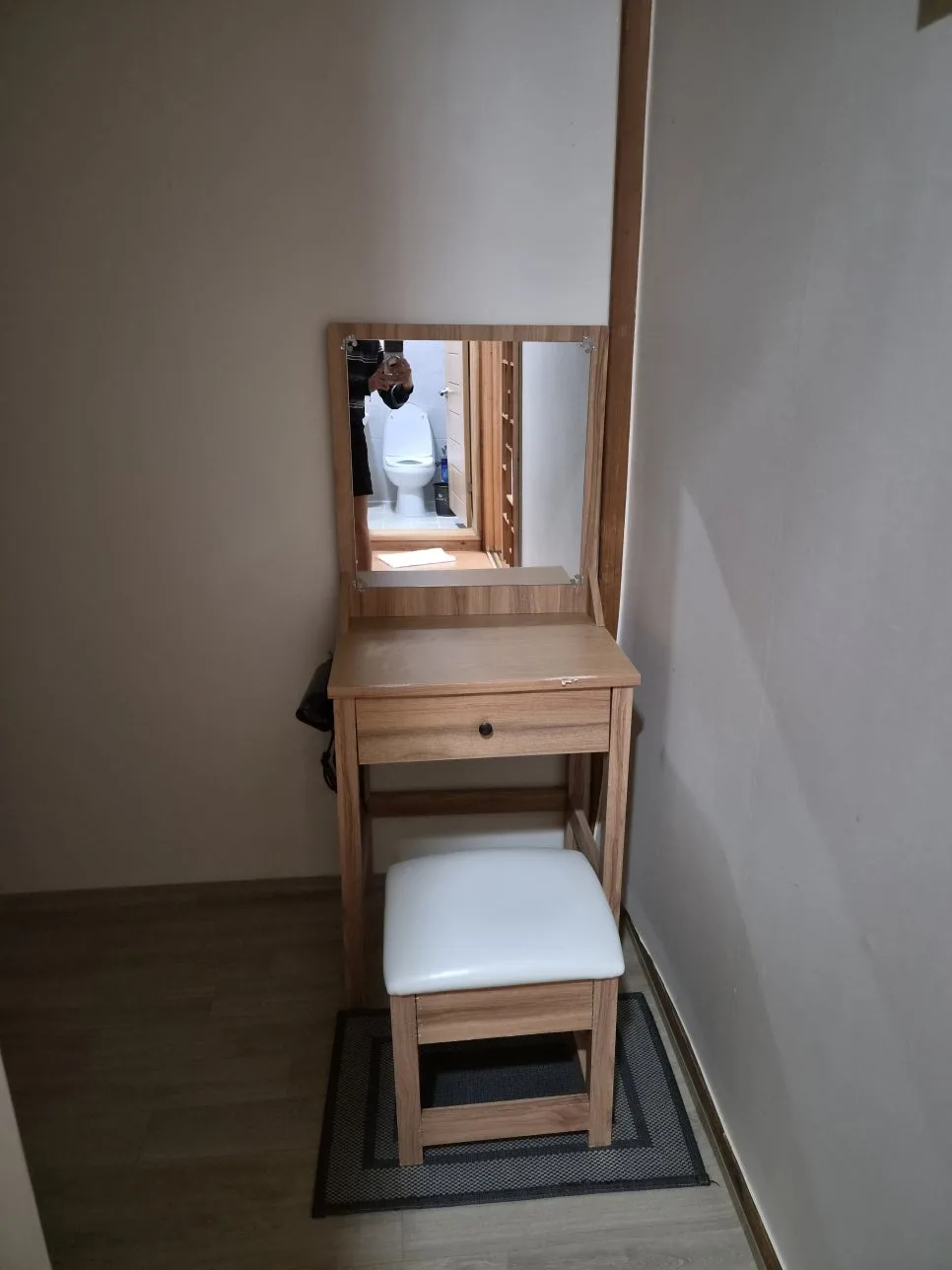
I loved the atmosphere of the hanok, but the most memorable feature was the traditional, wood-fired gudeul floor heating.That was quite an experience.
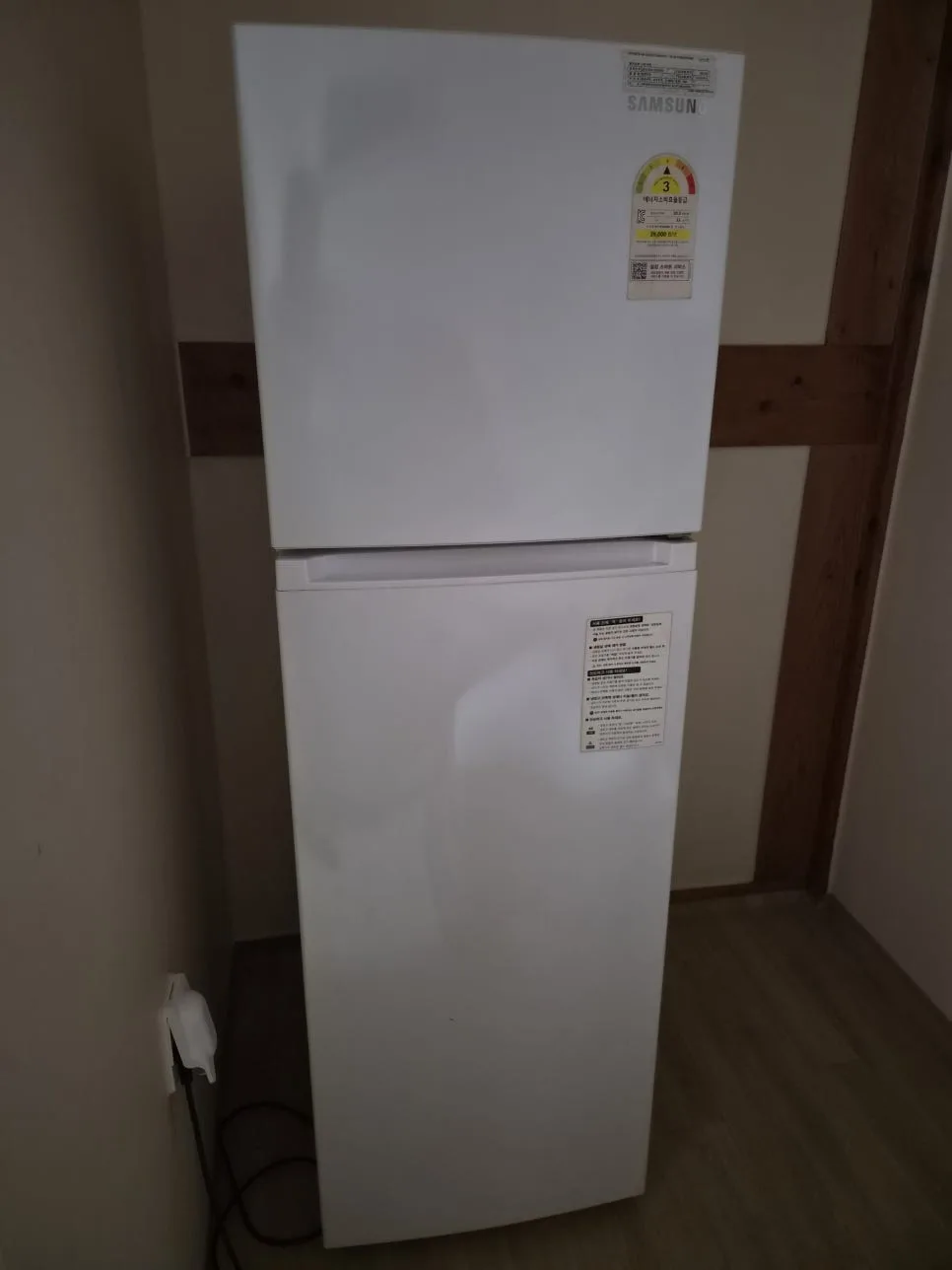
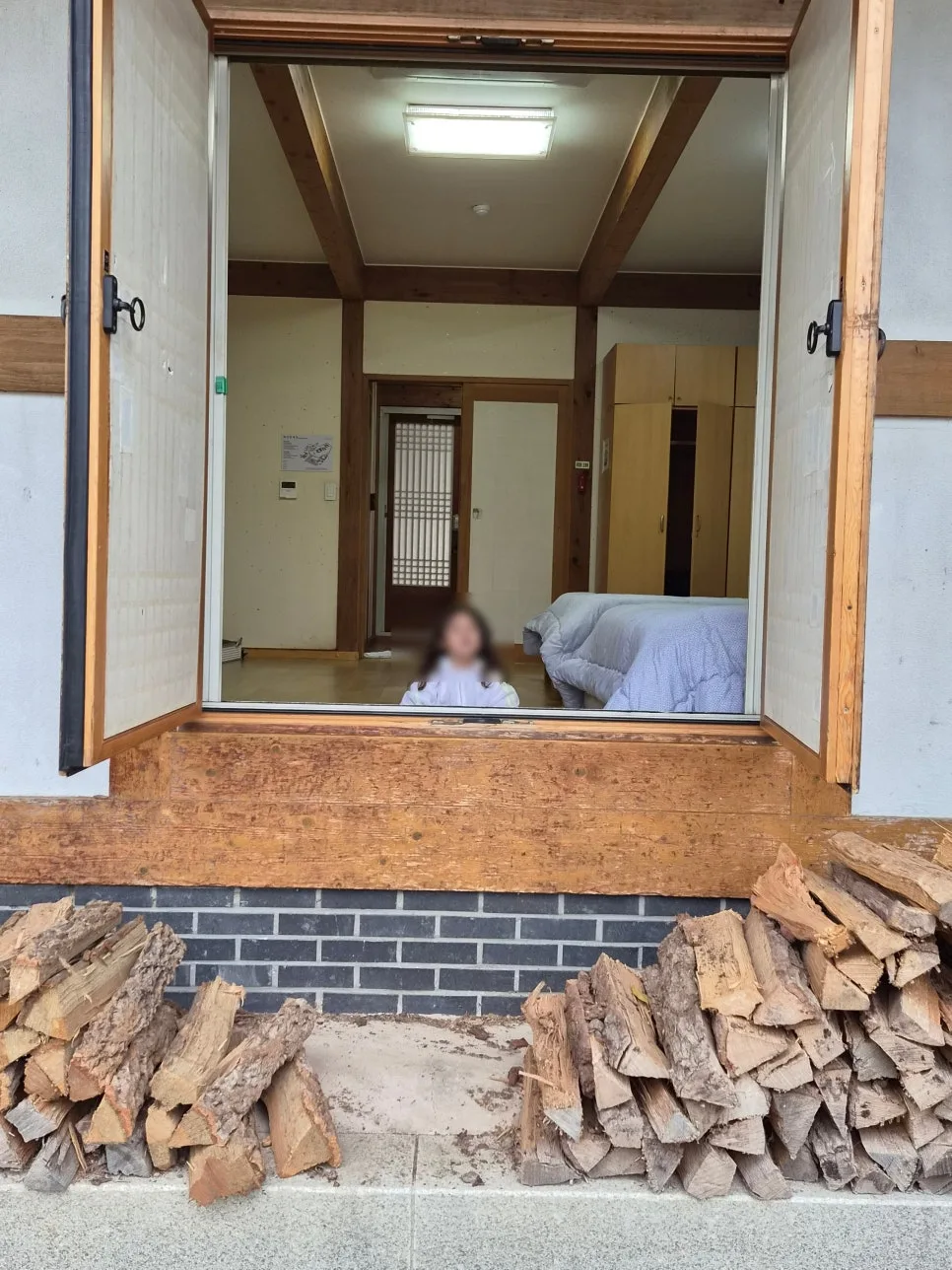
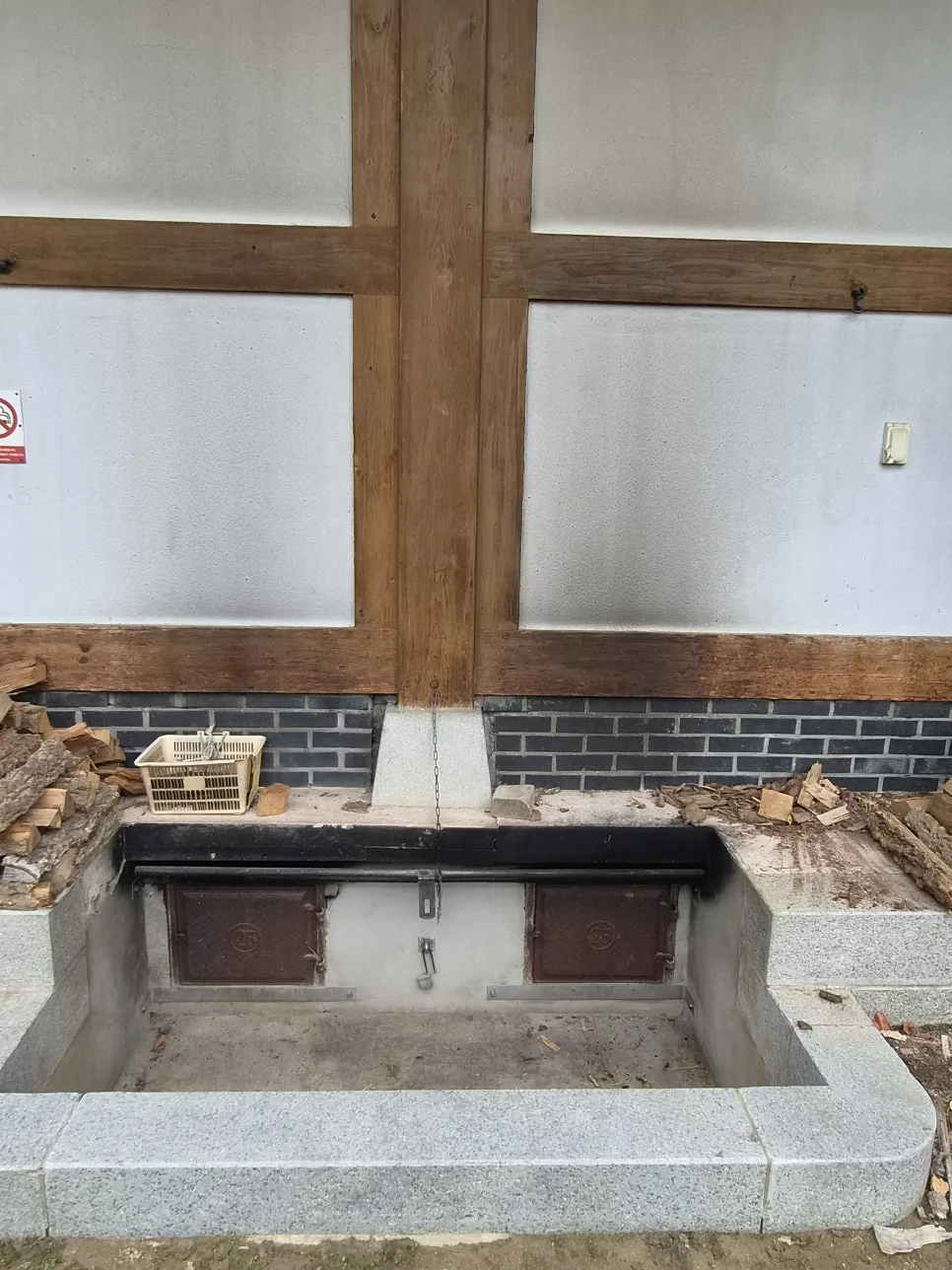
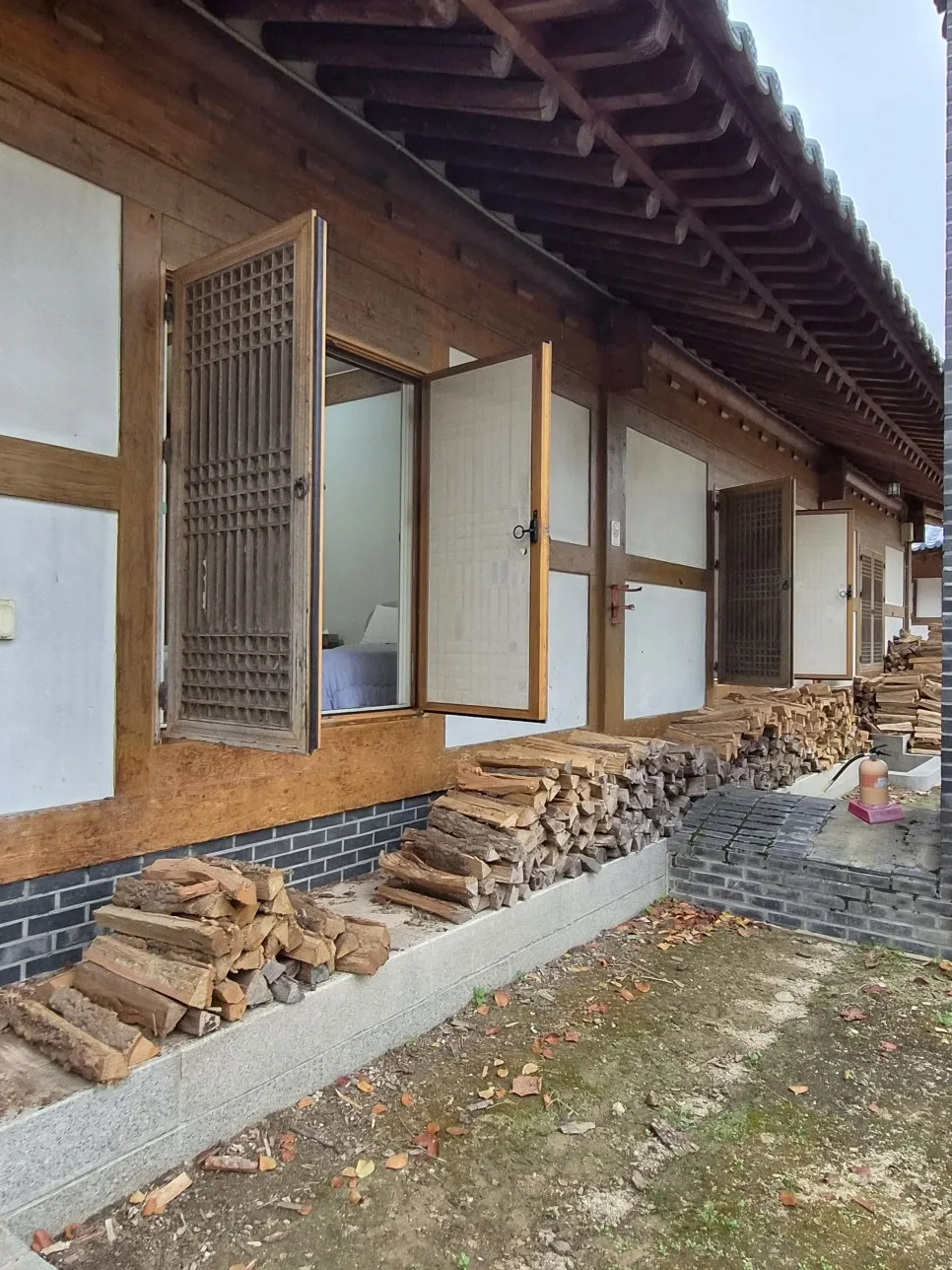
The floor was so hot, it felt like a jjimjilbang—a Korean bathhouse’s heated relaxation room!
The room was heated by burning firewood in a furnace beneath the floor, a traditional system you don’t often get to experience firsthand.
Explaining gudeul heating to a 5-year-old wasn’t easy,
so I sang the line about a little calf sitting on the kitchen hearth from a Korean children’s song to help make the idea more familiar.
A night in a traditional gudeul-heated room is hard to come by these days, which made our stay all the more memorable.
Resting Our Feet in a Warm Footbath
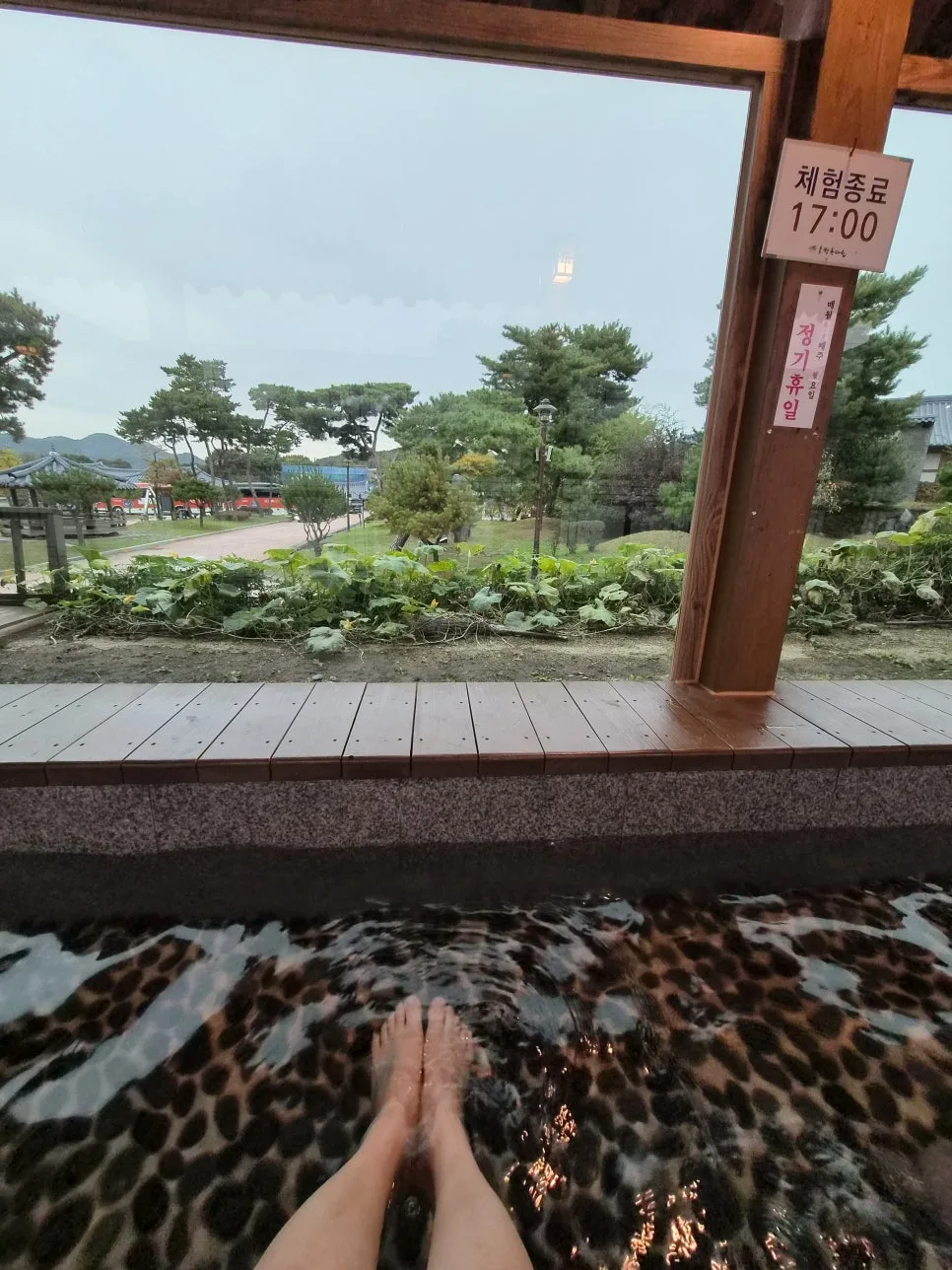
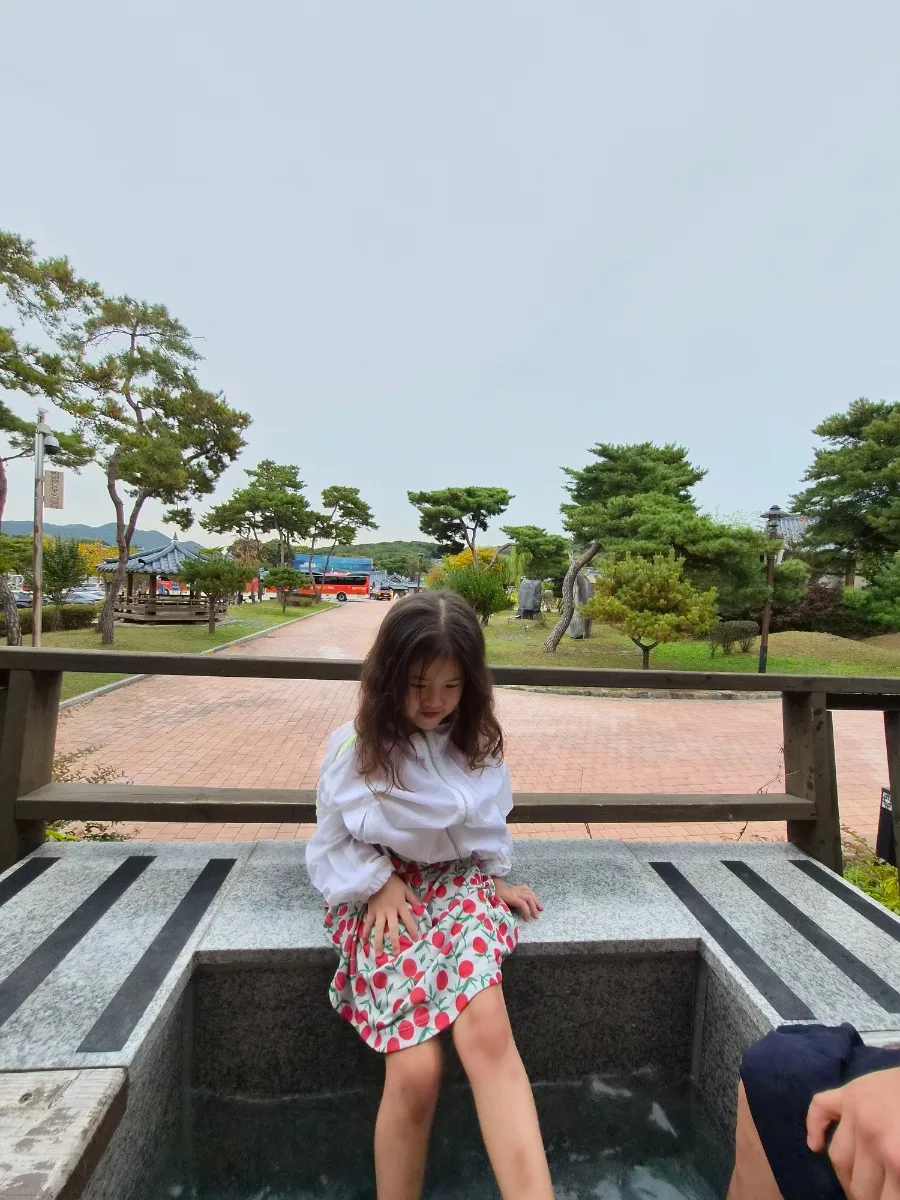
Apparently, the footbath is free to use even if you’re not staying overnight.
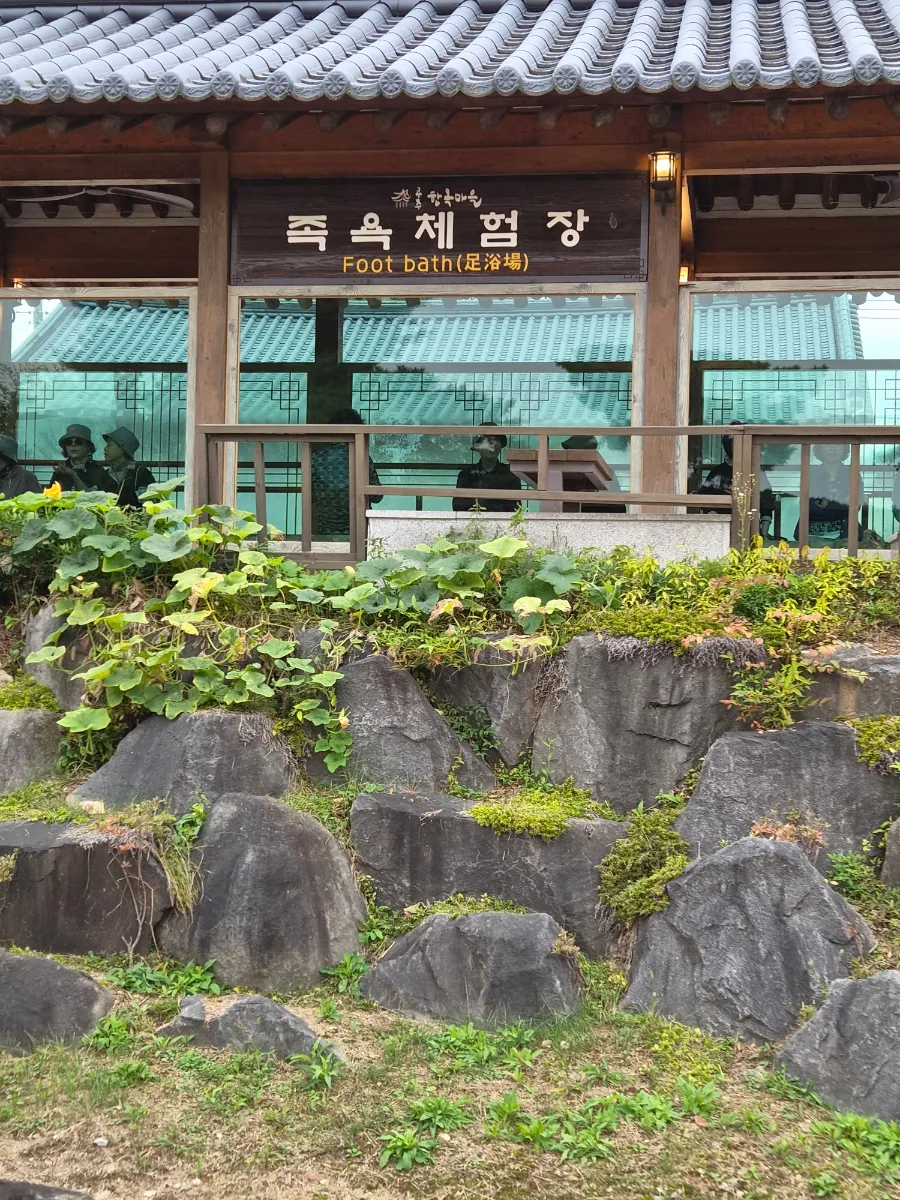
We gave it a try while we were at the hanok village.
After a full day of walking between sights, soaking our feet in the warm water felt wonderfully soothing.
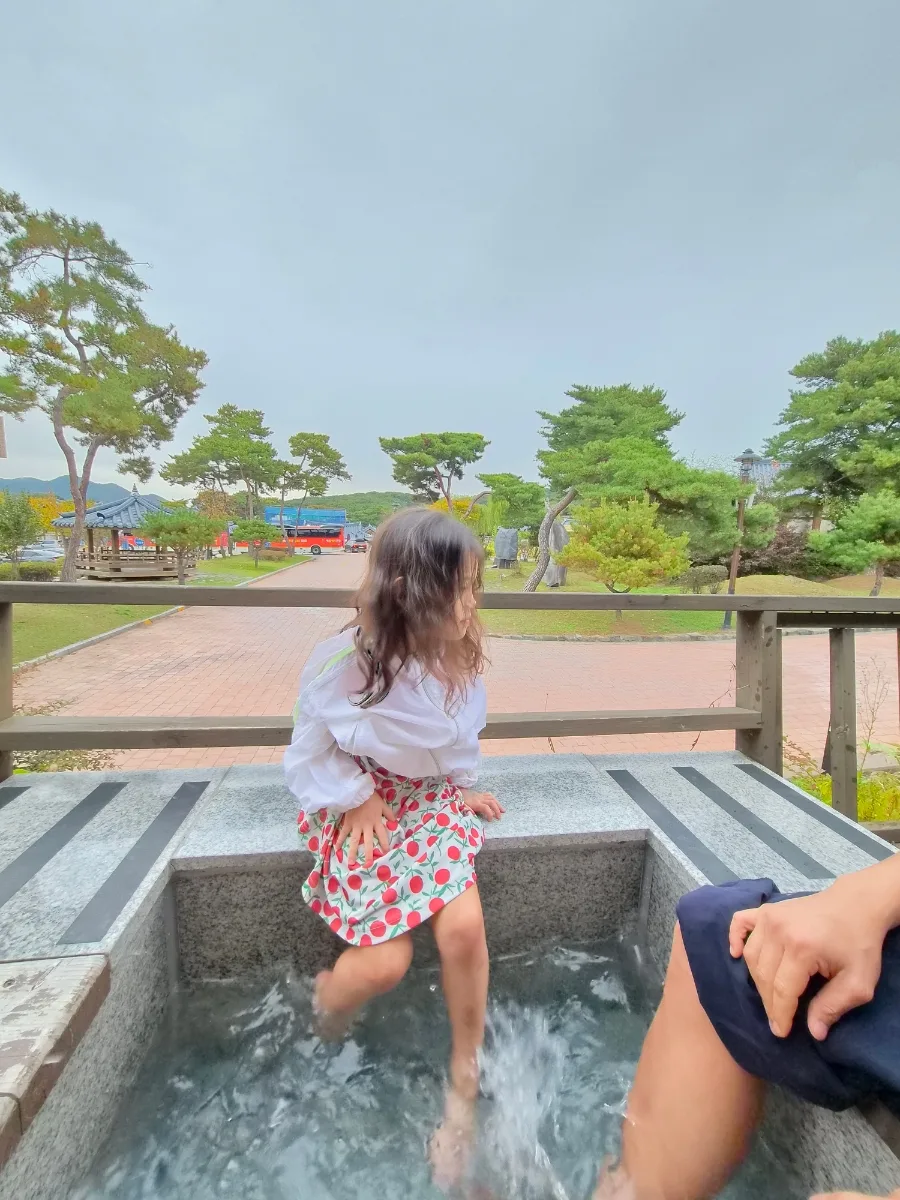
Traveling with a child really does call for little breaks like this.
Ordering Food by Drone at Gongju Hanok Village
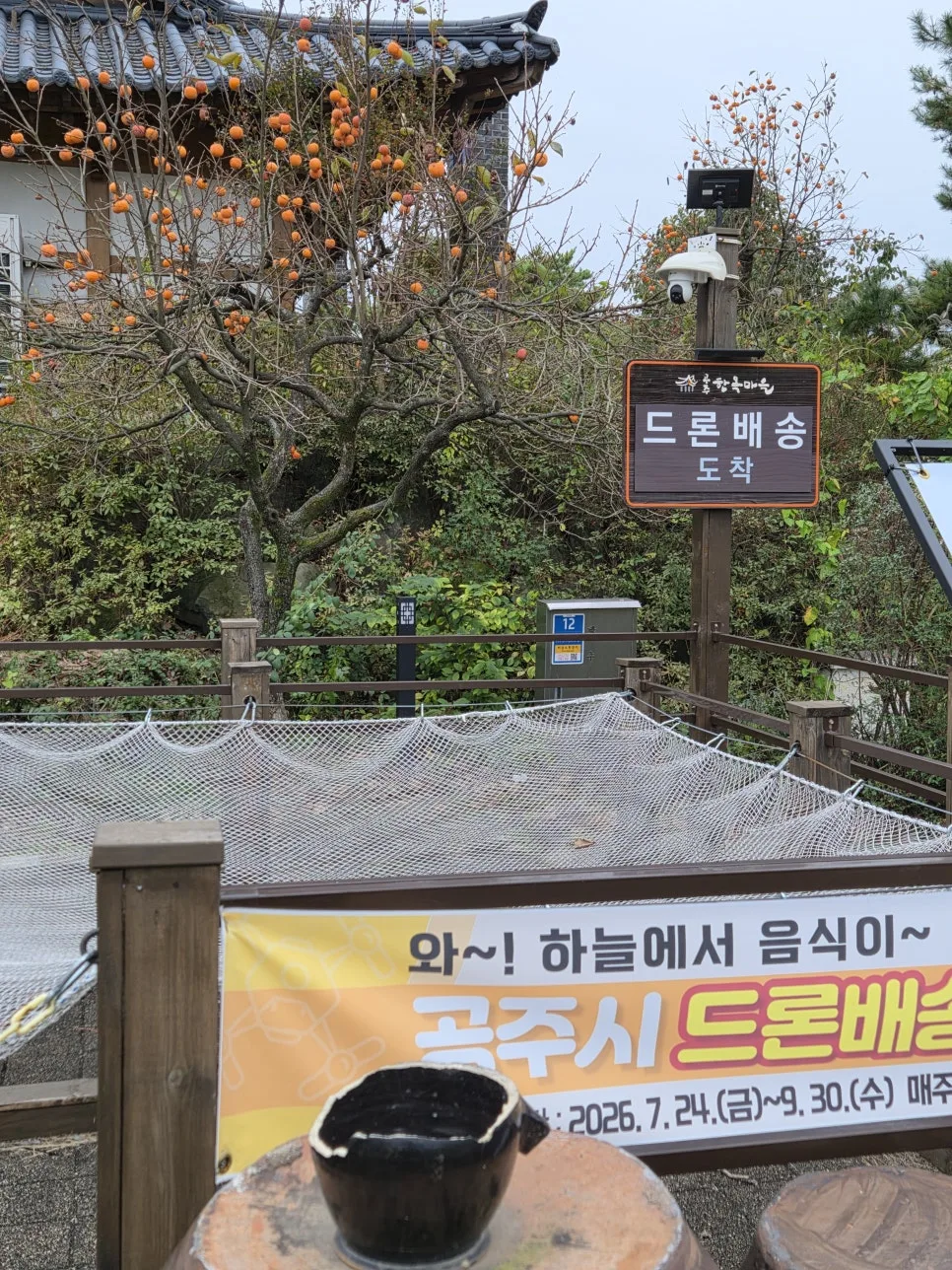
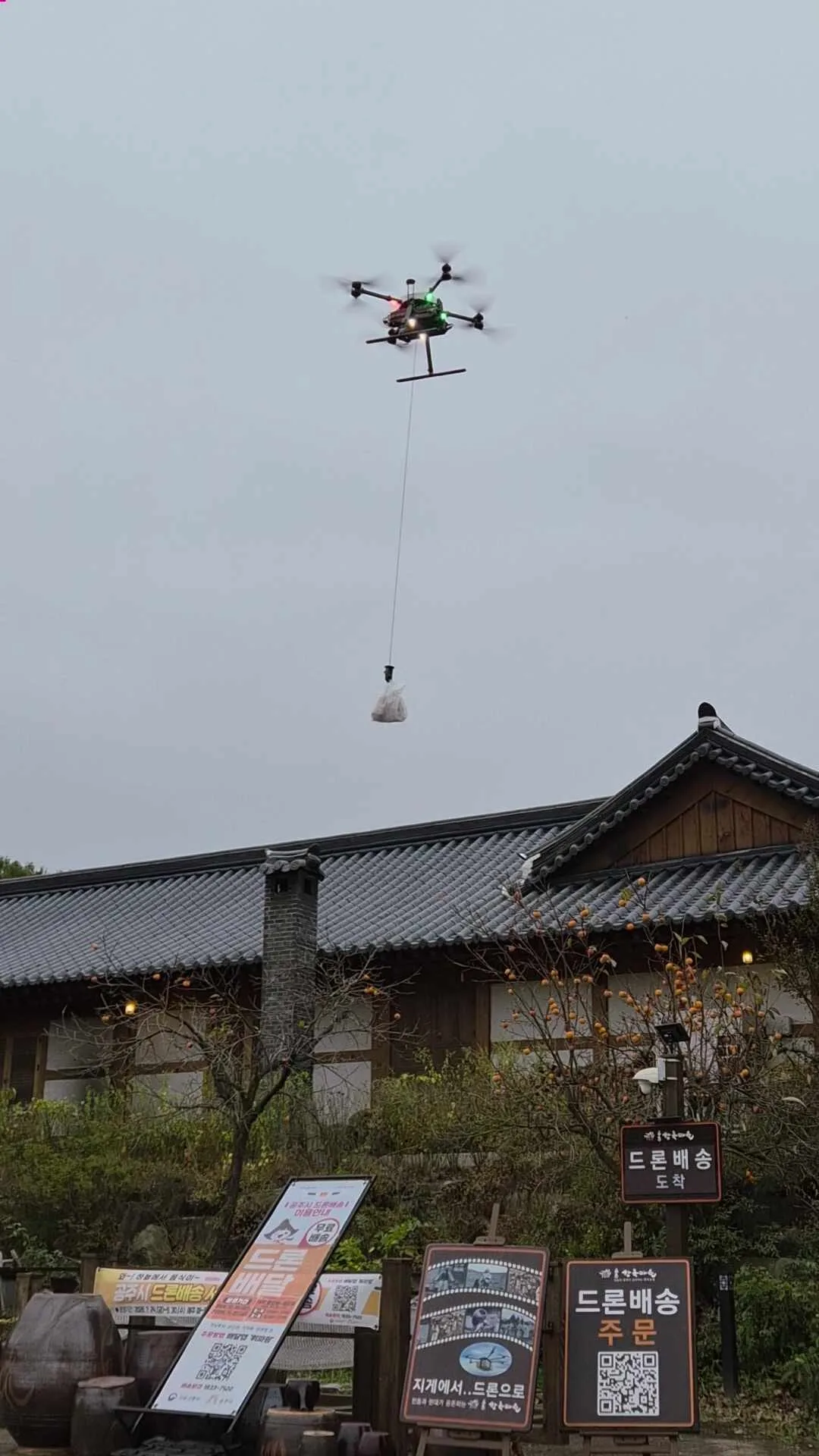
Another unexpected highlight was trying drone food delivery.
Our child was fascinated to see a drone up close.
Honestly, we adults were just as impressed.
Drone-delivered food in a traditional hanok village—what a combination!
It was fun to try something so modern in such a traditional setting.
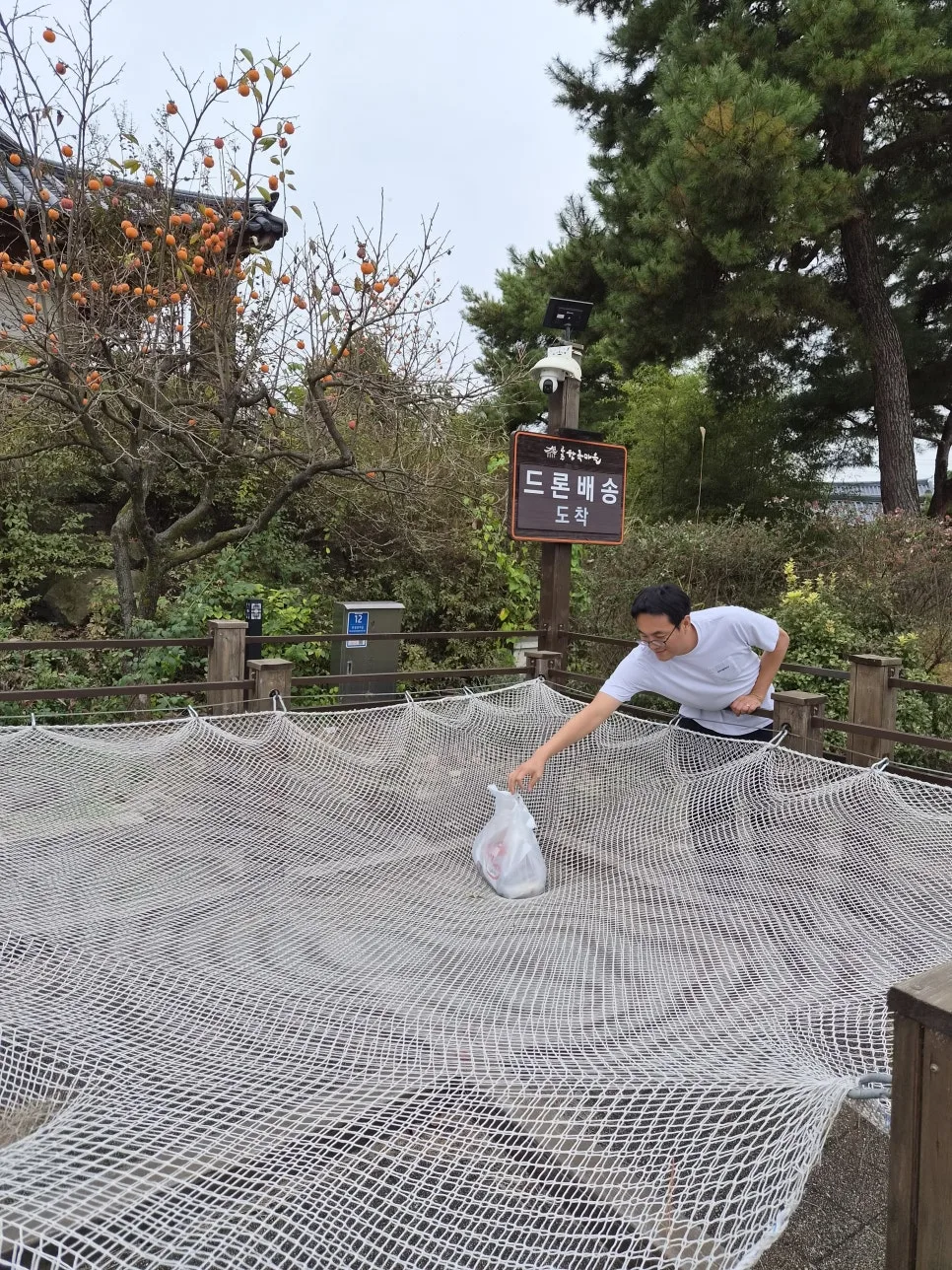
Dinner at Yeongbingwan Inside the Hanok Village
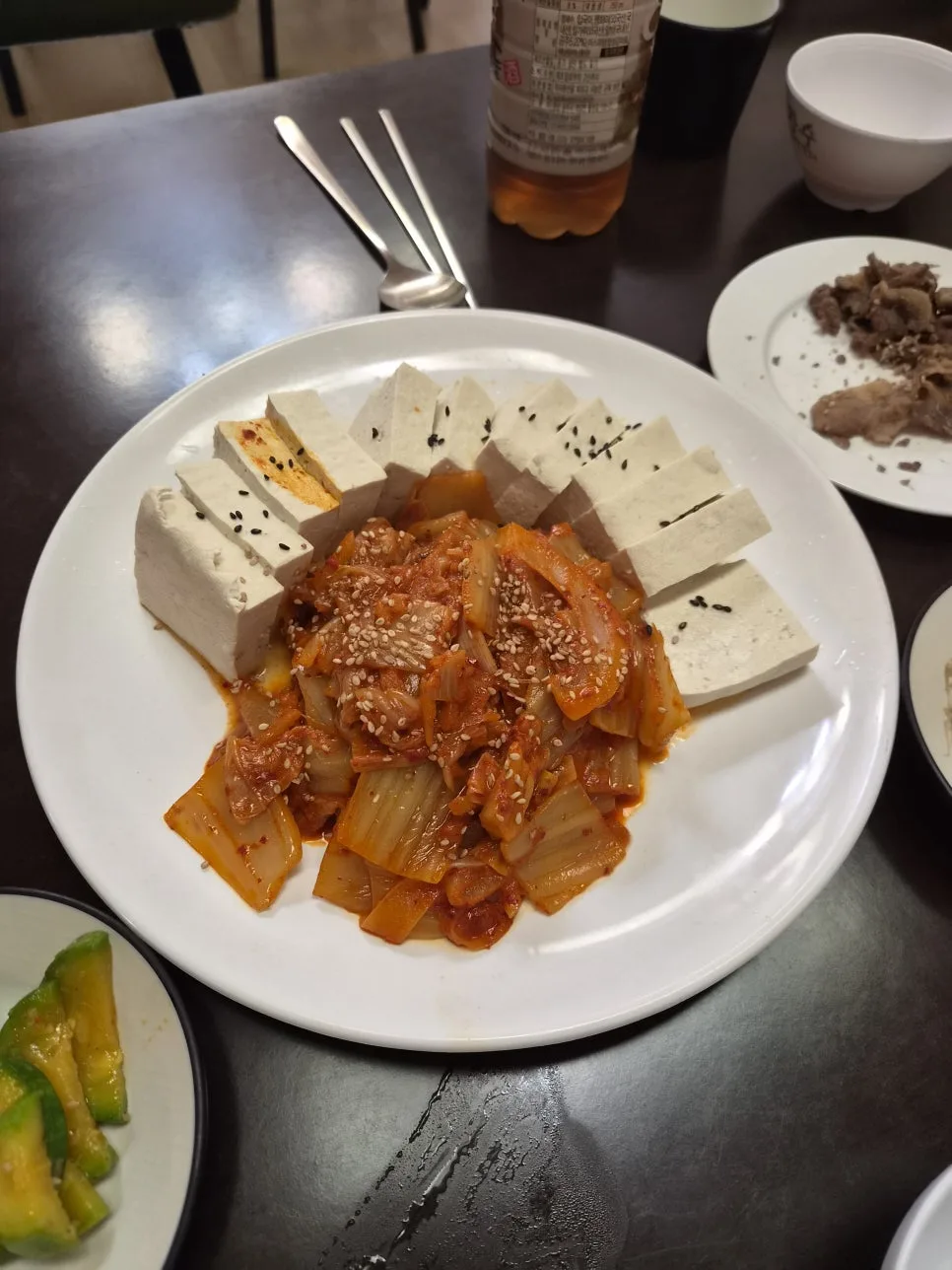
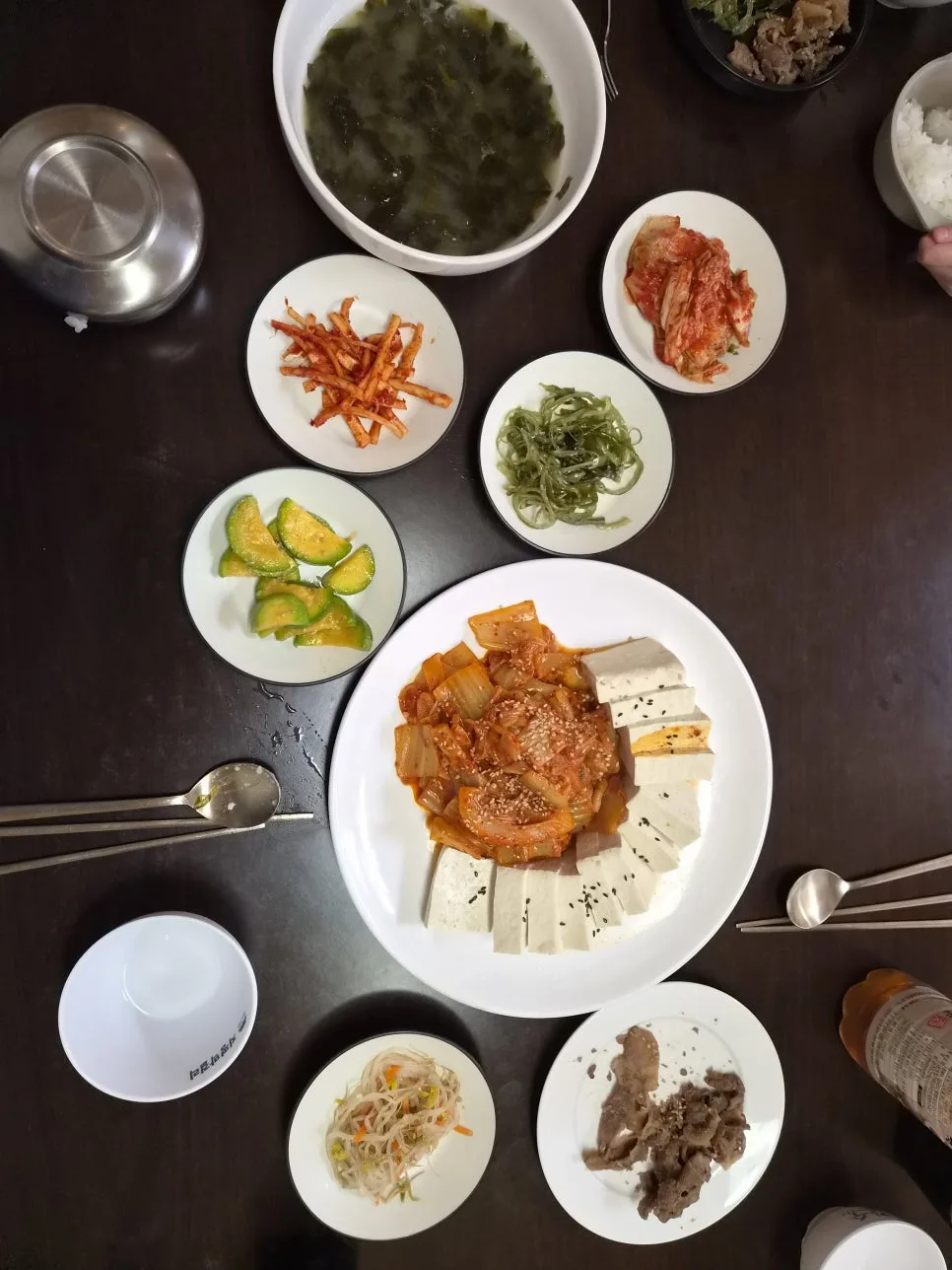
We’d already had chicken delivered by drone,
but we still wanted a little more to eat,
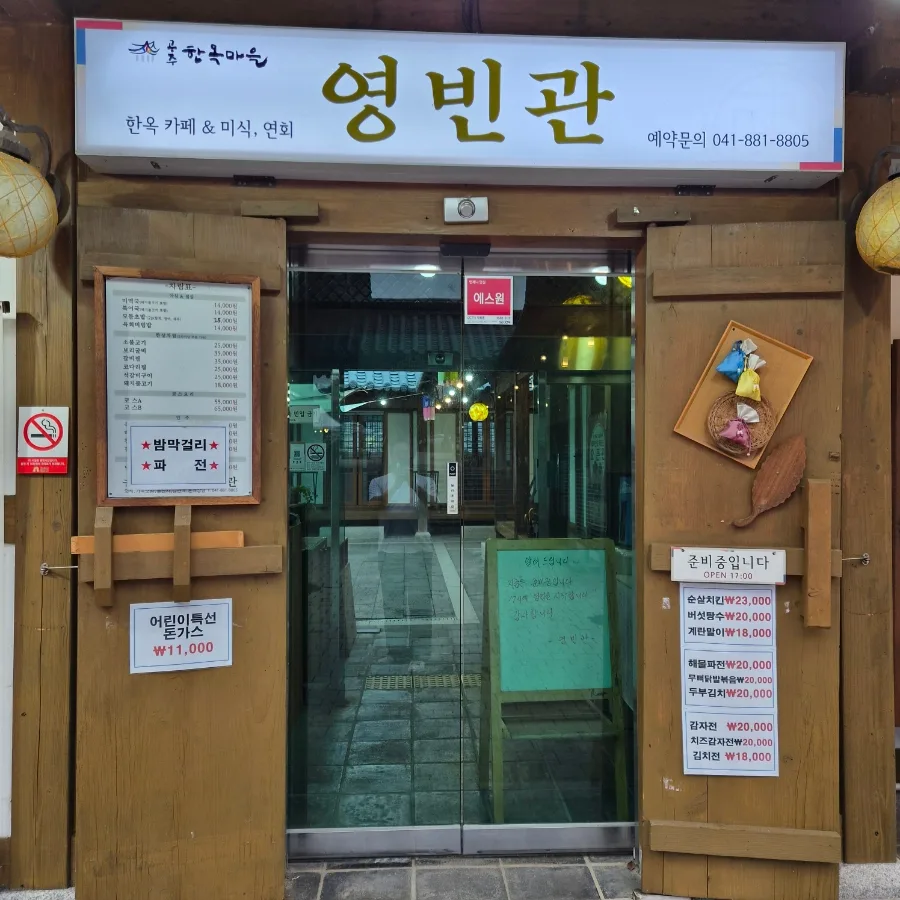
so we headed to Yeongbingwan inside the hanok village.
After sightseeing all day, it was convenient to have dinner close to our room rather than head out again.
We wrapped up our first day with dinner and a relaxed evening in the village.
Our Take on a Car-Free Gongju Trip With a 5-Year-Old
This trip gave us a relaxed way to introduce our child to Baekje’s history and culture.
Traveling without a car
also gave us plenty of time to talk along the way.
We tried hands-on activities at the museum,
explored traces of Baekje at Gongsanseong Fortress and the Tomb of King Muryeong,
and experienced a traditional gudeul-heated room at the hanok village.
Gongju National Museum was my favorite stop for a visit with a child, while our night at Gongju Hanok Village stood out as the most distinctive experience.
Above all, the DRT tour bus showed us that exploring Gongju without a car really is possible.
Next Stop: Buyeo!
After our night at Gongju Hanok Village, we headed to Buyeo the following day.
Buyeo offered another side of Baekje history, with an atmosphere quite different from Gongju’s.
I’ll share our Buyeo itinerary and firsthand experiences in detail in the next post.
#CTourBus, #GongjuDRT, #BuyeoDRT, #GongjuTravel, #BuyeoTravel, #CarFreeTravel
#GongjuTravel #GongjuTwoDayTrip #GongjuItinerary #CarFreeGongju #GongjuDRT #GongjuTourBus #GongjuWithKids #GongjuNationalMuseum #GongsanseongFortress #TombOfKingMuryeong #GongjuHanokVillage